

Gua Sha Mistakes Beginners Make (And How to Fix Them for Better Results)
by Amber Boone, Holistic Aesthetician & Founder of Skin Soul Rituals
Tried gua sha and thought, “Why isn’t this working for me?”
You’re not doing it wrong because gua sha doesn’t work you’re likely making one of a few very common beginner mistakes.
Facial gua sha is incredibly effective for:
De-puffing
Sculpting
Improving circulation
Supporting long-term skin health
But it’s technique-dependent. Small errors can block results or even make your face look more swollen.
Let’s fix that.
Mistake #1: Using Too Much Pressure
Many beginners think gua sha should feel like deep muscle work. It shouldn’t.
Facial tissue contains delicate lymphatic vessels that sit close to the surface. Pressing too hard can:
Increase inflammation
Cause redness
Stress the skin barrier
Trigger puffiness instead of reducing it
Fix: Use light-to-moderate pressure. The tool should glide, not drag. Think “lifting and sweeping,” not scraping.
Mistake #2: Skipping Lymphatic Prep (Starting at the Face)
This is the #1 reason gua sha makes people feel more puffy.
Your lymphatic system needs an exit pathway. If you move fluid in the face without opening drainage points, it has nowhere to go.
Fix: Always begin at the neck and collarbone with gentle downward strokes. This signals the body where fluid should drain before you sculpt the face.
Mistake #3: Not Using Enough Slip
Dry or under-lubricated skin causes:
Tugging
Micro-stress to the skin
Reduced effectiveness
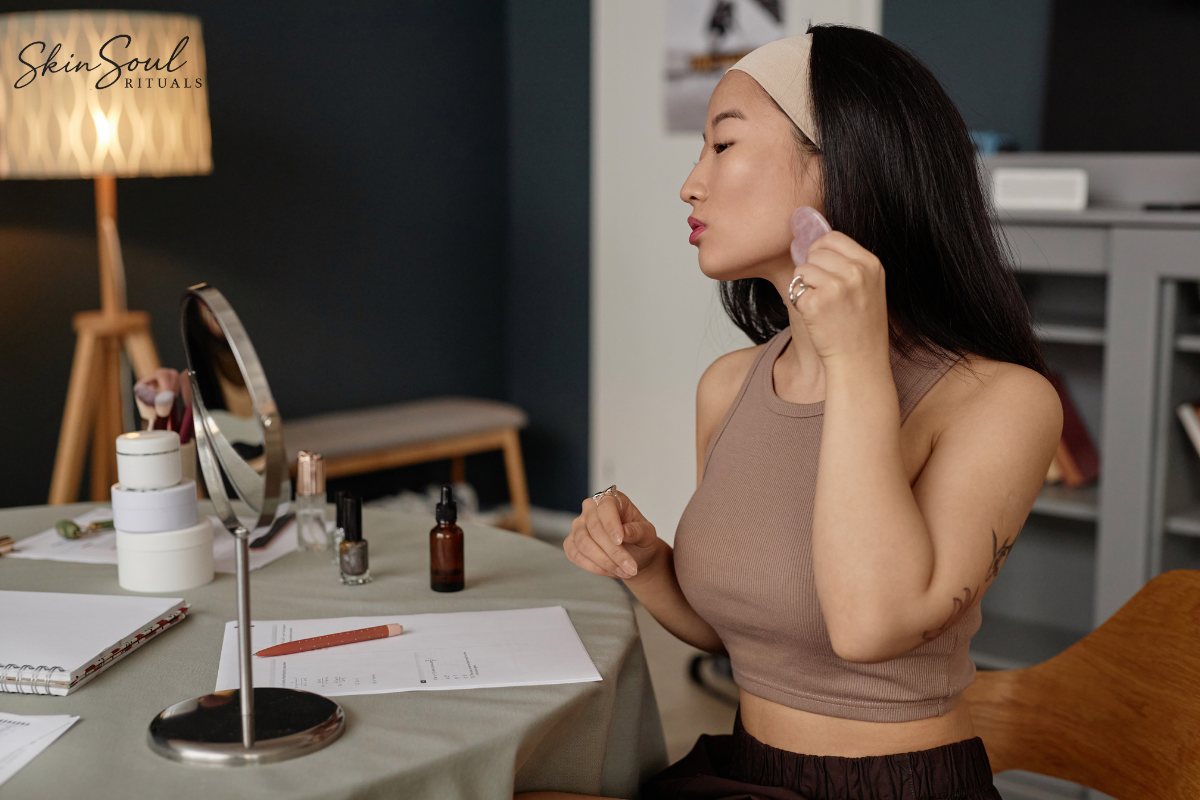
Gua sha works best when the stone glides smoothly.
Fix: Apply a nourishing facial oil or serum first. This supports the skin barrier and allows proper technique.
Mistake #4: Using a Decorative Stone Instead of a Functional One
Many tools look beautiful but aren’t designed for facial anatomy.
A poorly shaped stone makes it difficult to:
Fit under cheekbones
Follow the jawline
Work around the eyes
Address the neck properly
Fix: Choose a stone with multiple edges, curves, and rounded contours. The shape should work with your face, not against it.
Mistake #5: Moving Too Fast
Gua sha isn’t a quick scrub. Fast strokes don’t effectively support lymphatic flow.
Fix: Slow, intentional movements are key. Think rhythm, not speed.
Mistake #6: Being Inconsistent
Doing gua sha once in a while gives temporary de-puffing, but not sculpting.
Long-term benefits like improved tone and contour come from:
Regular circulation support
Releasing habitual muscle tension
Ongoing lymphatic movement
Fix: 3–5 minutes most days is enough.
Mistake #7: Expecting Instant Structural Change
Gua sha is not filler. It doesn’t force change, it supports your body’s natural systems.
Immediate results:
Reduced puffiness
Brighter tone
Gradual results:
More sculpted appearance
Softer tension lines
Better skin vitality
Fix: Track subtle improvements. They build over time.
Mistake #8: Ignoring Facial Tension
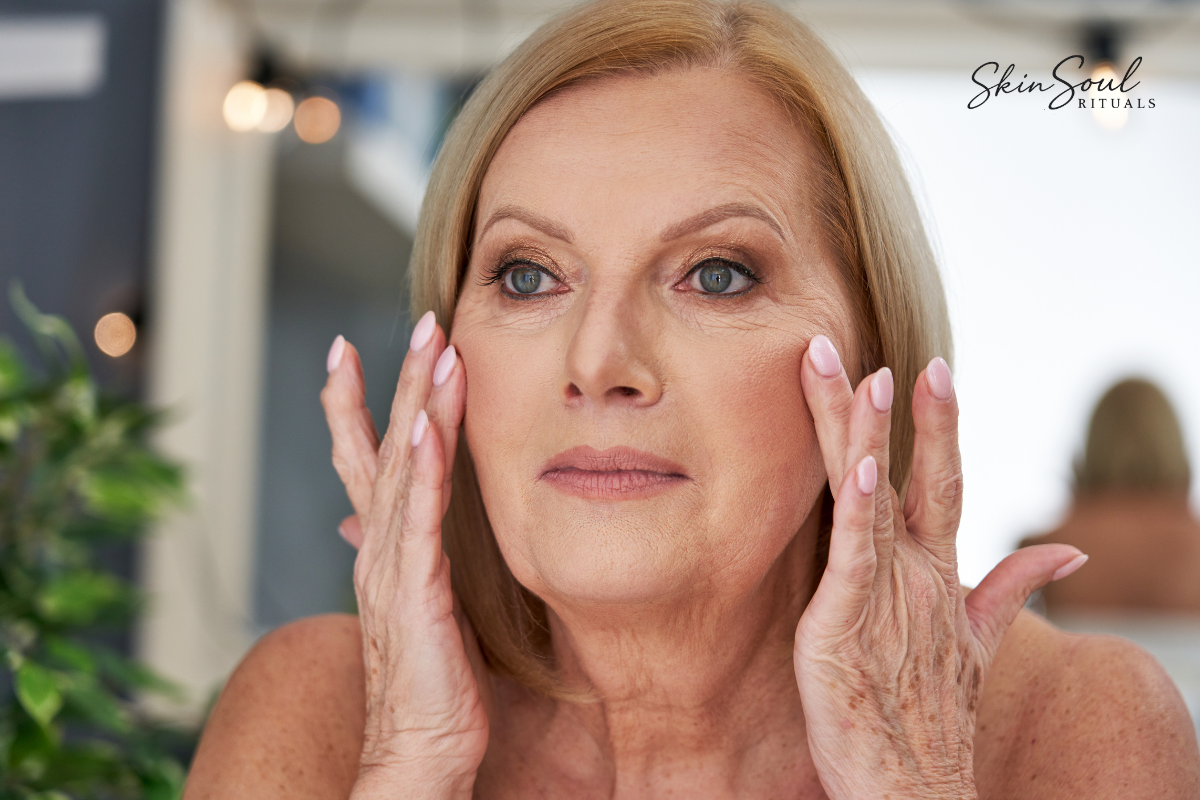
Holding tension in the jaw, brows, or mouth area can limit results. Tight muscles pull the face downward.
Fix: Use gua sha as a relaxation tool, not just sculpting. Slow strokes + breath = better outcomes.
Mistake #9: Not Cleaning Your Tool
Bacteria transfer can lead to breakouts and irritation.
Fix: Wash with gentle soap and water after use.
Why Gua Sha “Doesn’t Work” for Some People
It’s rarely the practice. It’s usually:
Too much pressure
No lymphatic prep
Wrong tool
Inconsistency
When these are corrected, gua sha becomes one of the most effective natural sculpting rituals available.
Final Thoughts
If gua sha hasn’t worked for you yet, don’t quit, adjust and learn. If you ready to go deeper, join me for the 5-day Gua Sha Challenge. It’s free to sign up and teaches you the proper techniques to get results. Sign up here: 5-Day Gua Sha Challenge
The difference between “this doesn’t work” and “this is magic” is often just technique, tools, and consistency.
Once those align, results follow.