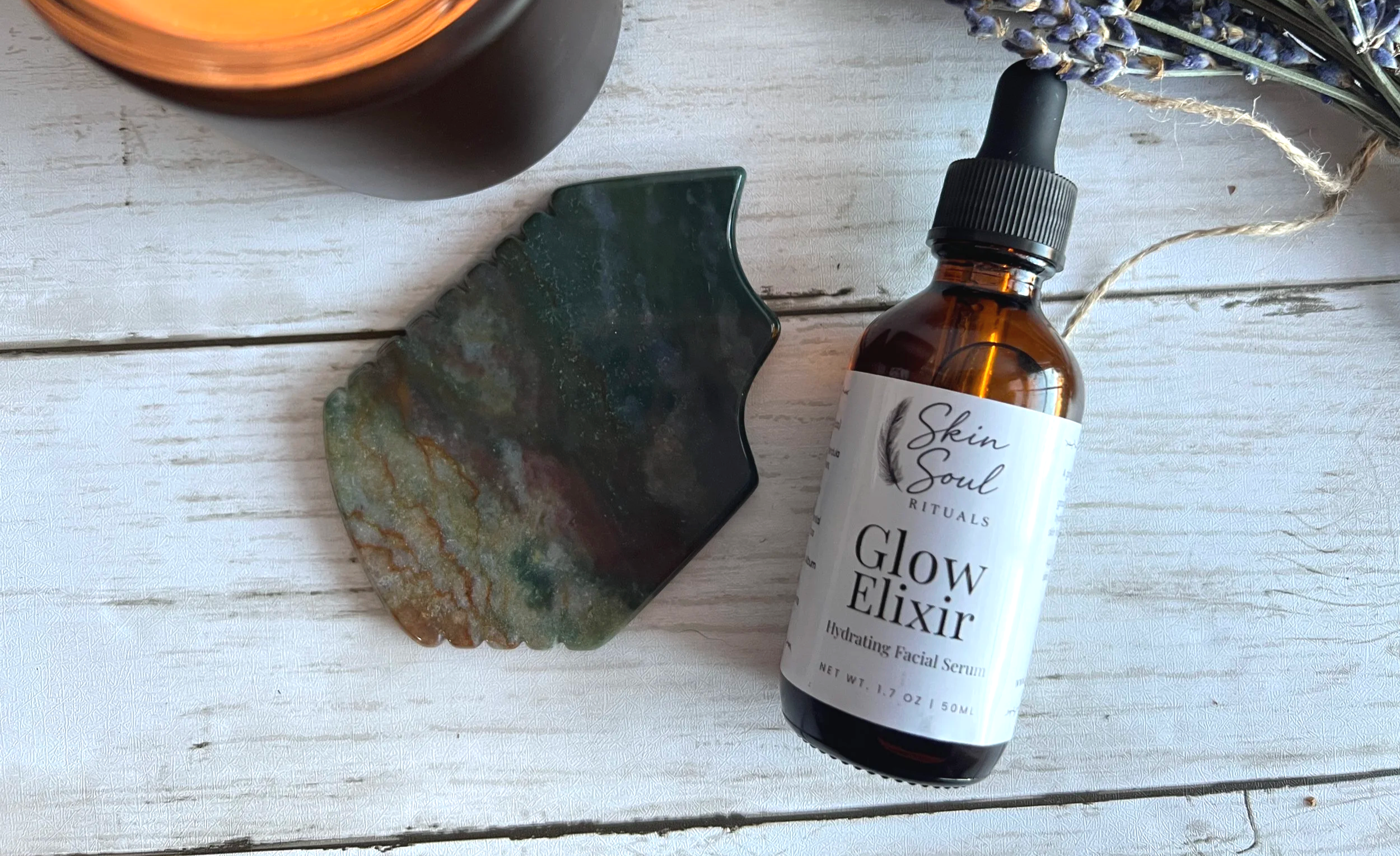


Does Your Gua Sha Stone Actually Matter: An Aestheticians Honest Guide
Does your gua sha stone actually matter? Yes, more than you think. From material and weight to shape and craftsmanship, the right tool can improve results, protect your skin, and elevate your facial sculpting ritual.
by Amber Boone, Holistic Aesthetician & Founder of Skin Soul Rituals
You've probably noticed that gua sha stones come in every color, material, and price point imaginable. And if you've ever wondered whether the material actually matters, it does. More than most people realize.
I've been a licensed aesthetician for over a decade, and gua sha has been part of my practice from the beginning. I fell in love with it early, for the results, yes, but also for the way it feels. Rooted in touch, rhythm, and intention, it's a practice that has stood the test of time for a reason.
But here's what doesn't get talked about enough: your stone comes into direct contact with your skin, your fascia, your lymphatic system, and even your nervous system. It becomes part of the experience. Which means the material it's made from and the integrity behind it, deserves real consideration.
So today I'm breaking it all down for you.
What Makes One Stone Different From Another
Many gua sha tools on the market are mass-produced from dyed glass or synthetic materials. They may look beautiful, but not all tools offer the same experience or results.
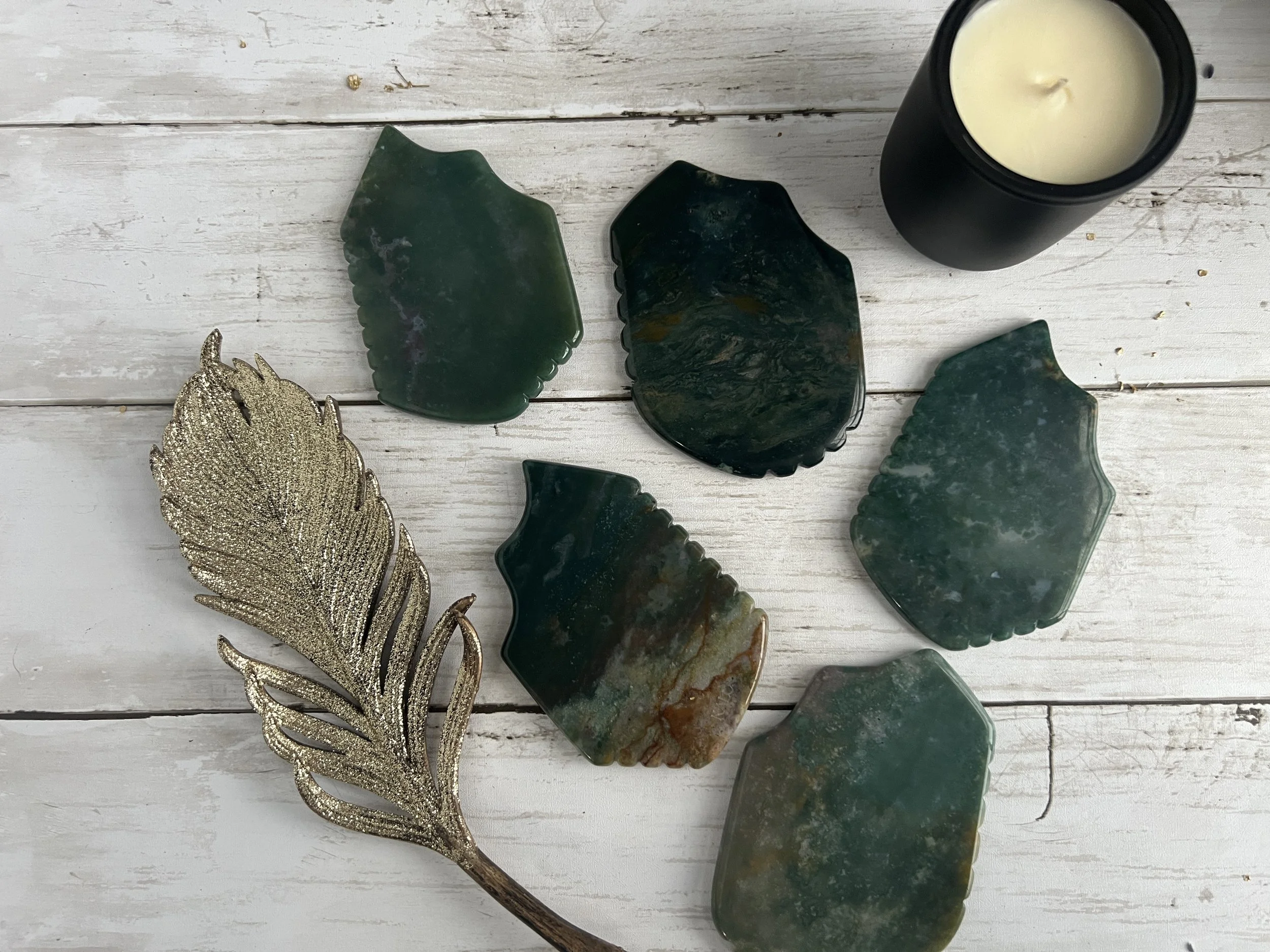
Some of our favorite Gua Sha Stones
Weight & Feel
Natural stone carries a different weight and presence than lightweight imitations. That subtle weight helps create steady, controlled movements rather than rushed or uneven pressure.
Temperature
Natural stone holds coolness longer, which can feel calming and soothing on the skin especially during a slow, mindful ritual. This cooling effect also makes it supportive for de-puffing and encouraging circulation for a healthy glow.
Shape & Function
A well-designed stone supports the natural curvatures of the face and neck. It should glide along contours without tugging and allow for sculpting, lifting, and lymphatic movements with ease.
We’ll talk more about shape below, because this is where results truly change.
Authenticity
We prioritize natural stone because we believe materials carry integrity. Authentic sourcing takes more time and care, but it aligns with how we approach everything we create from our formulations to tools.
The Energetic Side of Ritual
For centuries, stones have been used in practices connected to grounding and balance. Whether you see this through an energetic lens, emotional awareness, or simply the psychology of intention, the materials we use affect how we feel.
When something feels meaningful, we return to it.
And consistency is where the real results happen.
Why Gua Sha Stone Shape Matters More Than You Think
Facial gua sha works by:
• Encouraging stuck lymphatic drainage
• Releasing facial tightness and tension
• Supporting circulation and contour
Your face isn’t flat and a poorly designed stone can’t properly follow facial anatomy.
When the shape is wrong:
Pressure is uneven
Movements feel clunky
Certain areas get skipped
Results are inconsistent
A well-designed stone should fit your face, not force your face to adapt to it.
Best Gua Sha Stone Shapes (What To Look For)
1. Curved Edge (Jawline + Cheekbones)
A long, smooth curve is essential for sculpting the jawline, lifting the cheeks, and releasing masseter tension.
Why it matters: Flat or overly sharp edges can irritate skin and limit lift.
2. Notched or U-Shape (Jaw + Chin Area)
A gentle notch allows you to sculpt both sides of the jaw evenly and create definition without excessive pressure.
Especially helpful for beginners learning placement.
3. Small Tip/ Or Edged Corner (Under-Eyes + Delicate Areas)
A small tip or edged tip supports under-eye lymphatic drainage and temple work without irritation.
The best tips increase the risk of broken capillaries and sensitivity.
4. Broad Flat Side (Neck + Lymphatic Prep)
The neck is where gua sha should begin but many stones ignore this.
A flat surface allows for gentle lymphatic opening and smooth neck work. One of my favorites.
Materials: What to Know
Natural stone supports durability and glide, but results come from technique and shape.
High-quality stones:
• Feel smooth against the skin
• Have consistent weight
• Don’t drag or snag
• May vary slightly in color or translucency (this is normal)
What to Look for in a Beginner-Friendly Stone
If you’re new to gua sha, choose a stone with:
Multiple usable edges
Rounded, smooth contours
A shape that works for jaw, cheeks, eyes and neck
A comfortable grip
The goal is for it to be easy to use and choosing these qualities in a stone will help you get off to a good start. Some of my favorites I’m currently working with are white jade, moss agate and green aventurine.
Natural Variation Is Part of the Beauty
It’s also important to note that natural stones are not always perfectly uniform. Variations in color, veining, and translucency are signs of authenticity.
Your tool is uniquely yours.
How to Clean & Care for Your Gua Sha Stone
Your gua sha tool touches your skin, oil, lymphatic fluid, and hands, so keeping it clean isn’t optional. A well-cared-for stone not only lasts longer, it protects your skin and keeps your ritual feeling fresh and hygienic.
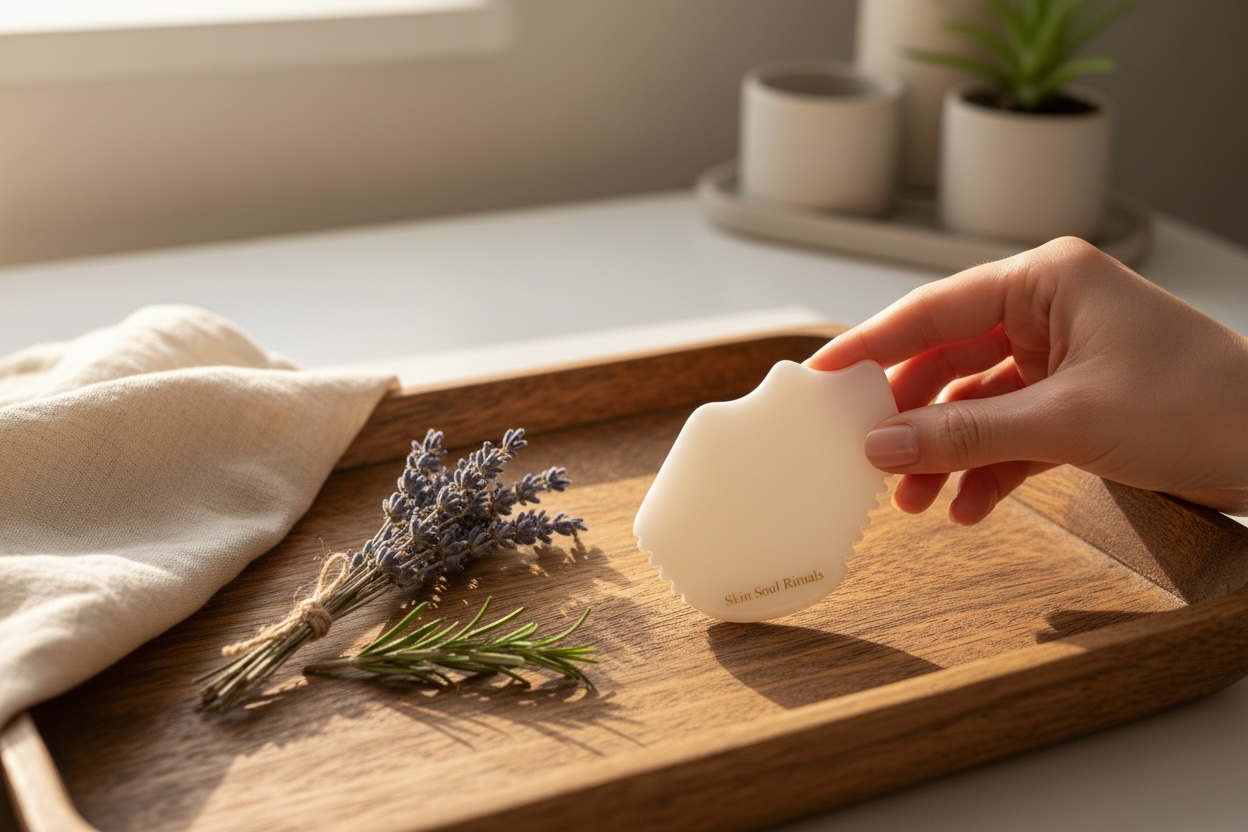
Remember to Clean Your Stones After Every Use with a Gentle Cleanser
After Every Use (Quick Clean)
Rinse with lukewarm water
Avoid hot water, extreme temperature changes can stress natural stone.Use a gentle cleanser
A mild soap, facial cleanser, or natural dish soap works well. Rub with your fingers, not a rough cloth.Rinse thoroughly
Make sure no residue from oils or cleanser remains.Dry completely
Pat dry with a clean towel and allow it to air dry before storing.
Weekly Deep Clean
If you use facial oils regularly (especially thicker oils), give your stone a deeper clean once a week.
Wash with gentle soap and warm (not hot) water
Use a soft toothbrush to clean edges and grooves
Rinse well and dry fully
This prevents oil buildup that can make the tool slippery or dull.
What Not to Do
Natural stone is strong, but it isn’t indestructible.
Avoid:
Boiling water
Soaking for long periods
Harsh chemicals or alcohol
Dropping it on hard surfaces
These can weaken the stone, fade its finish, or cause cracks.
Storage Matters Too
Store your gua sha tool:
In a dry place
In a soft pouch or box
Away from moisture or steam (like the shower)
Keeping it protected prevents chips and keeps your ritual feeling intentional rather than tossed in a drawer.
The Right Stone Makes All the Difference.
Gua sha isn't about collecting tools, it's about choosing one that actually works with your face, your hands, and your life.
When the shape fits your anatomy, something shifts. Results come faster. The ritual feels intuitive. And you actually want to come back to it tomorrow. That's where the real transformation lives not in one session, but in the consistency that a good tool makes possible.
If you're ready to stop guessing and start seeing results, we made it simple.
Our Glow & Lift Kit includes everything you need to begin, the right stone, the right botanical oil, and access to my 5-Day Gua Sha Foundations video series so you can pick it up with total confidence from day one.
Already have a stone? Grab the free 5-Day Gua Sha Challenge and learn the exact techniques that make the real difference.