

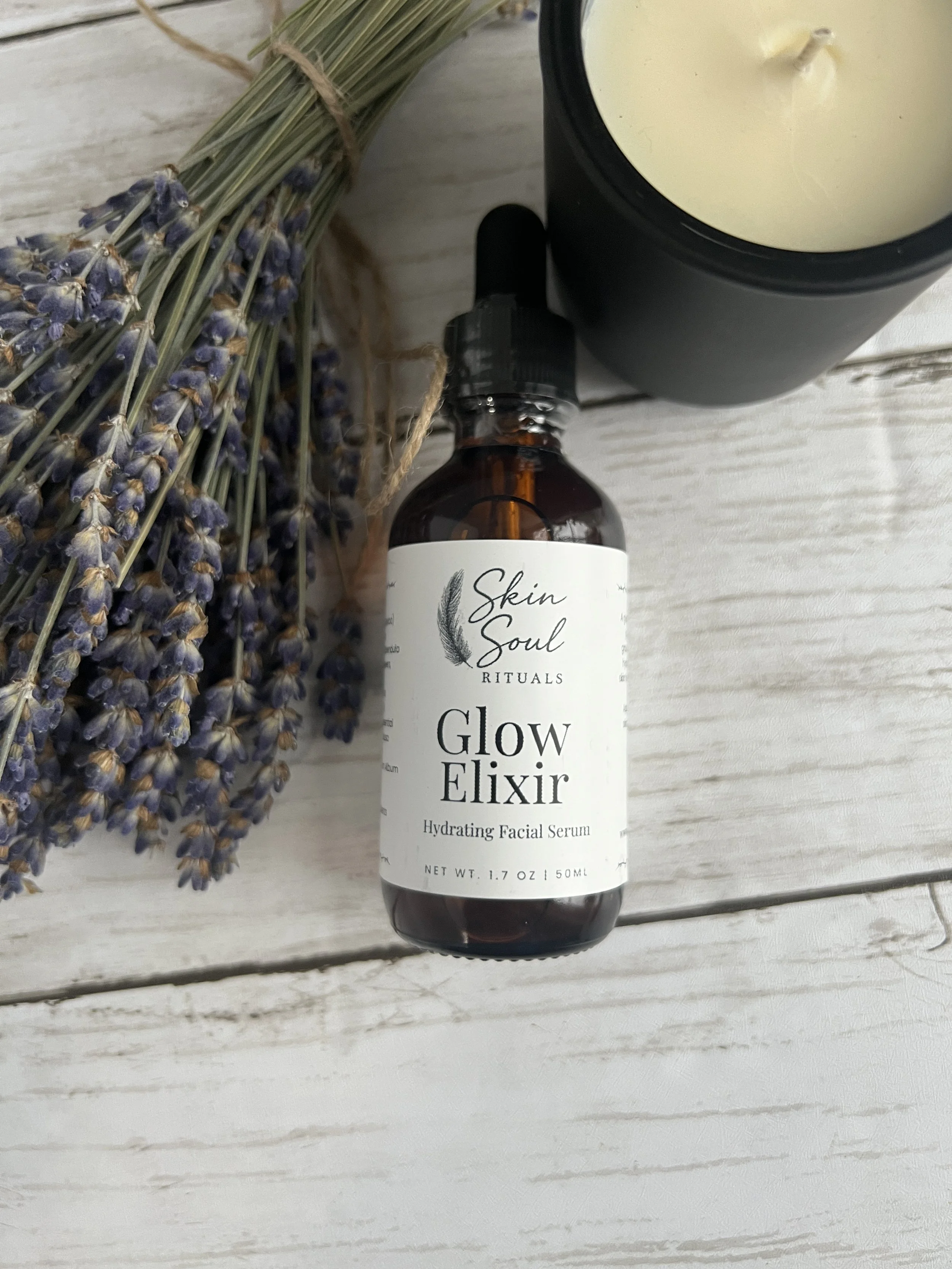
Best Face Oil for Gua Sha (And Why Slip Matters)
The best face oil for gua sha isn’t about trends, it’s about slip. Learn why glide matters, what ingredients to look for, and how oil affects your results.
by Amber Boone, Holistic Aesthetician & Founder of Skin Soul Rituals
If you’ve ever tried gua sha and thought, “This doesn’t feel right,” the problem can be your stone (they matter too) but oftentimes, it’s the oil.
One of the most overlooked (and most important) parts of an effective gua sha routine is slip. Without it, gua sha can pull the skin, irritate the barrier, and actually work against the results you’re trying to achieve.
So what is the best face oil for gua sha and why does slip matter so much? Let’s break it down.
Why Slip Matters When Doing Gua Sha
Slip refers to how smoothly your gua sha tool glides across the skin.
Proper slip:
Prevents tugging and dragging
Protects the skin barrier
Allows even pressure and controlled strokes
Makes gua sha feel calming instead of harsh
Without enough slip, gua sha can:
Create friction and irritation
Trigger redness or inflammation
Stress the skin instead of supporting it
Gua sha should never feel scratchy, dry or as if it’s dragging on your skin. If it does, your oil isn’t doing its job.
What Makes a Face Oil Good for Gua Sha?
Not all face oils are created equal especially for facial massage.
The best face oil for gua sha should:
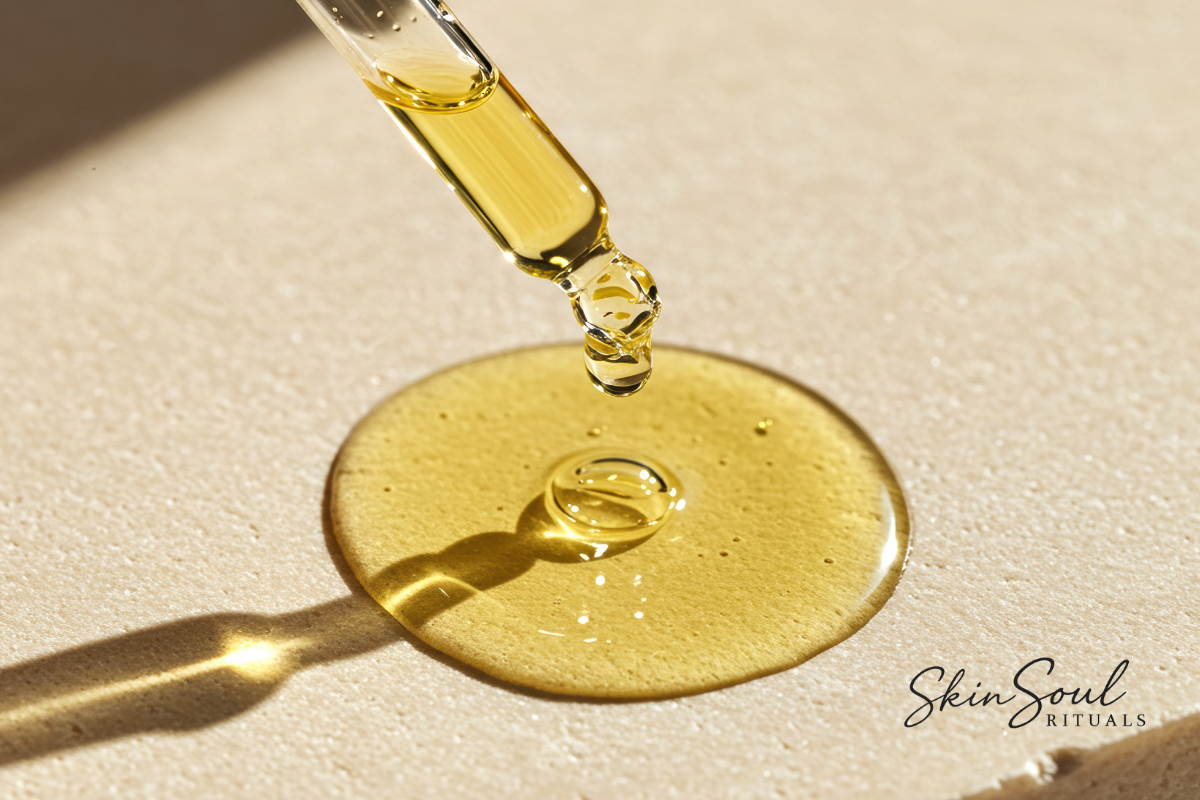
1. Have Medium-to-Long Slip
You want an oil that doesn’t disappear instantly and doesn’t sit heavy on the skin.
Too fast-absorbing = dragging
Too thick = clogged or greasy feeling
The sweet spot is cushioned glide with control.
2. Support the Skin Barrier
Gua sha works best on healthy, resilient skin.
Look for oils rich in:
Fatty acids
Antioxidants
Barrier-supporting lipids
This helps the skin stay calm while you work deeper facial muscles and fascia.
3. Be Non-Irritating
Because gua sha increases circulation, it can amplify whatever you put on your skin.
Avoid:
Synthetic fragrance
Harsh essential oils (the amount and the blend can make a big difference)
Drying alcohols (just say “no”)
Especially if you’re doing evening gua sha or working the jaw and neck.
4. Feel Good Enough to Stay Consistent
This matters more than people realize.
If your oil:
Smells overwhelming
Feels sticky
Breaks you out
You won’t stick with the ritual and consistency is where results come from.
The Best Types of Oils for Gua Sha
Some oils naturally perform better for facial massage and gua sha
Jojoba oil – mimics the skin’s natural sebum with excellent slip
Squalane – lightweight but cushioning
Meadowfoam seed oil – long glide, stable
Rosehip (in small amounts) – supportive, but better blended
Minimal, intentional blends tend to work best for gua sha because they balance slip, absorption, and skin support without overwhelming the skin. Jojoba oil is often considered the best face oil for gua sha because it provides consistent slip without feeling heavy.
Morning vs Evening: Does Oil Choice Matters
Yes, it can especially if you gua sha at night.
Morning gua sha: lighter application, focused on lymphatic drainage
Evening gua sha: slightly richer oil, deeper muscle release
In the evening, you want an oil that stays present long enough to complete your routine without reapplying. Ideally you’ll find one that supports both am/pm.
Why Face Oil Is Essential for Sculpting Results
If your goal is:
Facial sculpting
Lifting appearance
Jaw and cheek definition
Then a good quality oil is a non-negotiable.
Sculpting requires:
Slow strokes
Intentional pressure
Repeated passes
None of that works without consistent slip.
Think of face oil as the foundation of gua sha not an optional add-on.
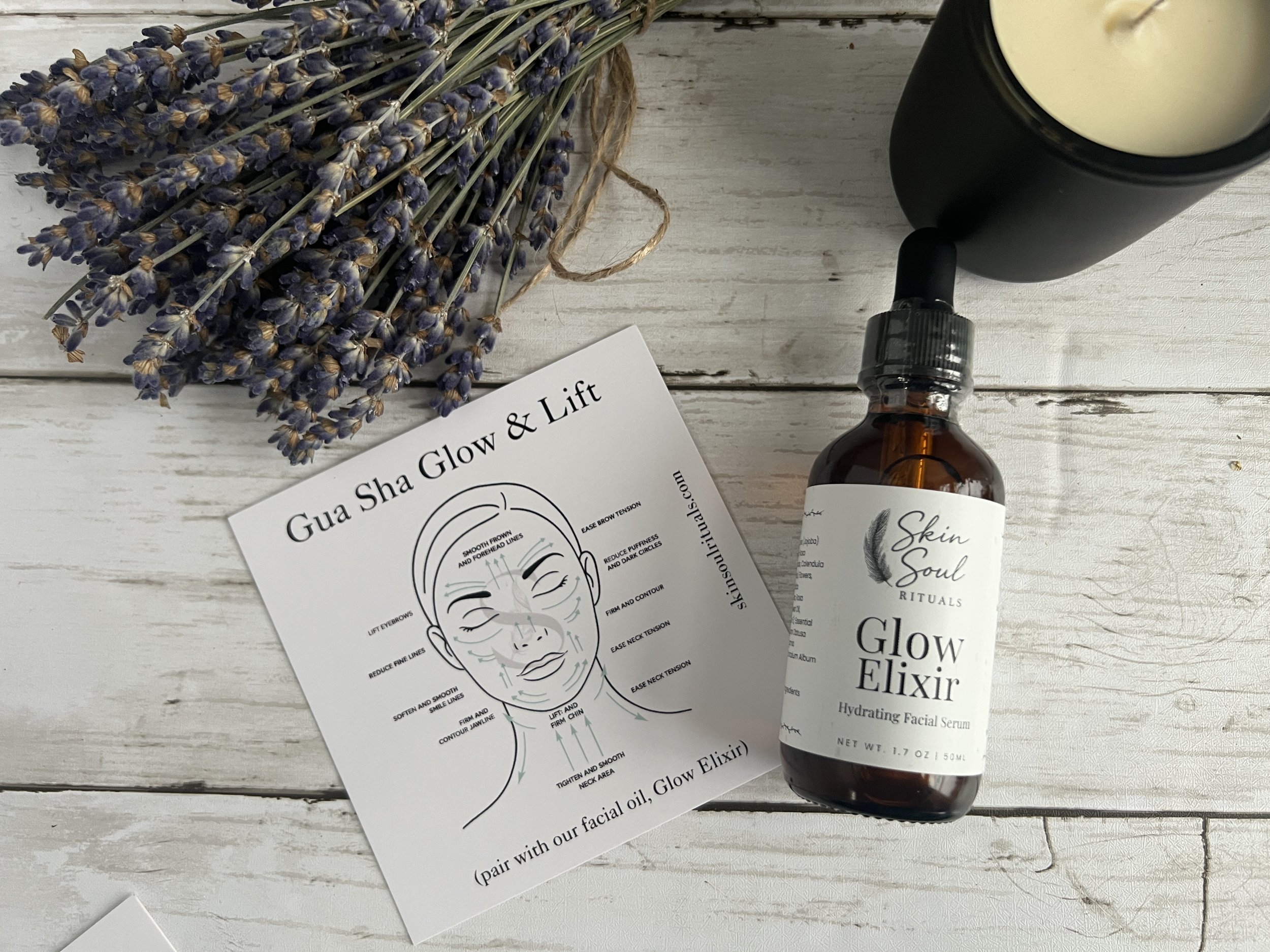
Choosing the Right Oil for Your Gua Sha Ritual
The best face oil for gua sha:
Allows your tool to glide effortlessly
Supports your skin barrier
Feels luxurious enough to use consistently
Enhances the ritual, not just the result
When paired with a thoughtfully designed gua sha tool, the right oil turns gua sha from a technique into a ritual.
Final Thoughts
Slip isn’t just about comfort, it’s about effectiveness.
If gua sha feels uncomfortable, inconsistent, or irritating, changing your oil can completely transform your results.
Choose an oil that works with your skin, not against it and let the ritual do what it’s meant to do.
Morning vs Evening Gua Sha: When Is the Best Time?
Is it better to do gua sha in the morning or evening? Learn how timing affects puffiness, sculpting, and relaxation and how to build a gua sha ritual that actually works.
by Amber Boone, Holistic Aesthetician & Founder of Skin Soul Rituals
One of the most searched questions about gua sha is surprisingly simple:
Is it better to do gua sha in the morning or in the evening?
The answer isn’t one-size-fits-all and that’s actually a good thing.
The best time to do gua sha depends on what your face and nervous system need most, because morning and evening gua sha serve very different purposes.
Let’s break it down so you can choose the right timing or use both for visible, sustainable results.
Why Timing Matters with Gua Sha
Gua sha works by supporting:
Lymphatic drainage
Circulation
Muscle release
Nervous system regulation
Your body processes fluid, tension, and stress differently in the morning than it does at night. That’s why when you do gua sha can change how it works.
Understanding this is what creating an intentional facial ritual is all about.
Morning Gua Sha: Best for Puffiness & Glow
Morning gua sha is ideal if you wake up with:
Facial puffiness
Under-eye swelling
Sinus congestion
A dull or tired complexion
Benefits of morning gua sha:
Helps move lymphatic fluid that builds up overnight
Reduces puffiness and swelling
Boosts circulation for a natural glow
Helps the face look more refreshed and awake
Morning sessions should be short, light, and gentle.
How long?
5-10 minutes is ideal for your morning gua sha routine.
This isn’t the time for de-puffing and a little sculpting.
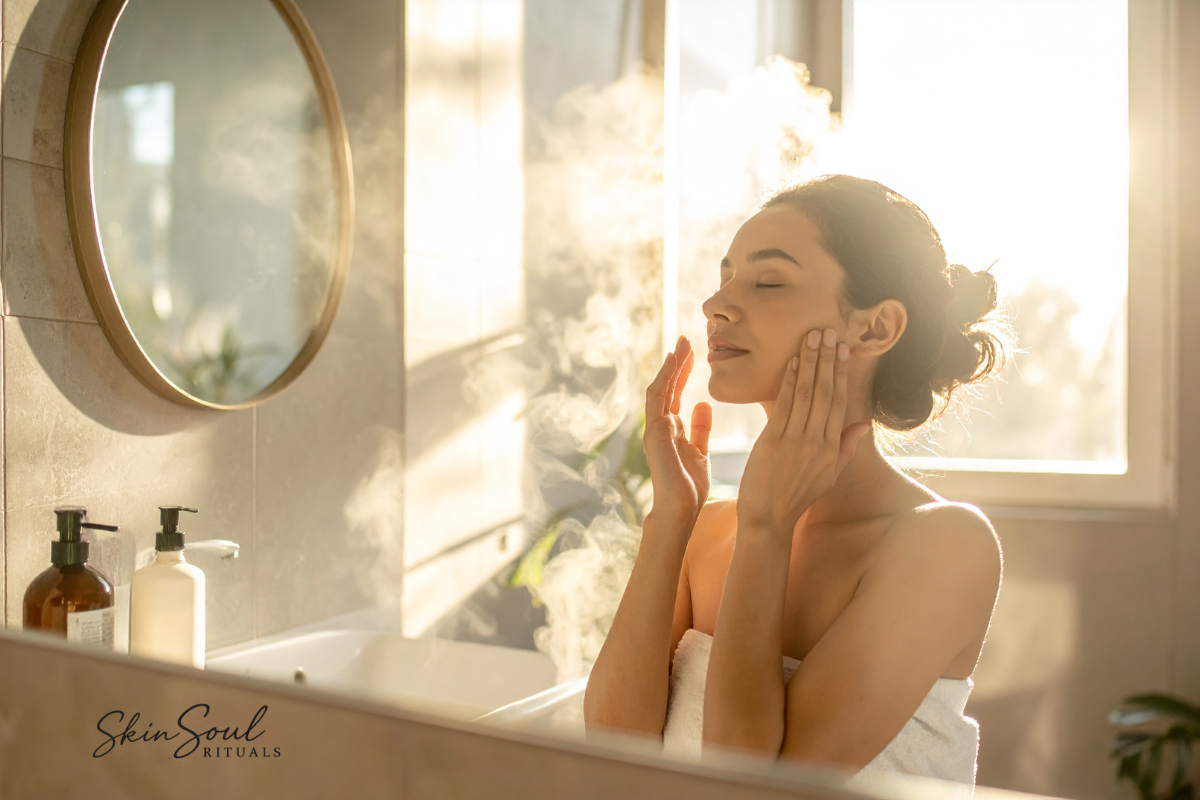
Evening Gua Sha: Best for Tension, Sculpting & Relaxation
Evening gua sha works on a deeper level.
Throughout the day, facial muscles hold:
Jaw clenching
Neck and shoulder tension
Stress patterns that affect the face
Benefits of evening gua sha:
Releases facial and jaw tension
Supports natural lifting and sculpting
Encourages deeper lymphatic flow
Helps calm the nervous system before sleep
Evening gua sha is where long-term results are built.
How long?
5–10 minutes, 3–5 times per week.
This is when you typically can be a little slower and intentional with your ritual.
Morning vs Evening Gua Sha: Key Differences
Morning Gua Sha
Best for: Puffiness, swelling, morning glow
Uses very light pressure
Focuses on lymphatic drainage
Helps move fluid that builds up overnight
Leaves the skin looking refreshed and awake
Takes just 5-10 minutes
Morning gua sha works best when it’s quick, gentle, and calming.
Evening Gua Sha
Best for: Tension release, sculpting, relaxation
Uses slower, more intentional strokes
Helps release jaw, neck, and facial tension
Supports natural lifting and definition over time
Encourages deeper lymphatic flow
Calms the nervous system before sleep
Takes about 5–10 minutes
Evening gua sha is where tightness and tension release happen and it’s a great way to relax the mind and nervous system before bed.
Key Takeaway
If you’re choosing just one time of day, evening gua sha delivers the most visible sculpting and lifting results. Morning gua sha is a beautiful add-on for de-puffing and glow.
Both are going to be effective they just support different goals. I typically fit my gua sha routine in during the morning simply because that’s when I know I will get it done and be consistent. Do what works for you.
So… When Is the Best Time to Do Gua Sha?
Here’s the honest answer:
Evening gua sha delivers the most long-term sculpting and lifting results.
Morning gua sha is a powerful add-on for de-puffing, glow & sculpting.
If you only choose one:
Choose the one that you will be most consistent with. That’s key.
If you want the full benefit:
Doing a gua sha routine 3–5 times per week is what will get you the best results.
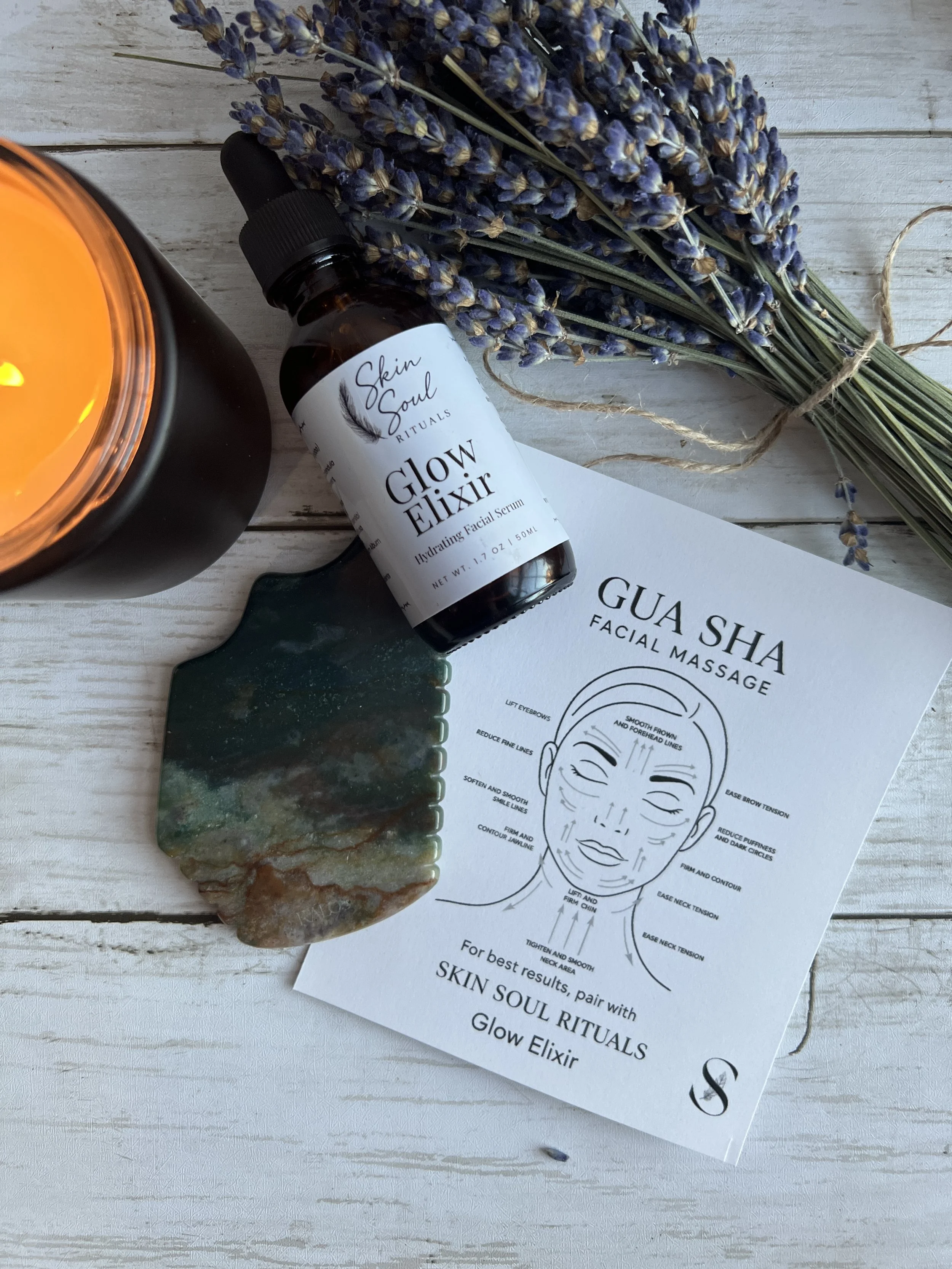
Gua Sha Ritual Kit
Can You Do Gua Sha Both Morning and Night?
Yes, as long as your pressure stays gentle.
A balanced routine might look like:
Evening: intentional sculpting ritual
Morning: quick lymphatic refresh and de-puffing ritual
You don’t need to do a full routine twice a day. Try an am or pm session see which one feels good to you and which one fits best into your routine. If you skip a few days, don’t beat yourself up over it just start again. That’s the beauty of ritual and gua sha you can always start where you are.
Why Face Oil Is Essential (Especially at Night)
Using gua sha without enough slip can cause:
Tugging
Irritation
Micro-stress to the skin
A nourishing face oil:
Protects the skin barrier
Allows smooth, effective strokes
Makes the ritual enjoyable enough to stay consistent
This is why gua sha works best when paired with a thoughtfully formulated oil and not rushed on dry skin.
Turning Gua Sha into a Ritual (Not a Task)
Gua sha shows the best results when it becomes something you want to do. Because let’s be real we don’t need another task on our to-do list. Once you get in the habit of gua sha, I’m convinced you’ll be hooked not only by the results you see but by the way it makes you feel.
Evening gua sha pairs beautifully with:
A calming face oil
Soft lighting or candlelight
Slow breathing
Quiet music or silence
This supports your skin and your nervous system.
Supporting Results with the Right Tools
The Glow & Sculpt Kit was created to support both morning and evening gua sha with a tool designed for gentle effectiveness and an oil that provides the right slip for mature, sensitive skin.
Explore the Glow & Sculpt Kit and build a gua sha ritual that works for you whether thats morning or night.
FAQ
So, morning vs evening gua sha, when is the best time?
Evening is best for sculpting and tension release.
Morning is best for de-puffing and glow.
You don’t have to choose perfectly. You can even switch it up. Try them both.
The key is to be consistent. This is what matters most and that’s where you will see your best results.