

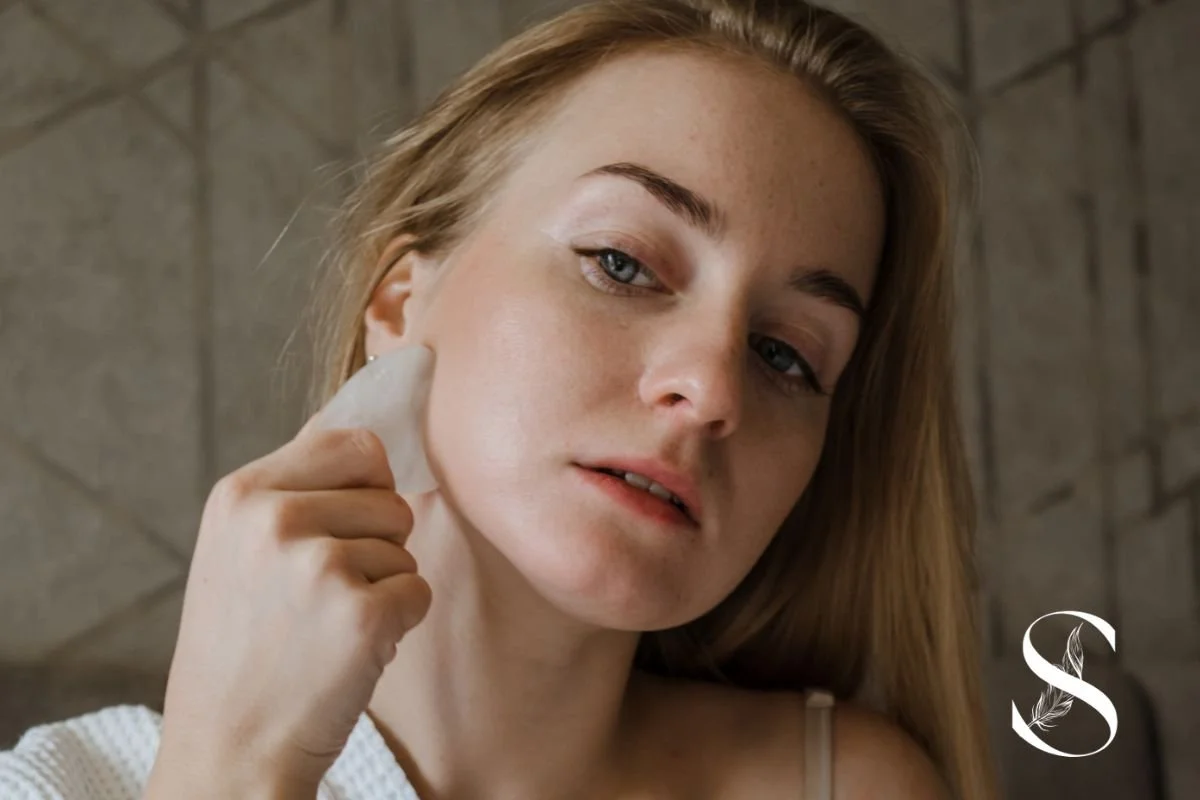
How to Choose Your First Gua Sha Tool: A Holistic Aesthetician's Buying Guide
Walking into the world of gua sha tools can feel overwhelming. Rose quartz or jade? Smooth edge or ridged? Large or small? As a holistic aesthetician who's used dozens of different gua sha tools over 13 years, both professionally and personally, I'm going to cut through the marketing hype and help you choose your first gua sha tool with confidence. Here's what actually matters and what's just noise.
by Amber Boone, Licensed Aesthetician and Founder of Skin Soul Rituals
You've decided to try gua sha. Maybe you've read about the benefits, seen the before-and-after photos, or heard friends raving about their morning gua sha ritual. You're ready to start.
Then you search "gua sha tool" online and you're hit with hundreds of options. Rose quartz. Jade. Bian stone. Amethyst. Heart-shaped. Wing-shaped. Curved edge. Ridged edge. $8 on Amazon. $68 from a luxury brand.
How on earth are you supposed to choose?
As a licensed holistic aesthetician with over 13 years of hands-on experience using gua sha tools, from cheap knockoffs to high-end luxury stones, from traditional shapes to modern designs, I'm going to help you cut through the marketing noise and choose your first gua sha tool with confidence.
Here's the truth: The "best" gua sha tool is the one you'll actually use consistently. But certain features genuinely matter for effectiveness, safety, and comfort. Let me show you what to look for.
Important Disclaimer: I'm a licensed aesthetician, not a medical professional. I cannot diagnose conditions or prescribe treatments. This guide is based on my professional experience and industry knowledge to help you make an informed purchasing decision.
What Actually Matters in a Gua Sha Tool (And What Doesn't)
Let's start by separating fact from marketing hype.
What DOES Matter:
1. Smooth, polished edges (safety) Your gua sha tool must have perfectly smooth edges with no rough spots or chips. You're gliding this across delicate facial skin so any roughness can scratch, irritate, or damage your skin.
2. Proper shape and curves (functionality) The tool should have multiple edges and curves that fit the natural contours of your face, your jawline, cheekbones, under-eyes and forehead. A well-designed shape makes the technique easier and more effective.
3. Comfortable size and weight (usability) Too large and it's unwieldy. Too small and you can't get good leverage. Too heavy and your hand gets tired. Too light and you can't apply adequate pressure. The tool should feel natural and comfortable in your hand.
4. Quality construction (durability and safety) A quality tool is cut from solid stone (not composite or resin), polished thoroughly, and finished properly. Poor-quality tools can have internal cracks, uneven surfaces, or break easily.
5. The right thickness (effectiveness) Tools that are too thin feel flimsy and don't have enough weight to glide smoothly. Tools that are too thick are clunky and hard to maneuver. There's a sweet spot (usually 5-8mm thick depending on the design).
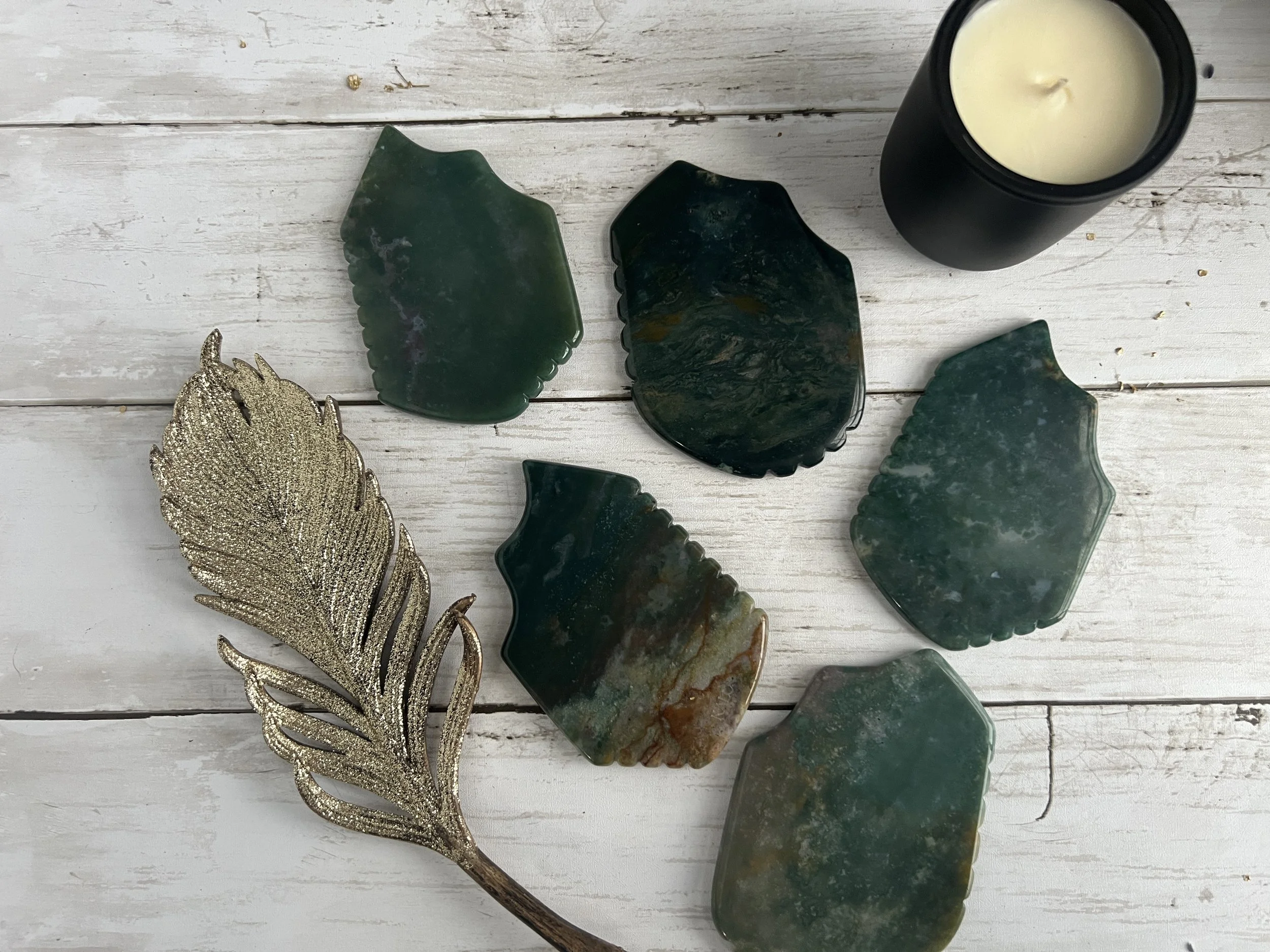
Understanding Gua Sha Stone Materials
Since this is the most commonly asked question, let me break down the different stone options.
The Most Common Materials:
Jade (Nephrite or Jadeite):
Pros: Naturally cool to the touch, durable, smooth when well-polished, traditional choice
Cons: Quality varies wildly (cheap "jade" is often dyed or fake), can be heavy
Best for: People who want a classic, cooling stone and don't mind a bit of weight
My take: Genuine jade is excellent if you buy from a reputable source. Be wary of suspiciously cheap jade, it's often fake.
Rose Quartz:
Pros: Beautiful pink color, smooth texture, moderate weight, popular
Cons: Can be more fragile than jade, often marketed with unproven "love energy" claims
Best for: People who want a lighter tool with a gorgeous aesthetic
My take: Works perfectly well. The "self-love" and "heart chakra" marketing is overhyped, but the stone itself is functional and pretty.
White Jade:
Pros: Clean aesthetic, smooth, cooling, durable
Cons: Can be harder to source in high quality
Best for: People who want jade benefits without the green color
My take: Excellent choice if you find a quality version. Very similar performance to green jade.
Bian Stone (Black Stone):
Pros: Naturally warm rather than cool, unique texture, traditional in Chinese medicine
Cons: Harder to find, can be expensive, marketing claims often exaggerated
Best for: People who prefer warmth over cooling
My take: Functional but not necessary.
Amethyst, Aventurine, Obsidian, Other Crystals:
Pros: Variety of colors and "energetic properties" for those who value crystal healing
Cons: Often more expensive, quality varies, purely aesthetic/energetic preference
Best for: People who connect with specific crystals for personal or spiritual reasons
My take: If you love a particular crystal, go for it. I have my favorites.
Stainless Steel or Metal:
Pros: Extremely durable, can be put in fridge/freezer for extra cooling, hygienic, long-lasting
Cons: Less traditional, some people don't like the feel of metal on skin
Best for: People who want maximum cooling effect and durability
My take: Underrated option. It’s not one I enjoy using.
My Honest Recommendation on Material:
Choose based on:
What feels good to you: Do you want cooling (jade, quartz, metal) or warming (bian stone)?
Quality over type: A high-quality rose quartz beats a cheap, poorly-made jade
Aesthetic preference: If a beautiful stone motivates you to use it daily, that matters
Don't choose based on:
What influencers say is "best" (it's often just sponsored content)
Price (expensive doesn't always mean better)
I personally use ocean agate, white jade stone & aventurine because I love the clean look and they stay naturally cool. But again, the best results are going to come with the stone you are consistent with. Most work if the shape and quality are right.
Understanding Gua Sha Tool Shapes
This matters MORE than most people realize. The shape determines how effectively you can work different areas of your face.
Common Shape Features to Look For:
1. Curved Long Edge (Essential):
Purpose: For sweeping along your jawline, cheekbones, and forehead
What to look for: A smooth, gently curved edge that's 2-3 inches long
Why it matters: This is the workhorse edge you'll use most often
2. Curved Notch or Heart Cutout (Very Helpful):
Purpose: Fits perfectly around your jawbone and chin for sculpting
What to look for: A curved indentation that cradles your jaw
Why it matters: Makes jawline work much easier and more effective
3. Flat or Gently Curved Surface (Important):
Purpose: For broad strokes on your cheeks, forehead, and neck
What to look for: A smooth flat side, large enough to cover area
Why it matters: Allows for efficient coverage of larger areas
4. Small Curved Edge (Helpful):
Purpose: For delicate work under eyes, around nose, on lips
What to look for: A small, gently curved edge (about 1 inch)
Why it matters: Gives you precision in small, delicate areas
5. Pointed or Tapered End (Optional but Nice):
Purpose: For acupressure points, temples, between brows
What to look for: A pointed or rounded tapered end
Why it matters: Allows targeted pressure on specific points
Shapes to Avoid:
Tools that are too flat/rectangular: Without curves, they won't fit your facial contours properly
Tiny tools: Cute but impractical. you can't get good leverage or coverage
My recommendation: Look for a traditional "wing" or "S-shape" design with multiple functional edges. This gives you versatility for all areas of your face.
Size Matters: Finding the Right Dimensions
Gua sha tools come in various sizes. Here's how to choose:
Standard Facial Tool:
Length: 3-4 inches
Width: 2-3 inches at widest point
Thickness: 5-8mm
Best for: Most people, all facial work
Why: Large enough for efficiency, small enough for precision
Larger/Body Tools:
Length: 5-6+ inches
Best for: Body gua sha, large coverage areas, people with larger hands
Skip for your first tool: Start with facial size
Mini/Travel Tools:
Length: 2-3 inches
Best for: Travel, purse carry, very small hands
Consider as second tool: Good for portability, but standard size is more versatile
My recommendation for beginners: Start with a standard-size facial tool (3-4 inches). It's versatile, comfortable to hold, and works for all facial techniques.
Quality Indicators: How to Spot a Good Tool
Not all gua sha tools are created equal. Here's how to identify quality:
Signs of High Quality:
Smooth edges: Run your finger along every edge, no rough spots
Even, consistent polish: The entire surface should be uniformly shiny and smooth
No visible cracks or chips: Inspect carefully, especially edges
Solid, one-piece construction: Not glued, not composite, not hollow
Clear product information: Reputable sellers specify stone type, origin, dimensions
Red Flags (Avoid These):
Suspiciously cheap price: A $5-8 gua sha is likely poor quality (real stone, proper finishing, and quality control cost money)
Rough or gritty texture: Will irritate and damage your skin
Excessive marketing claims: "Detoxifies," "removes wrinkles instantly," "ancient secret"—these are hype
Where to buy quality tools:
Reputable skincare brands (check reviews)
Specialty gua sha or facial tool companies
Aesthetician-created brands (like Skin Soul Rituals!)
Established wellness retailers
Where to be cautious:
Amazon (hit or miss—read reviews carefully, many fakes)
Suspiciously cheap marketplaces
My Top Recommendation for Your First Gua Sha Tool
If you're feeling overwhelmed and just want a clear recommendation, here it is:
Choose a tool with these features:
Material: Jade (white or green) whichever you prefer aesthetically
Shape: Traditional wing/S-shape with curved edges and a heart cutout
Size: Standard facial size (3-4 inches long)
Quality: Smooth, well-polished, solid construction
Price range: $30-50 (sweet spot for quality without overpaying)
This combination gives you:
Effective functionality for all facial techniques
Comfortable, easy-to-use design
Durable, long-lasting tool
Good value for money
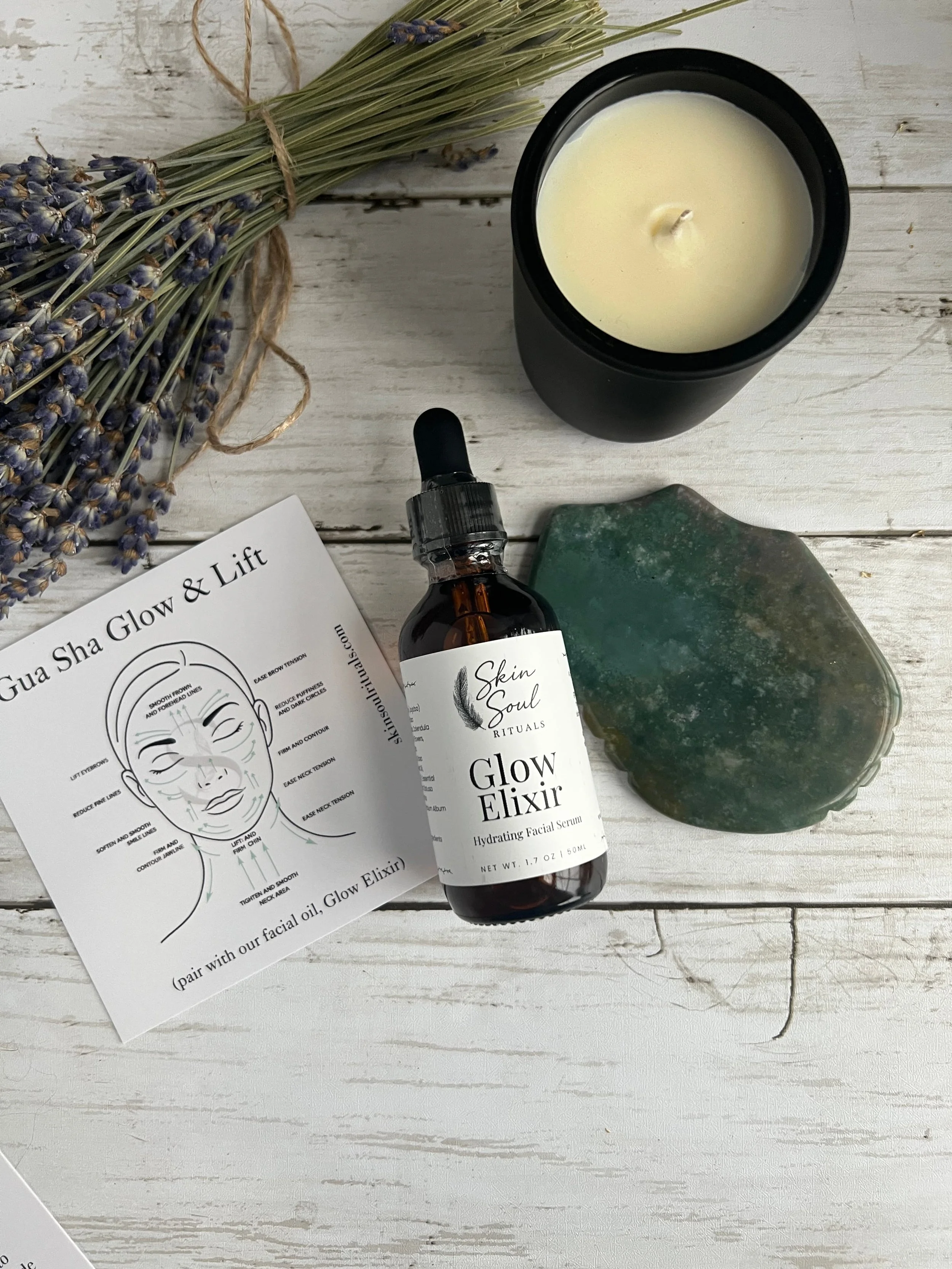
Our Glow & Lift Kit features a carefully sourced professional gua sha stone that I selected specifically for its smooth finish, perfect weight, and versatile shape. The stone has multiple functional edges - a long curved edge for jawline and cheeks, a heart-shaped notch that cradles your jaw perfectly, a small curved edge for under-eyes, and a flat surface for broad strokes. It's the exact tool I use in my own morning routine and durable.
What About the Oil/Serum to Use With It?
Your gua sha tool is only half the equation. You need a facial oil or serum to provide slip so that you never drag a gua sha tool on dry skin.
What to look for in a gua sha oil:
Lightweight enough to glide smoothly
Nourishing enough to benefit your skin during the 5-10 minute massage
Non-comedogenic (won't clog pores)
Pleasant or neutral scent (you'll be breathing it in during your practice)
Made with quality plant oils (jojoba, rosehip, calendula, etc.)
Avoid:
Thick, heavy creams (won't provide enough slip)
Coconut oil (can clog pores for many people)
Fragranced oils with synthetic scents (can irritate)
Random carrier oils without facial-specific formulation
My Glow Serum is formulated specifically for gua sha practice, it provides perfect glide, absorbs beautifully, and nourishes skin with botanical oils. But any quality facial oil will work as long as it gives you smooth gliding without pulling.
Common First-Timer Questions Answered
Q: Can I use the same tool on my body and face? A: You can, but I don't recommend it. Body gua sha uses firmer pressure and can make your facial tool rough over time. If you want to do body work, get a separate, larger tool.
Q: How do I clean my gua sha tool? A: After each use, wash with gentle soap and warm water, dry thoroughly. Store in a clean, dry place.
Q: How long does a gua sha tool last? A: A quality stone tool can last years (even decades) if properly cared for. Avoid dropping it on hard surfaces, stones can chip or crack.
Q: Should I keep it in the fridge? A: Optional but nice, especially for morning de-puffing. The cold enhances anti-inflammatory benefits. Store in a clean pouch or case in the fridge.
Q: What if I accidentally buy a low-quality tool? A: If the edges are smooth and it doesn't irritate your skin, you can still use it while you save up for a better one. If the edges are rough or it's damaging your skin, stop using it and invest in quality.
Q: Do I need different tools for different face shapes? A: No. One well-designed tool works for all face shapes. Adjust your technique and pressure, not your tool.
The Biggest Mistake First-Timers Make
The biggest mistake isn't choosing the "wrong" stone material or getting the "wrong" shape.
The biggest mistake is buying a tool and never learning proper technique.
You can have the most expensive, highest-quality, most beautiful gua sha tool in the world, but if you don't know how to use it correctly, the right pressure, the correct directions, the proper sequence, you won't get the results your after.
Before or immediately after you buy your first tool:
Learn proper technique (take my 5-Day Gua Sha Challenge for free step-by-step guidance)
Watch tutorial videos from licensed aestheticians (not just influencers)
Start slowly and build the habit
Be patient with the learning curve
The tool is just a tool. Your knowledge and consistency make it effective.
Final Thoughts: Keep It Simple
Choosing your first gua sha tool doesn't have to be complicated or stressful.
Here's the simple formula:
Choose a material you like aesthetically (jade is a great starter)
Pick a traditional shape with multiple functional edges
Make sure it's smooth, well-made, and comfortable to hold
Invest in a quality facial oil to use with it
Learn proper technique
Practice consistently
You don't need the most expensive tool, the rarest stone, or the trendiest brand. You need a well-made tool that feels good in your hand and that you'll actually use every day.
Everything else is just noise.
Ready to Start Your Gua Sha Practice?
Want to learn proper technique from the ground up? Join our free 5-Day Gua Sha Challenge where I'll teach you everything you need to know to use your new tool effectively and safely.
Ready to get started with a complete kit? Our Glow & Lift Kit includes a professional-grade gua sha stone and our signature Glow facial oil is everything you need to begin your practice with confidence. I created this kit based on 13 years of professional experience, choosing the exact tools I use in my own daily routine and recommend to clients.