

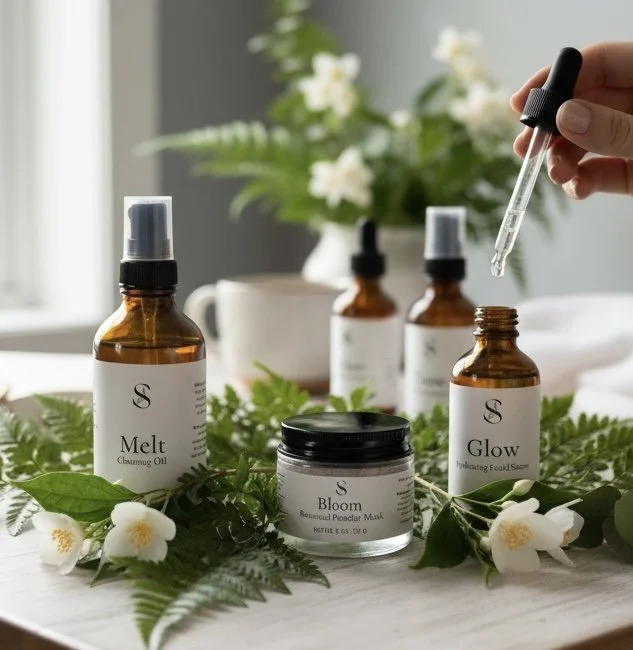
Why Your Skincare Stopped Working in Your 40s
If you've looked in the mirror lately wondering why your favorite moisturizer doesn't work anymore, why your serum just sits on top of your skin, or why your cleanser leaves you tight and stripped, you're not imagining it. Your skin has changed. In your 40s, perimenopause triggers rapid hormonal shifts that fundamentally alter your skin's structure and needs. The products that worked at 35 can't solve the problems your skin has at 45 because those problems are biologically different. You're losing collagen fast (30% in the first 5 years), your barrier is weaker, cell turnover has slowed, and you're producing less natural hydration. This isn't gradual aging, this is your hormones and the good news? There is a clear easy path to adjust your routine to meet your skin’s needs now.
By Amber Boone, Licensed Aesthetician & Founder of Skin Soul Rituals
If you've looked in the mirror lately and thought, "What happened? My moisturizer used to work. My serums used to make my skin glow. Now... nothing," you're not imagining it.
Your favorite products didn't suddenly become ineffective. Your skincare routine didn't fail you randomly.
Something changed. And that something is more than likely related to hormonal changes that come along with perimenopause.
What Happened? Why Did My Skincare Stop Working?
Here's what probably happened:
The cleanser that kept your skin balanced now leaves it tight and stripped.
The moisturizer that used to last all day now absorbs in an hour and your skin still feels dry.
The serum that gave you that glow? It sits on top of your skin and feels like its doing nothing.
The exfoliator that smoothed your texture now irritates and reddens your skin.
You've tried buying more expensive products. You've layered on extra hydration.
And nothing works the way it used to.
Here's the truth that the beauty industry doesn't want to talk about…
This Isn't Aging, This Is Hormonal
Most "anti-aging" skincare is not designed for this.
Your skin in your 40s isn't gradual aging and can sometimes feel like its changed overnight.
It's perimenopause. And perimenopause is hormonal, not chronological.
Here's what that means:
When you were in your 20s and 30s, estrogen was quietly doing a lot of heavy lifting for your skin:
Producing natural oils that kept your barrier strong
Stimulating collagen production to keep skin firm
Helping your skin retain water and stay plump
Supporting cell turnover to keep skin smooth and bright
Regulating oil production to keep skin balanced
Then, somewhere in your late 30s or early 40s, estrogen levels start to fluctuate and decline. Not gradually. Erratically.
Some days high, some days low, all over the place, until eventually, they settle at much lower levels than before.
And when estrogen drops, all those functions it was quietly handling? They drop too.
The 4 Skin Changes That Make Your Products Stop Working
I’m breaking down exactly what's happening and why the products that used to work don't anymore.
Change #1: Your Skin Barrier Is Weaker (Why Your Moisturizer Doesn't Work Anymore)
Think of your skin barrier like a brick wall. The "bricks" are skin cells, and the "mortar" holding them together is made of natural oils (lipids, ceramides, cholesterol).
Estrogen helps your skin produce that mortar.
When estrogen drops, your skin produces less of it. The mortar weakens. The wall develops gaps.
This is why:
Your moisturizer absorbs quickly but your skin feels dry an hour later (the moisture is escaping through the gaps)
Products that never bothered you now sting or burn (irritants are getting through the weak barrier)
Your skin feels sensitive to everything, the weather, fabrics, ingredients (your barrier can't protect you like it used to)
What your old routine was doing: Sitting on top of a strong barrier, adding a little extra hydration.
What your skin needs now: Barrier repair. Not just hydration but actual lipid replenishment to rebuild that mortar.
What works: Oil-based cleansers that don't strip your barrier (like Melt), hydrating mists that prep skin (like Dew), and nourishing facial oils that replace lost lipids (like Glow).
Change #2: You're Losing Collagen Fast (Why Your Serums Don't Firm Anymore)
Here's the number that matters:
In the first 5 years of perimenopause and menopause, women lose approximately 30% of their skin's collagen.
Not 30% over your lifetime. 30% in 5 years.
After that, you continue losing about 2% per year.
This is rapid structural change. Not simply gradual aging.
This is why:
Fine lines that used to appear only when you smiled are now visible all the time
Your skin feels thinner, more fragile, less resilient
Firmness is disappearing and jowls appear, skin starts to sag
Your "anti-aging" serum that worked at 35 barely makes a dent now
What your old routine was doing: Maintaining collagen levels that were naturally strong.
What your skin needs now: Collagen stimulation, but gentle stimulation that won't damage your weakened barrier.
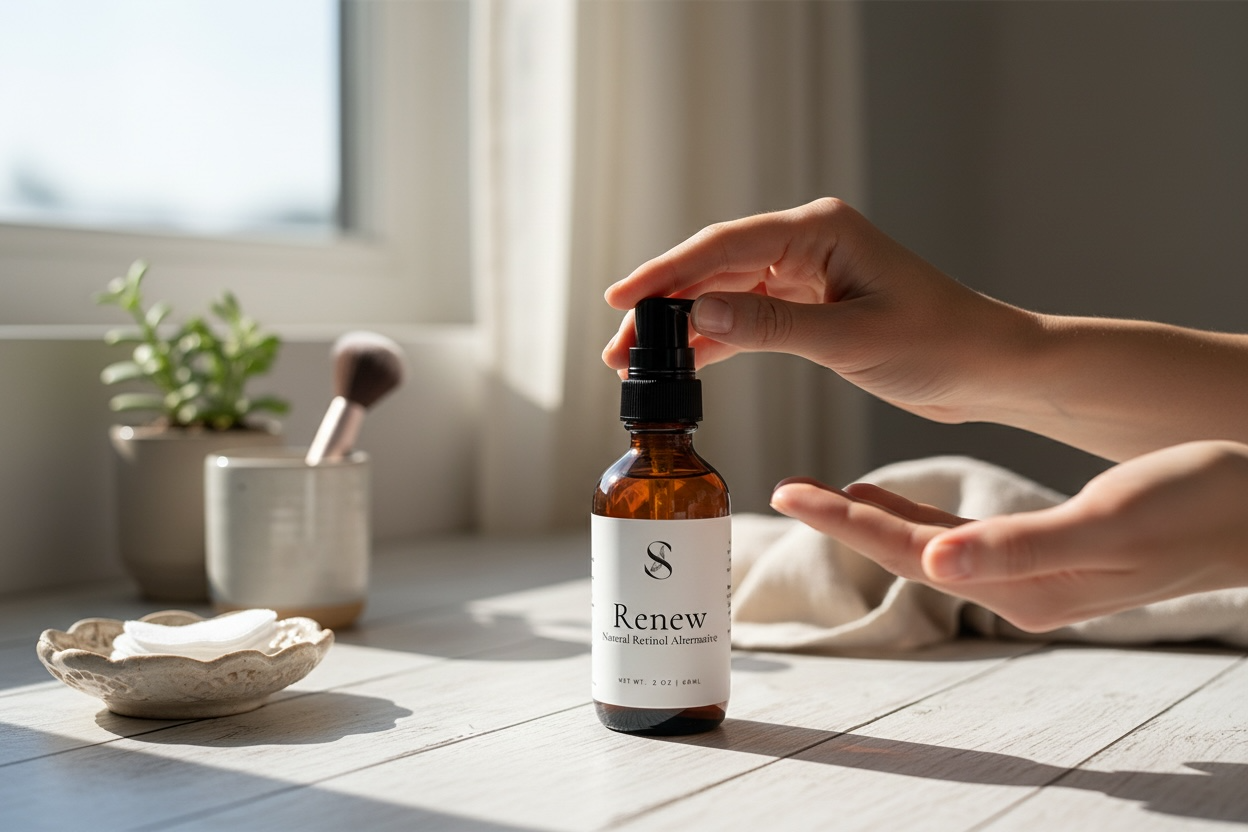
What works: Bakuchiol (the gentle retinol alternative that stimulates collagen without irritation, like in Renew) paired with barrier-supporting oils, not harsh retinol that strips your already-fragile skin.
Change #3: Your Cell Turnover Has Slowed Way Down (Why Exfoliators Don't Brighten Anymore)
When you were younger, your skin renewed itself about every 28 days.
In your 40s and beyond, that can stretch to 40-60 days and sometimes longer.
Dead skin cells stick around longer. New, fresh cells take longer to reach the surface.
This is why:
Your skin looks dull, even when you moisturize
Texture feels rough or uneven
Products seem to sit on top of your skin instead of absorbing
Your old exfoliator (that used to reveal glowing skin) now just irritates without results
What your old routine was doing: Speeding up a naturally fast process.
What your skin needs now: Gentle enzymatic exfoliation that works WITH your slower turnover, not harsh scrubs or acids that damage your barrier.
What works: Clay and botanical-based masks with natural enzymes (like Bloom's blend of marshmallow root, calendula, rose, hibiscus, and gentle clays) plus tremella mushroom for deep hydration while you exfoliate.
Change #4: You're Producing Less Natural Hydration (Why Everything Feels Dry)
Estrogen helps your skin produce hyaluronic acid naturally. The molecule that holds up to 1,000 times its weight in water.
When estrogen drops, your skin produces less of it.
You're also producing fewer natural oils (sebum), which means your skin can't seal in the hydration it does get.
This is why:
Your skin feels chronically dry no matter how much moisturizer you apply
You wake up with dry, flaky patches that never used to be there
Makeup doesn't sit right, it emphasizes texture and dryness
You're constantly reaching for lip balm, hand cream, body lotion
What your old routine was doing: Adding a little extra moisture to skin that was already well-hydrated.
What your skin needs now: Deep hydration PLUS a way to seal it in (because your skin can't do it on its own anymore).
What works: Layering water-based hydration (like Dew's rose hydrosol, aloe, and glycerin) with oil to lock it in (like Glow's calendula-rose infused jojoba and rosehip). Tremella mushroom (nature's hyaluronic acid) also helps, it holds up to 500x its weight in water and is in Bloom.
Why the "Just Use Stronger Actives" Advice Makes It Worse
Here's what probably happened when you noticed your skin changing:
You went to a dermatologist, or read an article, or asked for advice and someone told you:
"Use stronger actives. More retinol. More acids. Exfoliate more. Fight the aging harder."
So you did. And your skin got worse.
Redder. Drier. More irritated. More sensitive.
You thought, "Maybe I need to push through? Maybe my skin needs to adjust?"
But it didn't adjust. It just got more reactive.
Here's why that advice fails perimenopausal skin:
Those "anti-aging" actives were designed for skin with a strong barrier.
Your barrier is now thinner, weaker, and more fragile.
Harsh retinol, glycolic acid, strong exfoliants, they strip your barrier further.
They damage the very thing your skin is desperately trying to protect.
You don't need stronger products. You need different products.
Products that work WITH your changing skin, not against it.
Products that rebuild your barrier while gently supporting collagen.
Products that hydrate deeply AND seal that hydration in.
Products made for hormonal skin changes that meet you where you are now. A simple, effective botanical routine.
What Your Skin Actually Needs Now
If your skincare stopped working, it's not because you need to try harder.
It's because your skin's needs have fundamentally changed.
Here's what works now:
1. Gentle, Oil-Based Cleansing
Your weakened barrier can't handle harsh, foaming cleansers anymore.
You need oil-based cleansers that:
Remove makeup and sunscreen without stripping your natural oils
Emulsify with water (so they rinse clean without residue)
Nourish your skin while cleansing
What this looks like: Melt, an oil cleanser with macadamia nut oil, meadowfoam seed oil, sunflower seed oil, and vitamin E. It melts away makeup and impurities, then emulsifies into a milky texture that rinses clean—all while nourishing your barrier, not stripping it.
Why it works: Oil dissolves oil. You're balancing your skin, not fighting it.
2. Hydration That Actually Stays (Not Just Surface Moisture)
Your skin can't hold onto water like it used to.
You need:
Water-based hydration to plump skin
A way to seal that hydration in (because your skin doesn't produce enough oil to do it naturally)
What this looks like:
Step 1: Dew, a hydrating mist with rose hydrosol, aloe, and vegetable glycerin. It delivers botanical hydration that preps your skin to receive treatment products.
Step 2: Glow, a nourishing facial oil with jojoba (infused with calendula and rose), rosehip, and vitamin E. It seals in all that hydration and replaces the lipids your skin isn't producing anymore.
Why it works: You're layering water and oil—the way your skin used to do naturally before estrogen declined.
3. Gentle Collagen Stimulation
You're losing collagen fast. You DO need to stimulate collagen production.
But you need to do it WITHOUT damaging your fragile barrier.
You need:
Bakuchiol (the gentle retinol alternative that stimulates collagen without irritation)
Nourishing oils that support your barrier while the bakuchiol works
What this looks like: Renew, a bakuchiol serum with 1% bakuchiol in a base of squalane, jojoba, rosehip, macadamia nut, meadowfoam, and sea buckthorn oils. Plus vitamin E, frankincense, and jasmine.
Why it works: Bakuchiol delivers the collagen-boosting benefits of retinol without the peeling, redness, or irritation. It works WITH your barrier, not against it.
4. Gentle Exfoliation + Deep Hydration
Dead skin cells are sticking around longer. You need exfoliation.
But harsh scrubs and strong acids will damage your barrier.
You need:
Gentle clay-based exfoliation that detoxifies without stripping
Botanical enzymes that dissolve dead skin cells (not scrub them off)
Deep hydration AT THE SAME TIME (because your skin is dry!)
What this looks like: Bloom, a powder mask you mix with water. It contains:
White kaolin clay and French pink clay (gentle detoxification)
Marshmallow root, calendula, rose petal, and hibiscus (calming botanicals)
Tremella mushroom (nature's hyaluronic acid—holds up to 500x its weight in water!)
Why it works: You're exfoliating gently while flooding your skin with hydration. You're renewing AND nourishing at the same time.
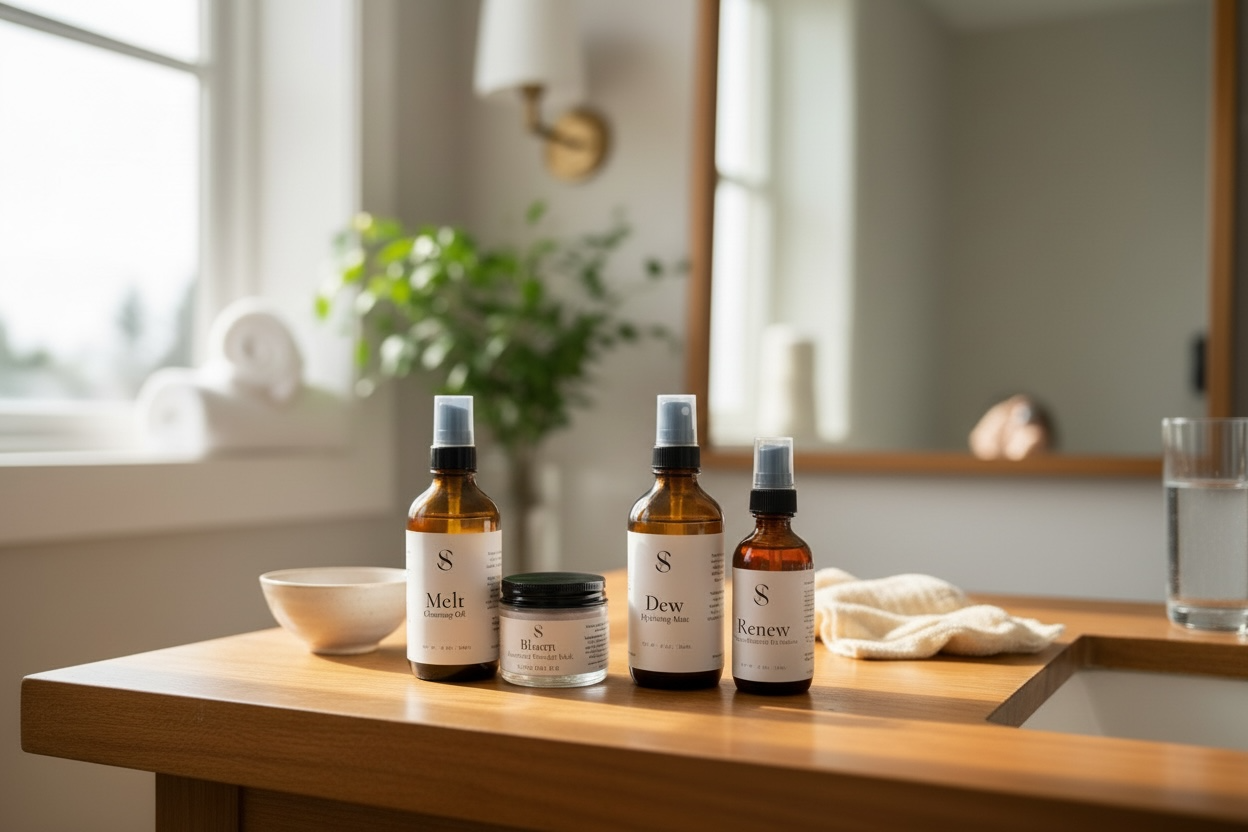
The Simple 3-Step Routine w/weekly exfoliation 1/2 x’s
The Simple Routine That Actually Works for Perimenopausal Skin
If your tired of guessing what will work for your skin. Here's the routine:
MORNING:
Cleanse: Melt (oil cleanser—nourishes while cleansing)
Hydrate: Dew (rose hydrosol mist—preps and plumps)
Treat: Renew (bakuchiol serum—gentle collagen boost)
Seal: Glow (facial oil—locks in hydration, replaces lipids)
Protect: SPF 30+ (mineral sunscreen is gentler)
EVENING:
Same routine (skip the SPF)
WEEKLY (1-2x):
Bloom powder mask (gentle exfoliation + deep hydration with tremella mushroom)
That's it.
No 10-step routine. No harsh actives. No fighting your skin.
Just simple, effective support for what your skin actually needs now.
If You Have Very Sensitive Skin
If your skin has become highly reactive during perimenopause, start even simpler:
Melt, Dew & Calm: Melt, a barrier repair oil cleanser, Dew, a hydrating mist that will soothe irritation (only 4 ingredients) and Calm a soothing serum to calm and heal with only 2 ingredients designed for inflammation and redness.
Perimenopause can make skin incredibly sensitive. Sometimes you need to strip it all back and start with the absolute gentlest option.
Common Questions About Perimenopause Skincare
Q: How do I know if my skin changes are perimenopause or just aging?
A: If you're in your 40s and you've noticed sudden changes such as dryness that appeared seemingly overnight, products that used to work suddenly don't, increased sensitivity, texture changes, that's perimenopause.
Gradual aging happens slowly over decades. Perimenopause skin changes happen in a few years (sometimes months). The speed of change is the giveaway.
Q: Will my skin ever feel "normal" again?
A: Your skin will adapt and stabilize after menopause (when hormone levels settle at a new baseline). But "normal" means something different now.
With the right support, and products made FOR hormonal skin, your skin can feel comfortable, hydrated, and healthy again. Just not in the same way it did at 30. But that’s okay. We want to look our best not necessarily younger.
Q: Can I still use retinol?
A: If your barrier is strong and you've been using retinol for years with no issues, you might be able to continue, but watch for increased sensitivity.
If you're new to retinol or your skin has become sensitive, bakuchiol is the better choice. It stimulates collagen without the irritation, peeling, or barrier damage that retinol causes. It’s my new favorite.
Q: How long until I see results?
A: Barrier repair: 1-2 weeks (skin will feel more comfortable, less tight)
Hydration improvement: 2-3 weeks (plumper, dewier skin)
Collagen stimulation: 4-6 weeks (smoother texture, improved firmness)
Give your skin time. It took months for these changes to develop. Healing takes time too.
Q: Do I really need oil if my skin is oily?
A: Yes. Even if your skin is oily, it's likely dehydrated during perimenopause.
Your skin might be overproducing oil to compensate for the weak barrier and lack of moisture. Adding the right oil (like jojoba, which mimics your skin's natural sebum) can actually balance oil production. Trust me on this one. I know it seem contradicting.
Q: What about diet, sleep, and lifestyle?
A: Absolutely crucial. Your skin is an organ, and it responds to how you care for your whole body.
Sleep: Skin repairs itself at night. 7-8 hours minimum.
Hydration: Drink half your body weight in ounces of water daily.
Stress: Cortisol breaks down collagen. Manage stress actively.
Nutrition: Omega-3s, antioxidants, collagen-building foods matter.
Movement: Circulation = glow. Even 20-minute walks help.
Skincare can't fix internal dehydration, chronic stress, or poor sleep. So make sure your also supporting your skin from the inside out.
The Bottom Line
If your skincare stopped working in your 40s, you didn't do anything wrong.
You're not "bad at skincare."
Your skin changed. Biologically. Structurally. At a cellular level.
The products that worked at 35 can't solve the problems your skin has at 45, because those problems are fundamentally different.
You don't need to fight your skin. You need to support it.
You don't need "anti-aging” skincare. You need perimenopause-specific skincare.
You don't need 10 steps and harsh actives. You need simple, gentle, targeted support:
Barrier repair (oil cleansing, lipid replenishment)
Deep hydration (water + oil layering)
Gentle collagen stimulation (like bakuchiol, sea buckthorn)
Gentle exfoliation + hydration (clay and botanicals with tremella)
Want to hear me walk through this in person? I made a whole video on this exact topic, come hang out:
Ready to Give Your Skin What It Actually Needs?
I created The Skin Reset Collection and it gives you everything you need for perimenopausal skin:
Melt (oil cleanser—nourishes while cleansing)
Dew (hydrating mist—preps and plumps)
Renew (bakuchiol serum—gentle collagen boost)
Bloom (powder mask with tremella—gentle renewal + deep hydration)
Add Glow & Lift Kit (facial oil + gua sha tool) for the final step that promotes circulation and seals in all that hydration and replaces lost lipids.
If your skin is highly sensitive, start with Calm (two-ingredient serum that soothes with just calendula + jojoba).
Shop:skinsoulrituals.com
Subscribe on YouTube:@skinsoulrituals
Sign up to get new blog posts delivered to your inbox: https://skinsoulrituals.myflodesk.com/blog
With Gratitude & Good Skin Days,
Amber, Licensed Holistic Aesthetician (13+ years)
Skin Soul Rituals
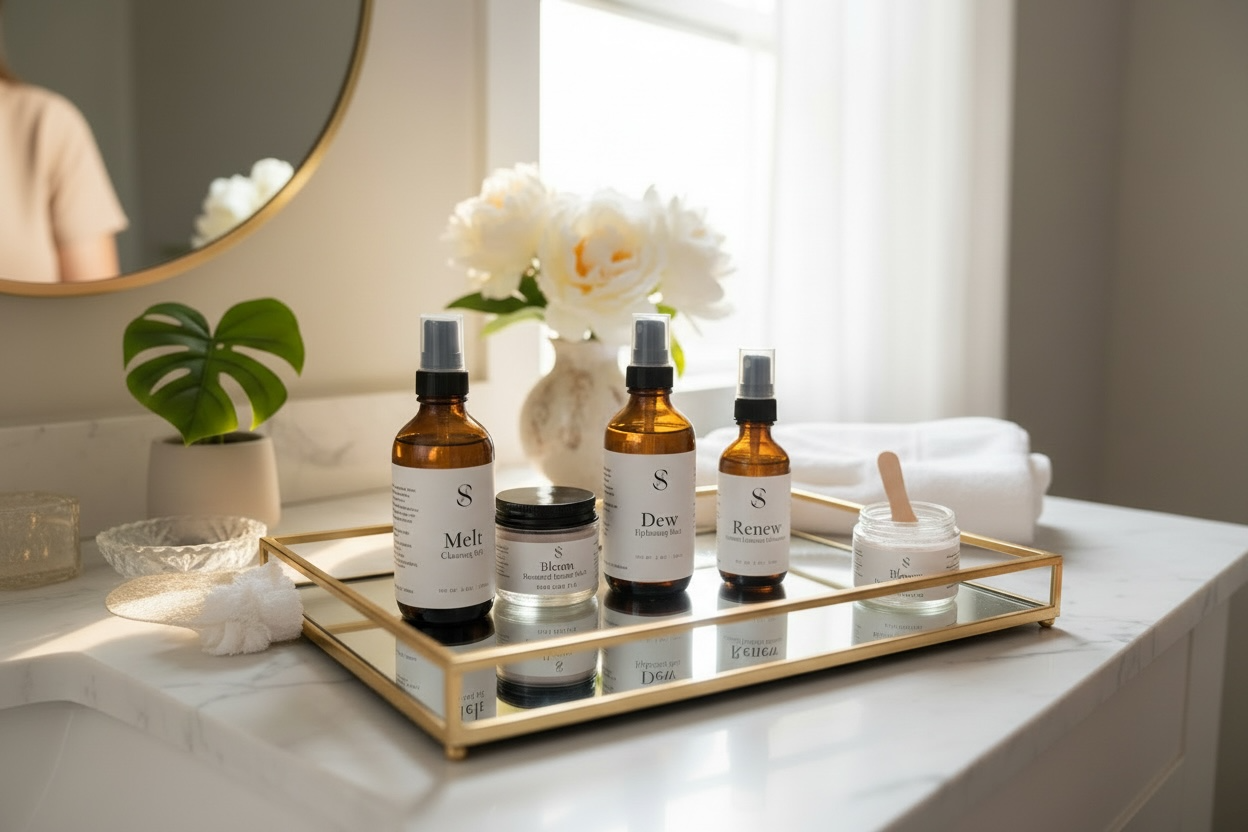
Are Seed Oils Bad for Your Skin? The Truth About Seed Oils in Skincare
If you've been following wellness trends, you've probably heard that seed oils are inflammatory, toxic, and something to avoid at all costs. But does that apply to skincare? As a licensed holistic aesthetician with 13 years of experience formulating botanical products, I'm here to separate the science from the fear-mongering. The truth is more nuanced than social media makes it seem - and understanding the difference between eating seed oils and applying them to your skin changes everything.
by Amber Boone, Holistic Aesthetician & Founder of Skin Soul Rituals
You've seen the videos. The Instagram posts. The passionate warnings about seed oils destroying your health, causing inflammation, and basically ruining everything.
"Avoid seed oils at all costs!" they say. "They're toxic! Inflammatory! Processed!"
And then you look at your favorite face oil, the one that makes your skin glow, and see sunflower oil or jojoba oil listed. You start to wonder: Am I harming my skin?
As a licensed holistic aesthetician with over 13 years of experience formulating botanical skincare, I've been asked this question more times than I can count lately. The seed oil controversy has people genuinely confused and worried about products they've been using safely for years.
Here's what you need to know: The seed oil debate is primarily about diet, not skincare. And the science behind topical use of seed oils is completely different from the concerns about consuming them.
Let me break this down so you can make informed decisions about what you put on your skin.
Important Disclaimer: I'm a licensed aesthetician, not a medical doctor or registered dietitian. I cannot provide medical or nutritional advice. This information is educational and based on dermatological research and my professional experience with botanical skincare ingredients. Always consult your healthcare provider for medical concerns.
What's the Seed Oil Controversy About?
Before we talk about skincare, let's understand where the concern comes from.
The dietary argument:
Critics of seed oils in food argue that:
High omega-6 fatty acid content: Seed oils (canola, soybean, corn, sunflower, safflower, etc.) are high in omega-6 polyunsaturated fats, specifically linoleic acid.
Modern diet imbalance: The Western diet has dramatically more omega-6 than omega-3 fatty acids. The ideal ratio is thought to be around 4:1 or lower; the typical American diet is closer to 16:1 or higher.
Inflammation concerns: Some research suggests that excessive omega-6 intake, especially when out of balance with omega-3s, may promote systemic inflammation.
Oxidation during processing and cooking: Seed oils are often highly processed and refined using heat and chemicals. When heated to high temperatures during cooking, they can oxidize and form harmful compounds.
Industrial production methods: Many commercial seed oils undergo extensive processing, bleaching, deodorizing, chemical extraction and that degrades their nutritional quality.
Is the dietary concern legitimate?
The science is still debating this. Some studies show associations between high omega-6 intake and inflammation; others don't. The quality of the oil (refined vs. cold-pressed), how it's used (high-heat cooking vs. raw), and the overall dietary context all matter.
But here's the key: This entire conversation is about eating seed oils, not applying them to your skin.

Why Topical Use Is Completely Different
Your skin is not your digestive system. The way oils behave when you eat them versus when you apply them to your skin is fundamentally different.
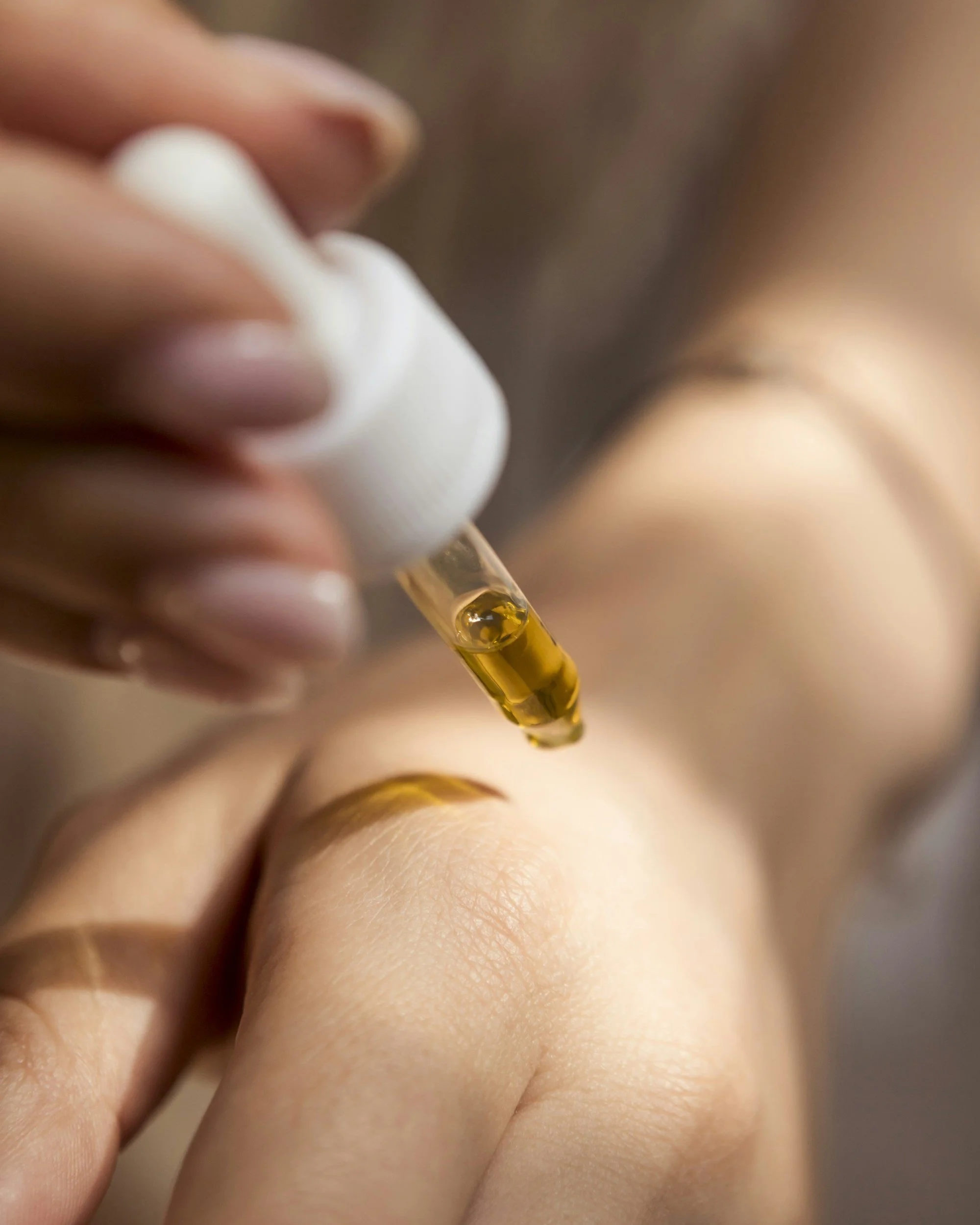
Your Skin Barrier Is Designed to Keep Things OUT
Your skin's outermost layer, the stratum corneum is specifically designed as a protective barrier. It's structured like a brick wall:
The "bricks" are dead skin cells (corneocytes)
The "mortar" is a matrix of lipids (fats)
This barrier exists to prevent things from penetrating into your body. It's remarkably effective at its job.
What this means for oils:
When you apply oil to your skin, the fatty acids in that oil primarily work on and within the barrier layers, not through them into your bloodstream.
The large molecular size of most fatty acids in carrier oils (like those in jojoba, sunflower, or rosehip) prevents them from penetrating deeply enough to enter systemic circulation in meaningful amounts.
What Actually Absorbs Through Skin?
For a substance to penetrate skin and enter your bloodstream in significant amounts, it needs to meet specific criteria:
Molecular size: Generally under 500 daltons (a measure of molecular weight). Most fatty acids in oils are much larger than this.
Lipophilicity/hydrophilicity balance: It needs to be able to cross both oil-loving and water-loving environments. Carrier oils are very lipophilic, which means they interact well with your skin's lipid barrier but don't easily pass through it entirely.
Skin condition: Broken, damaged, or highly compromised skin does allow more absorption but even then, the amount of fatty acids entering circulation from topical oil is minimal.
Things that DO penetrate more deeply:
Essential oils (very small molecules)
Certain pharmaceutical actives (specifically engineered for penetration)
Transdermal patches (medications designed to deliver drugs systemically)
Carrier oils like sunflower, jojoba, or rosehip? They work on the surface and within your barrier, not in your bloodstream.
Linoleic Acid Is Actually GOOD for Your Skin
Here's where it gets really interesting: linoleic acid, the omega-6 fatty acid that's the source of concern in dietary seed oils is actually essential for healthy skin when applied topically.
Research shows:
Linoleic acid is a key component of your skin's natural barrier. Your skin produces its own lipids to maintain barrier function, and linoleic acid is one of the most important.
People with acne-prone skin often have LOW linoleic acid in their sebum. Studies show that sebum low in linoleic acid is more likely to be comedogenic (pore-clogging). Topical linoleic acid can actually help normalize sebum and reduce breakouts.
Linoleic acid supports barrier repair. It helps skin cells produce ceramides (another critical barrier lipid) and reduces transepidermal water loss (TEWL), keeping skin hydrated.
It has anti-inflammatory properties topically. While excessive dietary omega-6 may promote systemic inflammation, topical linoleic acid has been shown to reduce skin inflammation, redness, and irritation.
So the very thing people are afraid of in dietary seed oils is actually beneficial when applied to skin. Context matters.
The Real Concern: Quality and Oxidation
While the "seed oils are inflammatory" argument doesn't hold for topical use, there IS a legitimate concern worth paying attention to: oxidation.
Oxidized oils ARE bad for your skin.
When oils oxidize (go rancid), they form free radicals and peroxides that can damage skin cells, cause inflammation, and accelerate aging.
Oxidation happens when oils are exposed to:
Heat
Light
Oxygen
Time
This is where quality matters enormously:
Refined, heavily processed seed oils (like those used in cheap, mass-market skincare) have often been stripped of their natural antioxidants during processing, making them more vulnerable to oxidation.
Cold-pressed, minimally processed seed oils (like those used in high-quality botanical skincare) retain their natural vitamin E, polyphenols, and other antioxidants that protect against oxidation.
Fresh, small-batch formulations are far less likely to be oxidized than products that have been sitting in warehouses or on shelves for months or years.
This is actually an argument FOR botanical, artisan skincare, not against seed oils themselves, but for choosing high-quality, fresh, properly stored oils over cheap, degraded ones.
The Best Seed Oils for Skincare (And Why They're Worth Using)
Not all seed oils are created equal. Some are exceptionally well-suited for skincare and have been used safely and effectively for decades in professional formulations.
Here are the ones I use and trust:
Jojoba Oil
Technically: Jojoba is a liquid wax, not a true oil, which makes it incredibly stable and resistant to oxidation.
Why it's excellent for skin:
Mimics human sebum more closely than almost any other botanical ingredient
Non-comedogenic (won't clog pores)
Suitable for all skin types, including oily and acne-prone
Balances oil production rather than adding to it
Extremely shelf-stable
The science: Jojoba's unique fatty acid profile (primarily eicosenoic acid) makes it nearly identical to the wax esters in human skin. This is why it absorbs beautifully and rarely causes reactions.
I use jojoba as a base in many of my formulations because it's universally compatible and acts as a carrier for other beneficial botanicals.
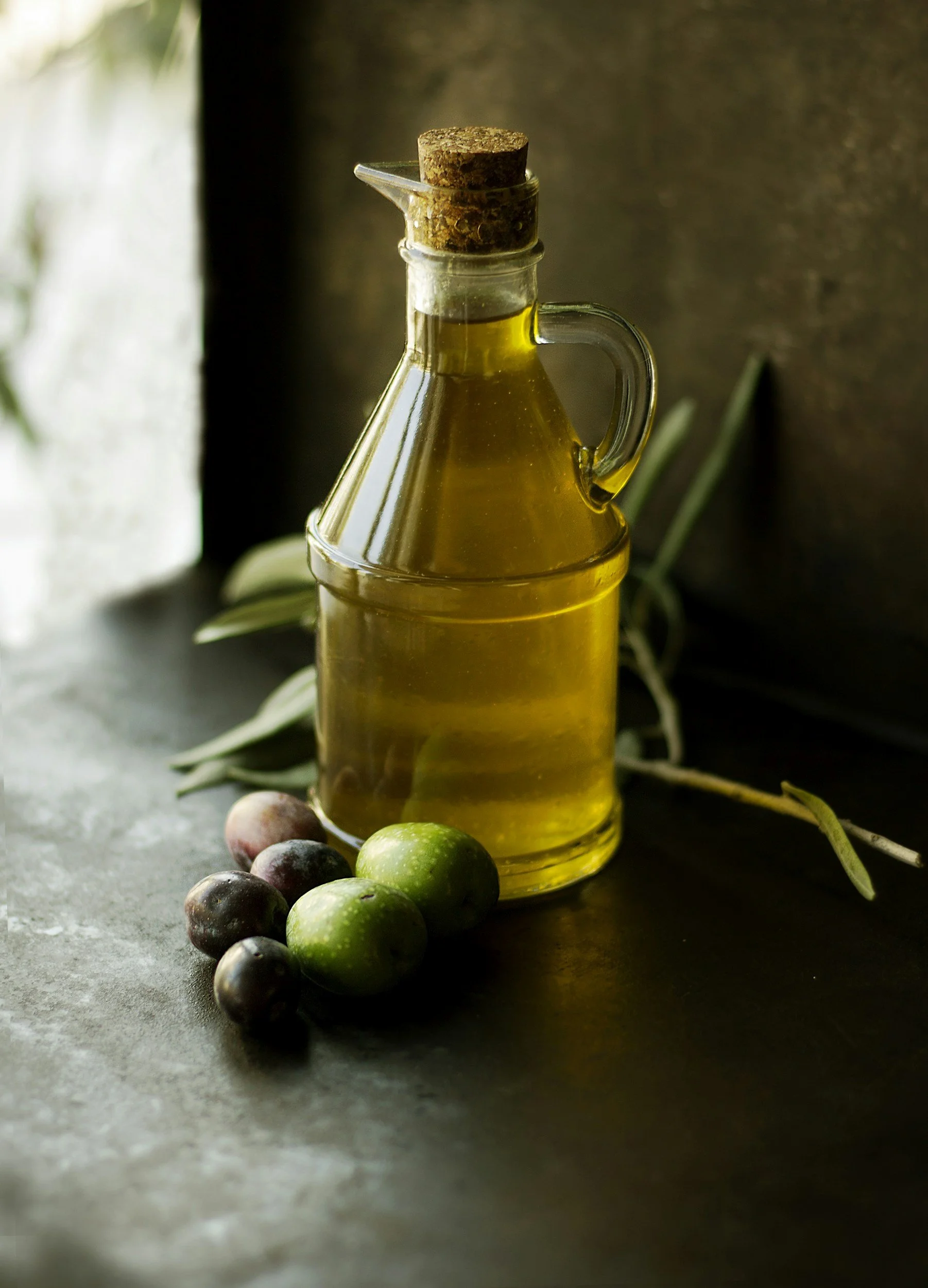
Sunflower Seed Oil
Why it's excellent for skin:
High in linoleic acid (60-70%), which as we discussed, supports the skin barrier
Rich in vitamin E (a powerful antioxidant)
Gentle and suitable for sensitive, dry, and eczema-prone skin
Non-comedogenic when cold-pressed and high-quality
Studies show it actually supports skin microbiome health
The science: Research published in Pediatric Dermatology found that topical sunflower seed oil significantly improved skin barrier function and didn't promote infection (unlike some other oils tested). It's genuinely therapeutic.
The key: Cold-pressed, organic sunflower oil is a completely different ingredient than the highly refined, oxidized sunflower oil used in cheap lotions.

Meadowfoam Seed Oil
Why it's excellent for skin:
Exceptionally stable and resists oxidation far better than most seed oils
Forms a protective, non-greasy film on skin that locks in moisture
Rich in long-chain fatty acids that support skin elasticity
Actually extends the shelf life of other oils when blended with them
The science: Meadowfoam contains over 98% long-chain fatty acids, including eicosenoic acid (like jojoba). This unique composition makes it one of the most stable natural oils available.
This is a formulator's secret ingredient and it makes other oils work better and last longer.
Rosehip Seed Oil
Why it's excellent for skin:
High in linoleic acid (supports barrier)
Rich in trans-retinoic acid (a natural form of vitamin A that supports cell turnover and anti-aging)
Packed with vitamin C and antioxidants
Helps fade hyperpigmentation and scars
Lightweight despite being deeply nourishing
The science: Studies show rosehip oil improves skin elasticity, reduces wrinkles, and fades post-inflammatory hyperpigmentation. It's one of the most research-backed botanical oils for anti-aging.
The quality matters here, cold-pressed, organic rosehip oil stored in dark glass is potent. Cheap, oxidized rosehip oil doesn't deliver the same benefits.

Sea Buckthorn Seed Oil
Why it's excellent for skin:
Rare source of omega-7 fatty acids (palmitoleic acid), which decline in skin as we age
Incredibly rich in antioxidants (vitamins A, C, E, and carotenoids)
Supports skin regeneration and wound healing
Anti-inflammatory and soothing
The science: Omega-7 is naturally abundant in young, healthy skin but decreases significantly with age. Topical application helps replenish what's lost, supporting a more youthful lipid profile.
How to Know If a Seed Oil Product Is High-Quality
Not all products containing seed oils are created equal. Here's how to identify quality:
✓ Look for:
Cold-pressed or expeller-pressed oils
Organic certification
Dark glass bottles (protects from light oxidation)
Recent manufacturing dates
Minimal ingredient lists
Clear sourcing information
Storage instructions (keep in cool, dark place)
✗ Avoid:
"Refined" seed oils high on ingredient lists
Products in clear plastic bottles
Old stock (especially if discounted because it's been sitting)
Strong, off, or rancid smells (sign of oxidation)
Products with seed oils listed after a long list of synthetic ingredients
The freshness factor: Small-batch, artisan skincare has a real advantage here. Products made fresh in small quantities and sold quickly are far less likely to oxidize than mass-market products made months ago and sitting in warehouses.
What About "Seed Oil Free" Skincare?
You'll see some brands marketing themselves as "seed oil free" to capitalize on the dietary controversy.
Here's the truth: This is mostly marketing.
Avoiding seed oils in skincare isn't necessary for skin health. In fact, eliminating beneficial oils like jojoba, rosehip, and sunflower means missing out on ingredients with proven barrier-supporting, anti-inflammatory, and anti-aging benefits.
What they replace seed oils with:
Often saturated fats like coconut oil or shea butter (which can be comedogenic for some skin types)
Synthetic alternatives
Sometimes just fewer beneficial ingredients overall
When "seed oil free" makes sense: If you have a documented allergy to a specific seed oil, absolutely avoid it. But that's individual sensitivity, not a blanket reason to avoid an entire category of beneficial ingredients.
My Professional Take: Quality Over Category
After 13 years a licensed aesthetician and formulating botanical skincare, working with hundreds of clients with every skin type and concern, here's what I know to be true:
The fear of seed oils in skincare is misplaced. It's based on a dietary conversation that doesn't translate to topical use.
Quality matters infinitely more than category. A fresh, cold-pressed, organic sunflower oil is exponentially better for your skin than a rancid, oxidized, "seed-oil-free" alternative.
Your skin needs fatty acids. Linoleic acid, oleic acid, palmitoleic acid, these are not your enemies. They're essential components of healthy skin.
Small-batch, botanical formulations have a real advantage in this conversation. Fresh oils, minimal processing, proper storage, these are what protect against oxidation and deliver real benefits.
I grow my own calendula, source my oils carefully, formulate in small batches, and store everything properly because I understand the science. Quality is everything.
Final Thoughts: Trust the Science, Not the Fear
The wellness world loves a good villain. First it was gluten, then it was lectins, now it's seed oils. There's always something to be afraid of.
But skincare shouldn't be driven by fear, it should be driven by science, quality, and understanding what actually works for your skin.
Seed oils, when chosen carefully and used properly, are some of the most beneficial ingredients in botanical skincare. They support your barrier, reduce inflammation, nourish deeply, and have decades of safe use and research backing them.
The conversation about dietary seed oils is worth having, how they're processed, how they're used in cooking, how they fit into your overall diet. But that's a completely separate discussion from whether jojoba or rosehip oil belongs in your face serum.
Your skin is not your stomach. Topical is not the same as internal. Quality matters more than category.
Choose fresh, cold-pressed, organic botanical oils from trusted sources. Store them properly. Use them confidently.
About the Oils in Skin Soul Rituals
Every oil I use in my formulations, jojoba, sunflower, meadowfoam, macadamia, rosehip, sea buckthorn is chosen for its proven skin benefits, carefully sourced, and used fresh in small-batch production.
I formulate with the same oils I trust on my own skin and recommend to clients. Quality, freshness, and botanical integrity are non-negotiable.
Explore the Skin Soul Rituals collection to see how these beautiful seed oils work in practice, nourishing, supporting, and enhancing your skin's natural health and glow.
Calendula for Eczema: What It Is, Why It Works, and How to Use It Safely
If you or your child struggles with eczema, you know the exhausting cycle: flare-ups that appear without warning, skin so irritated it cracks and bleeds, the desperate search for something, anything, that soothes without stinging or making it worse. As a licensed holistic aesthetician with over 13 years of experience working with sensitive, compromised skin, I've seen calendula transform eczema-prone skin when almost nothing else worked. Here's the science behind why this gentle botanical is so effective, and how to use it safely for both children and adults.
by Amber Boone, Holistic Aesthetician & Founder of Skin Soul Rituals
You've tried the creams. You've read the labels. You've watched your child scratch at skin that just won't calm down and you're tired of reaching for the hydrocortisone knowing it's only a temporary fix.
There's a botanical that's been quietly working for centuries. And the research on it is really solid.
Important Disclaimer: I'm a licensed aesthetician, not a medical doctor or dermatologist. I cannot diagnose or treat medical conditions. Eczema (atopic dermatitis) is a medical condition that should be managed with guidance from your healthcare provider. This information is educational and based on my professional experience and current research. Always consult with your doctor before trying new treatments, especially for children.
What Is Calendula?
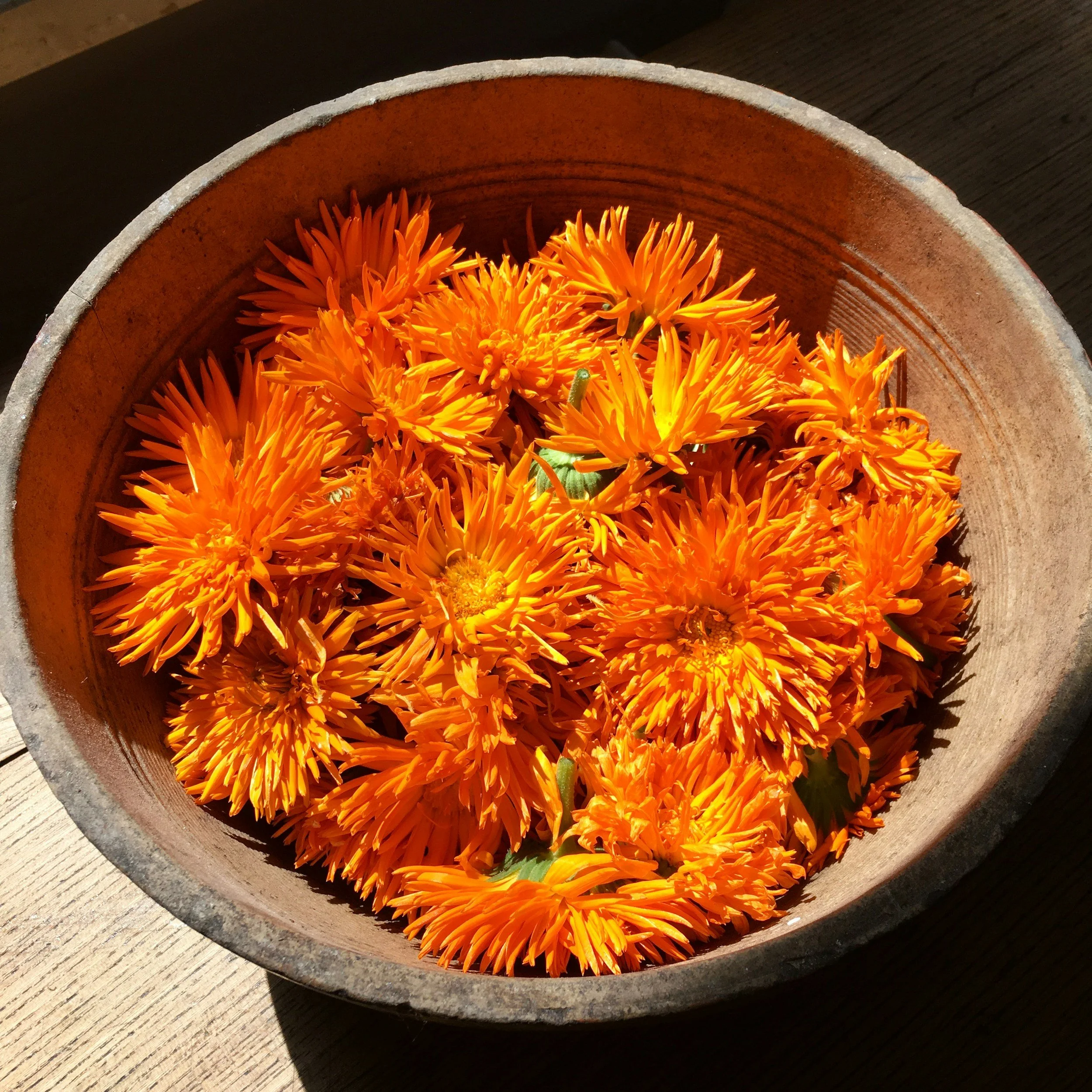
Calendula officinalis, commonly called pot marigold is a bright orange-yellow flower that's been used medicinally for centuries. It's not the same as the marigolds you see in garden centers (those are Tagetes); calendula is its own distinct plant with a long history in herbal medicine.
Traditional uses of calendula: Throughout history, calendula has been used topically for wounds, burns, skin inflammation, rashes, and infections. Herbalists called it "wound herb" because of its ability to support healing and reduce inflammation.
What makes calendula special for skin: The flowers contain powerful anti-inflammatory, antimicrobial, and skin-soothing compounds including:
Flavonoids (anti-inflammatory and antioxidant)
Triterpenoids (promote wound healing and tissue repair)
Carotenoids (antioxidant protection)
Essential oils (antimicrobial properties)
When these compounds are extracted from the flowers, typically through oil infusion they create a gentle but effective topical treatment that's safe enough for the most delicate skin, including babies and children.
Understanding Eczema (So You Know Why Calendula Helps)
Before we talk about how calendula works, you need to understand what's actually happening with eczema so the mechanism makes sense.
What eczema is: Atopic dermatitis (the medical term for eczema) is a chronic inflammatory skin condition characterized by a compromised skin barrier, immune system overreaction, and extreme sensitivity to triggers.
What's happening in eczema-prone skin:
Damaged skin barrier: Your skin's outermost layer normally acts like a brick wall, skin cells are the bricks, lipids (fats) are the mortar. In eczema, this wall is faulty. The "mortar" is deficient, creating gaps that allow:
Moisture to escape (causing dryness)
Irritants, allergens, and bacteria to penetrate (causing inflammation)
Overactive immune response: When irritants get through the damaged barrier, the immune system overreacts, releasing inflammatory chemicals that cause redness, swelling, itching, and pain.
The itch-scratch cycle: Itching triggers scratching, which further damages the barrier, which allows more irritants in, which causes more inflammation and itching. It's a vicious cycle.
Microbial imbalance: Eczema-prone skin often has an overgrowth of Staphylococcus aureus bacteria, which produces toxins that worsen inflammation.
Common eczema triggers:
Harsh soaps and detergents
Fragrances and synthetic chemicals
Wool and rough fabrics
Temperature extremes and sweating
Stress
Allergens (food, environmental)
Dry air
Why most products make it worse: Many conventional skincare products contain ingredients that further damage the barrier, sulfates, alcohol, synthetic fragrances, preservatives that irritate. Even products marketed for "sensitive skin" can contain hidden irritants.
This is where calendula comes in. It addresses multiple aspects of the eczema problem at once.
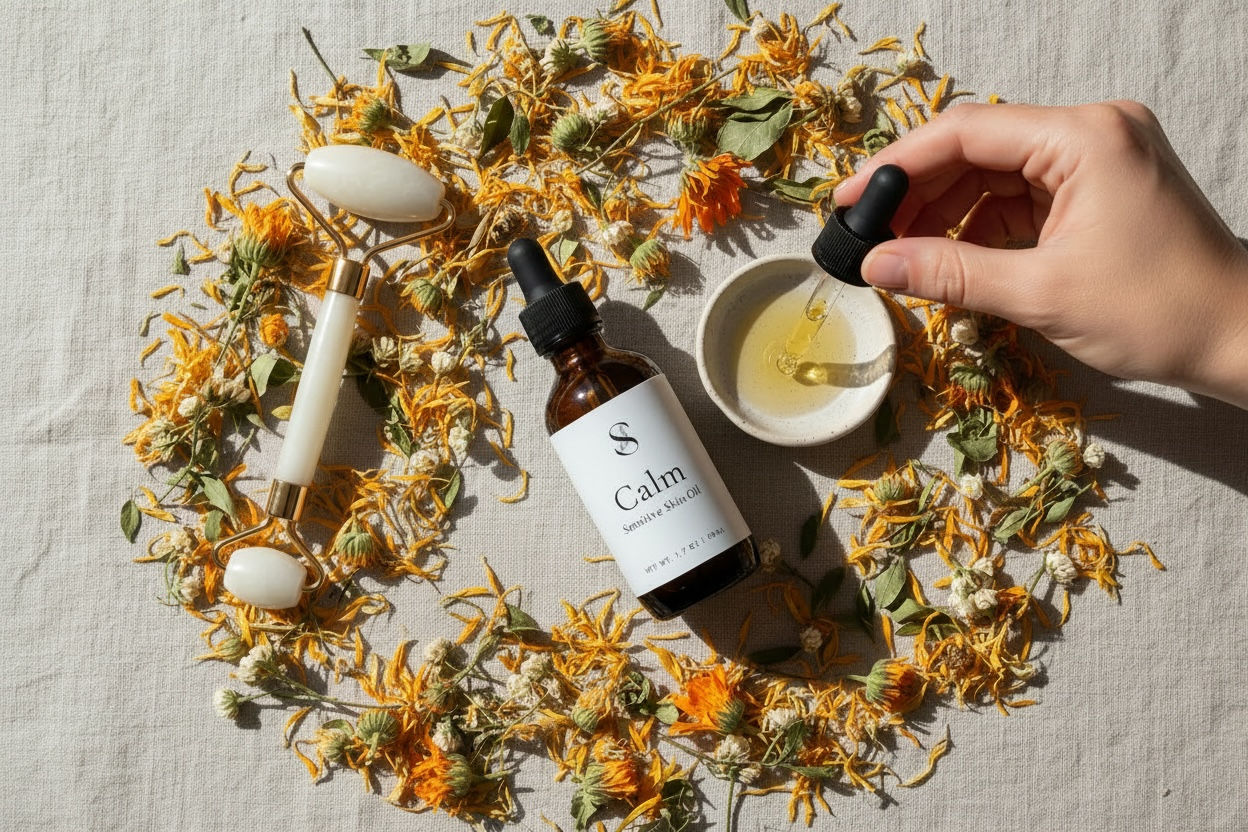
Skin Soul Rituals | Jojoba & Calendula Oil
How Calendula Helps Eczema: The Science
Calendula isn't a cure for eczema, there is no cure. But research shows it can significantly reduce symptoms, support the skin barrier, and calm the inflammatory response that drives flare-ups.
Here's what calendula does for eczema-prone skin:
1. Powerful Anti-Inflammatory Action
The primary benefit of calendula for eczema is its anti-inflammatory effect. Studies show that calendula extracts significantly reduce inflammation markers in the skin.
How it works: The flavonoids and triterpenoids in calendula inhibit the inflammatory pathways that cause redness, swelling, and pain. It's gentler than hydrocortisone but works through a similar anti-inflammatory mechanism.
What this means for eczema: Less inflammation = less redness, less swelling, less discomfort. The angry, hot feeling that comes with flare-ups calms down.
2. Supports Wound Healing and Skin Repair
Calendula has been extensively studied for wound healing. It promotes the formation of new tissue, increases collagen production, and speeds up epithelialization (the process of skin growing back over wounds).
How it works: The triterpenoids stimulate fibroblast activity (the cells that produce collagen and repair tissue). Calendula also increases blood flow to the area, bringing nutrients and oxygen needed for healing.
What this means for eczema: The cracked, broken skin that comes with severe eczema heals faster. The skin barrier repairs more efficiently, reducing vulnerability to irritants.
3. Antimicrobial Properties
Calendula has natural antimicrobial activity against bacteria, fungi, and some viruses, including Staphylococcus aureus, the bacteria that commonly overgrows in eczema.
How it works: The essential oils and other compounds in calendula disrupt bacterial cell membranes and inhibit their growth.
What this means for eczema: Reduces the risk of infected eczema (a common and painful complication). Helps rebalance the skin's microbiome.
4. Soothes Itching and Discomfort
While the mechanism isn't fully understood, calendula has a documented soothing effect on itchy, irritated skin.
What this means for eczema: Breaking the itch-scratch cycle is crucial. If you can reduce the urge to scratch, you prevent further damage to the barrier.
5. Hydrates Without Irritation
When calendula is infused into a carrier oil (like jojoba), it delivers moisture and nourishment to dry, damaged skin without any of the irritating ingredients found in conventional creams.
What this means for eczema: Hydration supports barrier function. Eczema skin is chronically dehydrated, and calendula-infused oil provides essential fatty acids and moisture that compromised skin desperately needs.
The Research: What Studies Show
I'm not just recommending calendula based on tradition or anecdote, there's actual research backing its use for inflammatory skin conditions.
Key studies:
A 2009 study published in the Journal of Clinical Oncology compared calendula cream to trolamine (a common anti-inflammatory) for radiation-induced dermatitis (which shares characteristics with eczema). Calendula was significantly more effective at preventing and reducing skin inflammation.
A 2012 study in Advances in Therapy found that calendula extract reduced inflammation and promoted wound healing in skin injuries.
Multiple studies have confirmed calendula's antimicrobial activity against S. aureus, the bacteria implicated in eczema flare-ups.
While there aren't large-scale clinical trials specifically on calendula for atopic dermatitis, the anti-inflammatory, wound-healing, and antimicrobial properties documented in research directly address the mechanisms of eczema.
Calendula Oil vs. Calendula Cream: What's the Difference?
You'll find calendula in different forms, creams, ointments, salves, and oils. Here's what you need to know:
Calendula-infused oil:
Dried calendula flowers steeped in a carrier oil (jojoba, olive, sunflower, etc.) to extract the beneficial compounds
Pure, simple, minimal ingredients
Excellent for very sensitive skin because there are no emulsifiers, preservatives, or additives
Absorbs well, nourishes deeply
Best for: Daily moisture, barrier support, gentle treatment
Calendula cream/ointment:
Calendula extract or infused oil mixed with water, emulsifiers, and often preservatives to create a spreadable cream
May contain additional beneficial ingredients (colloidal oatmeal, shea butter, etc.)
Can be more convenient for some people
Risk: Additional ingredients may irritate sensitive skin
Best for: People who prefer cream texture over oil
My professional recommendation for eczema: Pure calendula-infused oil in a gentle carrier oil is the safest, most effective option, especially for children and severely compromised skin. The fewer ingredients, the lower the risk of irritation.
How to Use Calendula Oil for Eczema
Using calendula correctly matters. Here's my protocol based on years of working with eczema-prone clients:
Step 1: Choose the Right Calendula Oil
Not all calendula oils are created equal. Look for:
High-quality carrier oil: Jojoba is ideal because it's non-comedogenic, shelf-stable, and mimics skin's natural sebum. Olive, sunflower, and sweet almond oil are also good choices.
Organic calendula flowers: Pesticides and chemicals defeat the purpose of using a gentle botanical.
Proper extraction method: Heat or cold infusion extracts the beneficial compounds. Avoid products that just add calendula fragrance or have "calendula" far down the ingredient list.
Minimal ingredients: The best calendula oil for eczema is just two ingredients.
Step 2: Patch Test First
Even gentle ingredients can cause reactions in highly sensitive skin. Before using calendula oil all over:
Apply a small amount to the inside of the forearm
Wait 24-48 hours
Check for any redness, itching, or irritation
If clear, proceed to use on affected areas
Step 3: Apply to Damp Skin
Oil works best when applied to slightly damp skin, it seals in moisture rather than sitting on top of dry skin.
The routine:
Bathe or wash the affected area with lukewarm (not hot) water and a gentle, fragrance-free cleanser (or just water for babies)
Pat skin mostly dry but leave it slightly damp
Apply a few drops of calendula oil to your palm
Warm it between your hands
Gently press and massage into the affected areas, don't rub vigorously, use gentle patting and pressing motions
Allow it to absorb for a few minutes
Step 4: Use Consistently
For active flare-ups: Apply 2-3 times daily (morning, midday if needed, and before bed)
For maintenance: Apply once or twice daily to prevent flare-ups
For children: Apply after bath time and in the morning, more frequently during cold, dry weather
Step 5: Combine with Other Eczema Management Strategies
Calendula works best as part of a comprehensive approach:
Avoid known triggers
Use gentle, fragrance-free cleansers
Keep nails short to minimize damage from scratching
Dress in soft, breathable fabrics
Use a humidifier in dry climates
Manage stress (stress worsens eczema significantly)
Work with your doctor on any underlying allergies or immune issues
Is Calendula Safe for Babies and Children?
This is one of the most common questions I get, and it's the right question to ask.
Yes, calendula is generally considered safe for babies and children when used topically.
Here's what you need to know:
Safety profile: Calendula has been used for centuries on infants and young children. It's one of the gentlest botanicals available and has a very low risk of allergic reaction.
Precautions for babies:
Always dilute: Use calendula-infused oil, not pure essential oil or alcohol-based extracts
Patch test first, even on babies
Avoid eyes, mouth, and any open, weeping wounds (wait until the acute phase calms)
Use organic, pure formulations with minimal ingredients
Consult your pediatrician before starting any new treatment, especially for infants under 6 months
Why parents choose calendula for children's eczema: Parents are rightfully cautious about using steroids on young children. While topical steroids prescribed by a doctor are sometimes necessary, many parents want gentler options for daily maintenance and mild flare-ups. Calendula offers that.
What Results to Expect (And When)
Let me set realistic expectations so you're not disappointed or give up too soon.
Within 24-48 hours:
Reduced redness and inflammation
Less intense itching
Skin feels more comfortable and soothed
The "angry" feeling of a flare-up starts to calm
Within 1 week:
Visible reduction in redness and swelling
Cracked skin begins to heal
Less frequent scratching
Improved sleep (if itching was disrupting sleep)
Within 2-4 weeks:
Skin barrier function improves
Flare-ups become less frequent
Affected areas start to look and feel more like normal skin
Overall skin texture smoother and healthier
Long-term (2-3 months of consistent use):
Significantly fewer flare-ups
Baseline skin health much improved
Less dependency on rescue treatments like steroids
Better tolerance of previously triggering situations (weather changes, stress, etc.)
Important: Calendula is not a cure. Eczema is chronic and will require ongoing management. But calendula can dramatically reduce symptom severity and frequency when used consistently.
When Calendula Alone Isn't Enough
Calendula is incredibly effective for mild to moderate eczema and as a maintenance treatment. But there are situations where you need more intervention:
See a doctor if:
Eczema is severe, widespread, or getting worse despite treatment
Skin shows signs of infection (yellow crusting, oozing, increased pain, fever)
Eczema is significantly impacting quality of life or sleep
You suspect an underlying allergy or trigger that needs identification
Home treatments aren't providing adequate relief
Calendula works well alongside medical treatment: Many dermatologists actually support using gentle botanicals like calendula for maintenance between steroid treatments. It's not an either/or as it can be both.
Choosing a Quality Calendula Product
If you're buying rather than making your own calendula oil, here's what to look for:
Ingredient list should be short: Ideally just: [Carrier oil] infused with Calendula Officinalis Flower, Tocopherol (Vitamin E)
Avoid:
Long ingredient lists with chemicals you can't pronounce
Synthetic fragrances (even "unscented" products can have masking fragrances)
Alcohol, parabens, sulfates
Calendula listed far down the ingredient list (means there's very little actual calendula)
Look for:
Organic or wildcrafted calendula
Cold-pressed or properly infused oils
Dark glass bottles (protect from light degradation)
Clear information about sourcing and extraction method
Where to buy:
Reputable natural skincare brands
Herbalists and botanical product makers
Aesthetician-formulated products (like Skin Soul Rituals)
Avoid: Random Amazon listings, suspiciously cheap products
My Personal Experience with Calendula for Eczema
I want to share why I'm so passionate about calendula for eczema beyond just the research.
Over my 13 years as a holistic aesthetician, I've worked with dozens of clients, adults and children, struggling with eczema. I've seen the physical discomfort, the emotional toll, the frustration with products that promise relief but deliver irritation.
Calendula has been one of my most consistently effective recommendations. Not because it's trendy or profitable, but because it genuinely works and it's safe.
I grow calendula in my own garden specifically because I want complete control over the quality of what goes into the products I create. I harvest the flowers at peak bloom, dry them carefully, and infuse them slowly into organic jojoba oil. The resulting oil is simple, pure, and effective.
That's the power of simple, quality botanical skincare, it doesn't need a marketing team or celebrity endorsement. It just needs to work.
Final Thoughts: Gentle, Effective, and Safe
If you or your child struggles with eczema, you don't have to choose between effective and gentle. Calendula offers both.
It won't cure eczema, nothing will. But it can significantly reduce inflammation, support your skin's natural barrier, calm itching, and help you manage flare-ups without harsh chemicals or constant steroid use.
The key is consistency, quality, and patience. Give calendula at least 2-4 weeks of daily use before deciding if it's working. Support it with gentle skincare practices, trigger avoidance, and medical guidance when needed.
Your skin (or your child's skin) deserves care that doesn't cause more harm in the process of trying to heal. Calendula is that kind of care, ancient wisdom backed by modern research, gentle enough for the most delicate skin, and effective enough to make a real difference.

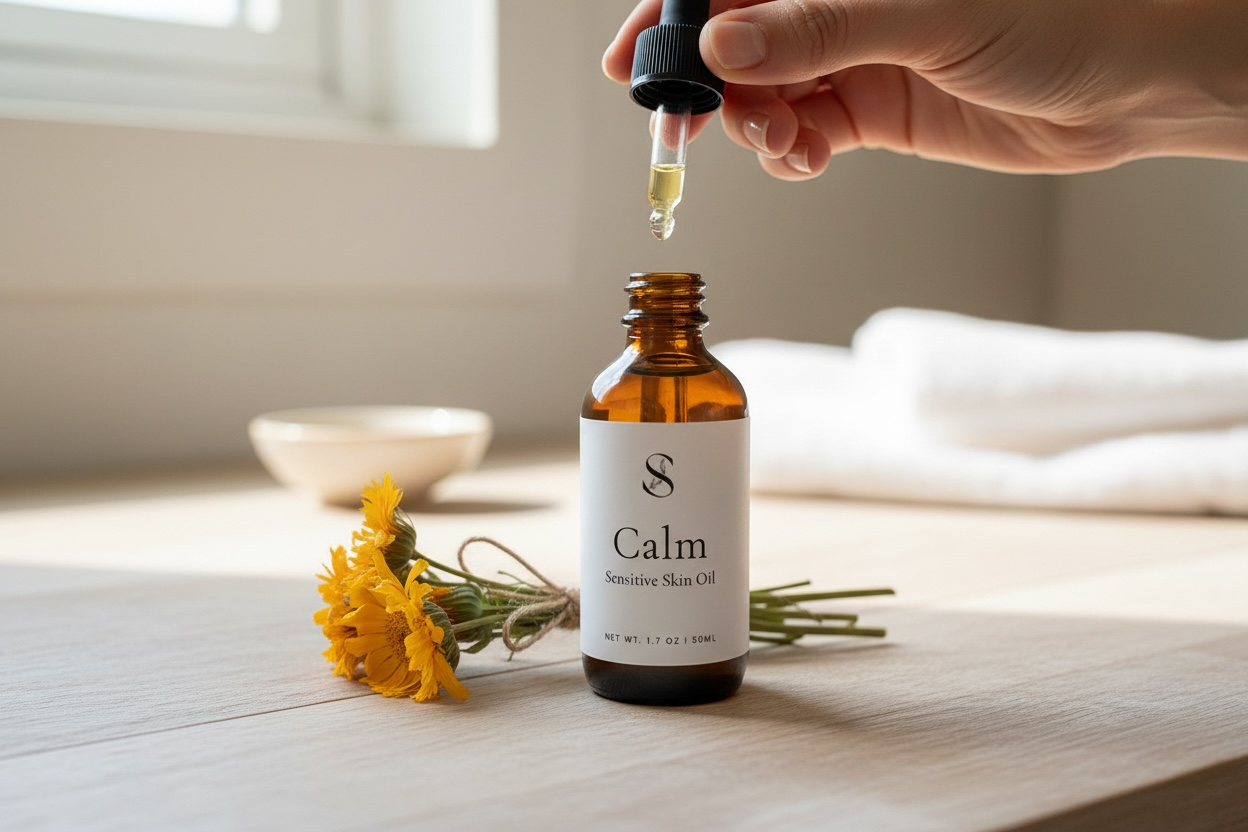
Calm Sensitive Skin Oil | Skin Soul Rituals
Ready to try Calm for yourself?
I formulated Calm specifically for eczema-prone, reactive, and sensitive skin, including children's. Two ingredients. Calendula flowers, infused into organic jojoba oil. Nothing else.

The Complete Gua Sha Guide: Everything You Need for Lifted, Sculpted, Glowing Skin
You've seen the before-and-after photos. The glowing skin, the lifted jawlines, the sculpted cheekbones. You've wondered if gua sha could actually work for you, for your skin, your concerns, your busy life. As a holistic aesthetician who's practiced gua sha for over 13 years, I'm giving you everything: the science, the techniques, the realistic timelines, the mistakes to avoid, and the truth about what this ancient practice can and cannot do. Whether you have 5 minutes or 15, sensitive skin or mature skin, this is your complete roadmap to making gua sha work for you.
By Amber Boone, Holistic Aesthetician & Founder of Skin Soul Rituals
You've been scrolling. Seeing the photos. Watching women with glowing skin, defined jawlines, and that effortless radiance you want to have too.
They're all talking about gua sha.
And you're wondering: Could this actually work for me?
Maybe you've already bought a stone that's been sitting in a drawer because you're not sure you're doing it right. Or maybe you haven't started yet because you're overwhelmed, too many videos, conflicting advice, no clear path forward.
Maybe you're skeptical. You've tried things before that promised results and delivered nothing. You don't have time for another skincare trend that doesn't work.
Here's what I want you to know: Gua sha is not a trend. It's a 2,000-year-old practice that actually works when you understand how to do it properly, what to expect, and how to make it fit into your real life.
I'm Amber, a licensed holistic aesthetician with over 13 years of hands-on experience. I've used gua sha in my treatment room with hundreds of clients. I've practiced it on my own face almost every day for years. I've seen the transformation it creates not through filters or perfect lighting, but through consistent, intentional practice.
This guide is everything I wish someone had told me when I started. It's comprehensive but not overwhelming. It's honest about what works and what doesn't. And it's designed to meet you exactly where you are, whether you're a complete beginner or someone who's been practicing but not seeing the results you want.
By the end of this guide, you'll know:
Exactly what gua sha does (and doesn't do) for your skin
How to choose the right tool and use proper technique
What results to expect and when
How to customize your practice for YOUR specific goals
The common mistakes that sabotage results
How to fit this into your life, even if you only have 5 minutes
You don't need to become an expert overnight. You just need to start with the right information, the right tools, and the right support.
Let's do this together.
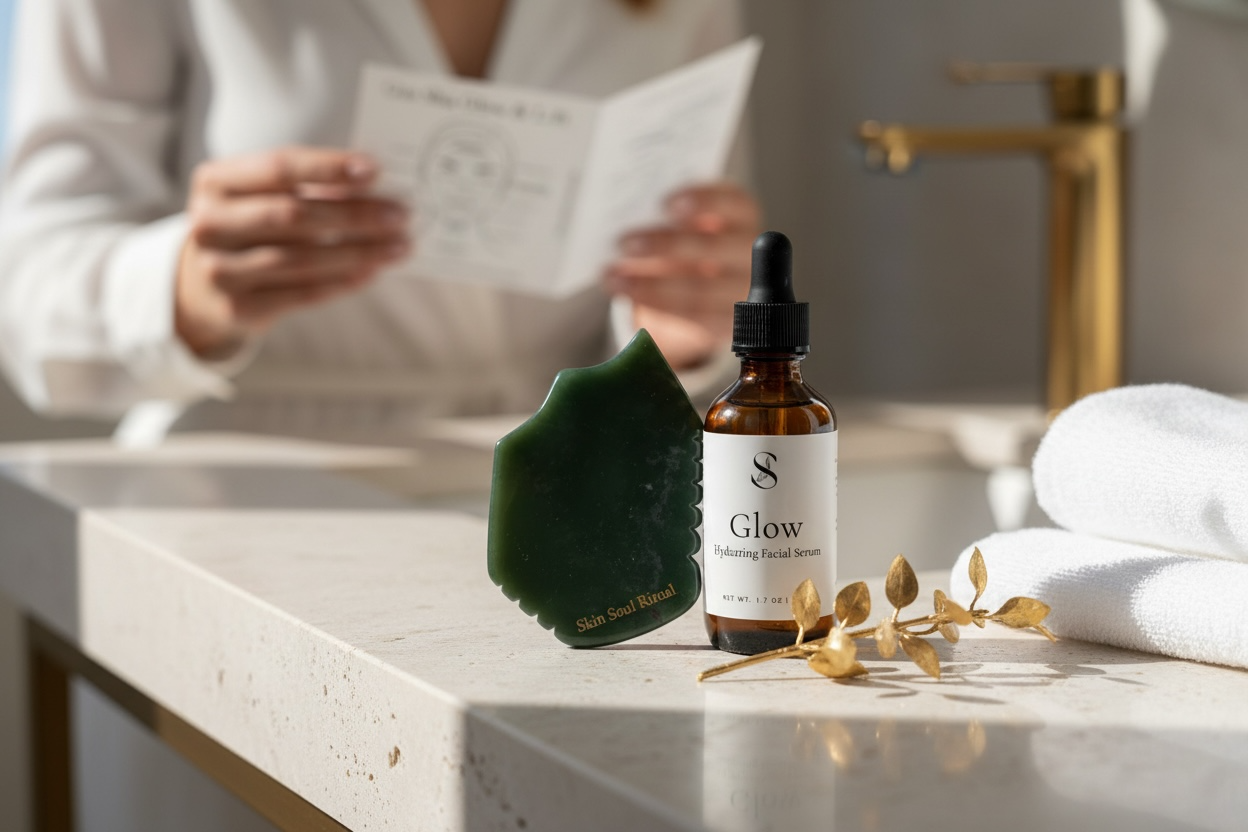
Part 1: What Gua Sha Actually Is (And Why It Works)
The Ancient Practice, Modernized
Gua sha (pronounced "gwah-shah") comes from traditional Chinese medicine. The term literally translates to "scraping sand"—referring to the light, speckled marks that sometimes appear on skin after treatment.
Traditionally, gua sha was used on the body to release muscle tension, improve circulation, and move stagnant energy (called "qi" in Chinese medicine). Practitioners used smooth-edged tools made from jade, horn, or stone to apply pressure and gliding strokes along specific pathways.
Modern facial gua sha adapts this ancient technique for the delicate skin and muscles of the face. Instead of the deeper pressure used on the body, facial gua sha uses gentle, intentional strokes to:
Drain lymphatic fluid
Release facial muscle tension
Increase circulation
Stimulate collagen production
Sculpt and lift facial contours
It's the same foundational principles—just refined for the specific needs of your face.
What Happens When You Do Gua Sha
Here's the science behind why this works:
Lymphatic drainage: Your lymphatic system is your body's waste removal and immune support network. Unlike your circulatory system (which has your heart as a pump), your lymphatic system relies on muscle movement and manual stimulation to move fluid.
Your face has a complex network of lymph vessels, and fluid easily pools there, especially after sleeping flat all night, eating salty foods, or experiencing hormonal changes. When lymphatic fluid stagnates, your face looks puffy, swollen, and dull.
Gua sha manually moves this fluid toward your lymph nodes (located primarily at your neck and near your ears) where it can be filtered and drained. The result? Immediate depuffing and a lighter, more sculpted appearance.
Increased microcirculation: The gentle pressure and gliding motions stimulate blood flow to your skin's surface. Fresh, oxygenated blood brings nutrients and removes waste products. This is what creates the immediate "glow" you see after a session, your skin is literally more oxygenated and nourished.
Muscle tension release: You hold tension in your face just like you do in your shoulders. Clenching your jaw, furrowing your brow, squinting and this creates chronic muscle tightness that pulls your face down and creates wrinkles.
Gua sha releases this tension, allowing muscles to relax and lengthen. When facial muscles aren't chronically contracted, your face looks more lifted, open, and youthful.
Collagen stimulation: The micro-pressure from gua sha signals your skin cells to produce more collagen and elastin, the proteins responsible for firmness, elasticity, and youthful structure. This is a gradual process, but with consistent practice over weeks and months, it genuinely improves skin quality.
Nervous system regulation: The slow, intentional practice activates your parasympathetic nervous system (rest mode), reducing stress hormones like cortisol. Lower stress = less inflammation = healthier, calmer skin.
What Gua Sha Can Realistically Do
Let's be clear about what's possible and what's hype.
Gua sha CAN:
Reduce puffiness and fluid retention (immediately and cumulatively)
Sculpt and define your facial contours over time
Release chronic muscle tension (jaw, temples, forehead)
Soften fine lines caused by dehydration or muscle tension
Improve circulation for brighter, more radiant skin
Support lymphatic drainage for clearer skin
Provide a gentle, cumulative lifting effect
Reduce inflammation and calm reactive skin
Help your skincare products absorb better
Gua sha CANNOT:
Change your bone structure
Erase deep wrinkles or reverse significant sun damage
Work miracles in one session
Fix severe skin issues that require dermatological care
Substitute for healthy lifestyle habits
Think of gua sha like exercise for your face. One workout won't transform your body, but consistent practice over time creates real, visible change
The bottom line: Gua sha works. But it requires consistency, proper technique, and realistic expectations.
Feeling overwhelmed by where to start? I created a free 5-Day Gua Sha Challenge that walks you through the fundamentals step-by-step the proper technique, full-face routine, and how to target your specific concerns.Join the challenge here and start seeing results within the first week
Part 2: Getting Started - What You Actually Need
You don't need a lot. In fact, simplicity is better when you're starting out.
Your Gua Sha Tool: How to Choose
What to look for in a quality tool:
Smooth, polished edges - No rough spots that could scratch your skin
Proper shape with curves - Multiple edges that fit your facial contours (jaw, cheekbones, under-eyes)
Comfortable size - Not too large (unwieldy) or too small (hard to grip)
Solid construction - One-piece stone, no cracks or chips
Appropriate thickness - Substantial enough to glide smoothly but not clunky
The stone material question:
Here's the truth…
I work with different stones—white jade, green aventurine, moss agate and I love each for different reasons. White jade is naturally cooling and has a clean, elegant energy. Green aventurine feels heart-centered and abundant. Moss agate has a grounding, earthy quality.
What matters: That the stone is smooth, well-made, and feels good in your hand. A high-quality rose quartz will outperform a cheap, poorly-made jade every time.
My recommendation for beginners: Choose a stone that appeals to you aesthetically. If you love how it looks and feels, you'll actually use it and consistency is what creates results.
In my Glow & Lift Kit, I currently offer moss agate because I love its gentle, grounding energy and beautiful natural patterns. I also offer white jade and green aventurine as individual stones for those who feel drawn to their specific qualities. Try what calls to you.
The Facial Oil: Non-Negotiable
Don’t do gua sha on dry skin. Dragging a stone across dry skin creates friction that can irritate, damage capillaries, and even cause premature wrinkles.
You need a facial oil or serum that provides "slip" smooth gliding without pulling.
What to look for:
Lightweight enough to glide smoothly
Nourishing enough to benefit your skin during the 5-10 minute massage
Non-comedogenic (won't clog pores)
Made with quality plant oils
Pleasant or neutral scent (you'll be breathing it in)
I formulated my Glow Elixir specifically for gua sha practice, it's the perfect weight for smooth gliding, packed with botanical oils (jojoba, rosehip, calendula) that nourish during the massage, and the hinoki-bergamot-sandalwood scent is calming and grounding.
But any quality facial oil works, just make sure it's actually an oil, not a cream (which doesn't provide enough slip).
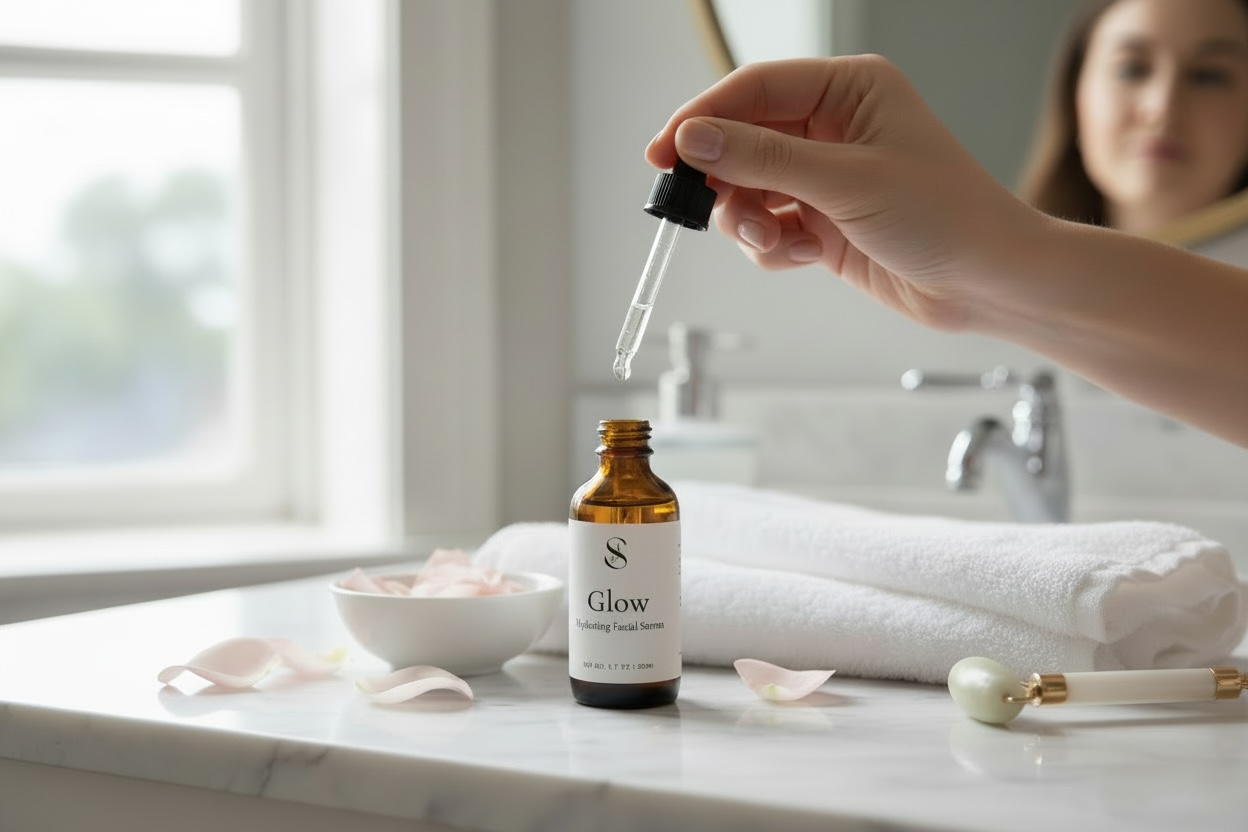
That's It. Seriously.
You need:
A quality gua sha stone
A good facial oil
Everything else is extra.
You don't need jade rollers, electric devices, twelve different stones, or complicated routines. Simple is better, especially when you're starting.
Ready to start with everything you need? The Glow & Lift Kit includes a professional-grade gua sha stone and our Glow Elixir facial oil, the exact tools I use and recommend to beginners. It's everything to start your practice with confidence.
Part 3: The Technique - How to Actually Do It
This is where most people get stuck. Technique matters and the difference between results and wasted time is understanding how to do this correctly.
The Golden Rules of Gua Sha
Before I give you specific techniques, understand these principles:
1. Light to medium pressure - NEVER hard Your lymphatic vessels sit very close to the surface of your skin. Deep pressure bypasses them entirely. You want gentle, intentional gliding, not aggressive scraping.
If you're seeing significant redness, broken capillaries, or bruising on your face, you're pressing way too hard.
2. Always move in the correct direction Lymph only flows one way. You're moving fluid OUT (away from the center of your face) and DOWN (toward your neck where your lymph nodes are and ultimately towards the heart).
Never scrape back and forth randomly. Always: out and down.
3. Slow, intentional strokes Each stroke should take 3-5 seconds. You're coaxing fluid to move, not frantically scraping. Slow = effective.
4. ALWAYS start with your neck This is the most important step everyone skips. Your neck is where all facial lymph drains. If you don't "open the drain" first, you're just moving fluid around your face with nowhere for it to go.
5. Use enough oil If you feel any dragging, pulling, or friction, you can add a few more drops of oil. You should glide smoothly without any resistance.
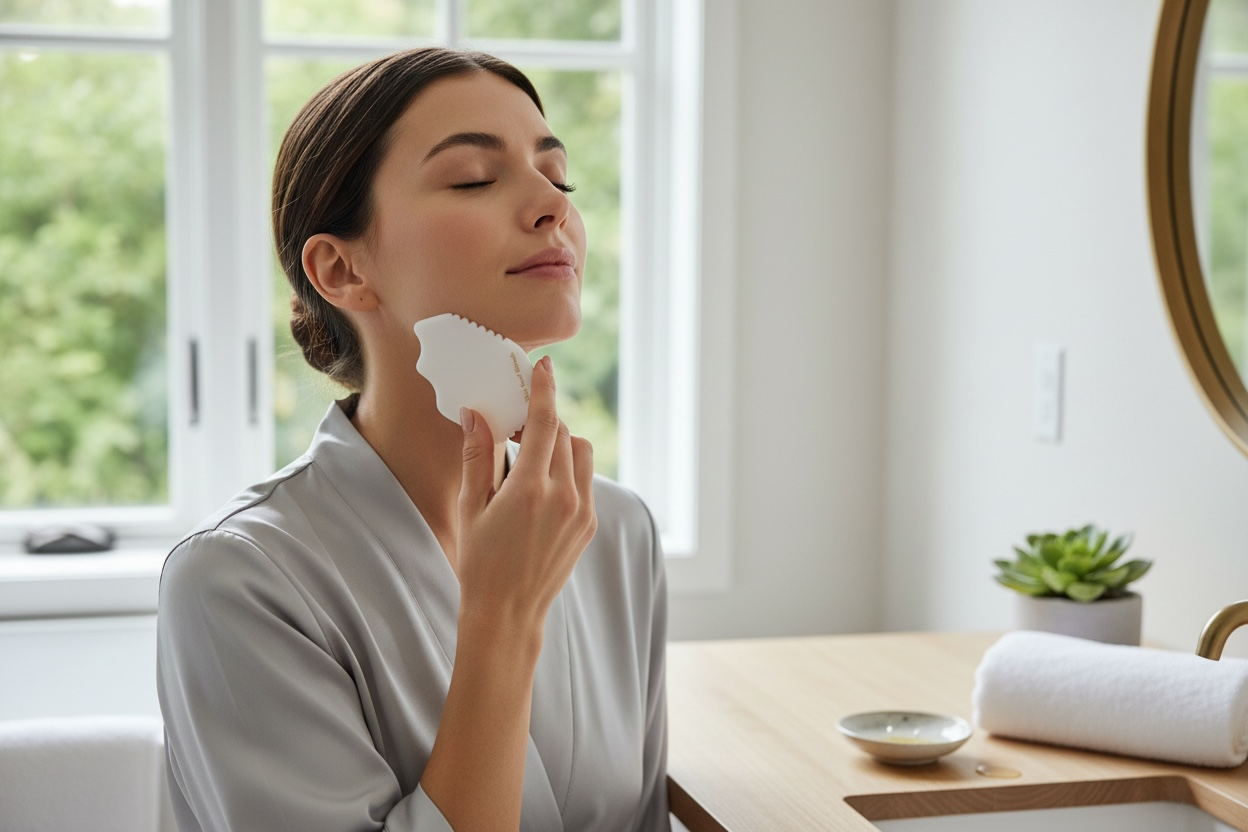
The Basic Full-Face Routine (5-10 Minutes)
This is the foundation. Master this, and everything else is just refinement.
Step 1: Prep Your Drainage Pathways (1 minute)
Sit comfortably. Take 3 deep breaths.
Place the flat edge of your tool just below your ear, at the side of your neck. Glide straight down toward your collarbone. Use smooth, gentle firm strokes.
Repeat 3-5 times on each side.
Why this matters: You're opening your cervical lymph nodes so the fluid you drain from your face has somewhere to go.
Step 2: Jawline Sculpting (2 minutes)
Place the curved notch of your tool at the center of your chin. Glide along your jawbone toward your ear. The tool should follow the natural line of your jaw.
Repeat 3-5 times on each side.
What you're doing: Draining fluid, releasing jaw tension (especially if you clench or grind), defining your jawline.
Step 3: Cheek Lifting (2 minutes)
Start at the side of your nose (where your cheek begins). Using the long curved edge, glide upward and outward along your cheekbone toward your ear.
Repeat 3-5 times on each side.
What you're doing: Lifting cheek tissue, draining puffiness, defining cheekbones, bringing circulation to the mid-face.
Step 4: Under-Eye Depuffing (1-2 minutes)
Using the flat or gently curved edge with the LIGHTEST possible pressure, start at the inner corner of your under-eye. Glide outward toward your temple and all the way to your hairline.
Repeat 3-5 times under each eye.
What you're doing: Draining the most delicate, puff-prone area. Be extremely gentle here, the skin is thin.
Step 5: Forehead Smoothing (1 minute)
Start in the center of your forehead between your brows. Glide outward toward your temple. Work in horizontal sections until you've covered your entire forehead.
Repeat 3-5 times across each section.
What you're doing: Releasing tension (especially if you furrow your brow), smoothing forehead lines, draining forehead puffiness.
Step 6: Complete the Drainage (1 minute)
Finish by sweeping down your neck again, from below your ear to your collarbone. This completes the drainage circuit.
Repeat 3-5 times on each side.
Total time: 5-10 minutes depending on how many strokes you do.
The beauty of this routine? It works even if you only have 5 minutes. Do fewer repetitions if you're short on time. Consistency matters more than duration.
Want to see this technique in action? My free 5-Day Gua Sha Challenge includes video tutorials showing you exactly how to do each step, common mistakes to avoid, and how to customize the routine for your specific concerns. Join here and start practicing with confidence.
Part 4: Choosing Your Path - Gua Sha by Goal
Not everyone has the same skin concerns. Here's how to focus your practice based on what YOU need.
If Your Goal Is: Depuffing and Lymphatic Drainage
Your main issue: You wake up puffy, especially around your eyes and jawline. Your face feels heavy and swollen. You retain fluid easily.
What to focus on:
Always start with neck drainage (this is your #1 priority)
Spend extra time on under-eyes with very light pressure
Do jawline work slowly and intentionally
Practice first thing in the morning when puffiness is worst
Timeline for results:
Immediate reduction in puffiness after each session
Within 2-3 weeks: morning puffiness less severe overall
Within 4-6 weeks: chronic puffiness significantly reduced
Additional tip: Keep your gua sha stone in the fridge. The cold enhances the anti-inflammatory, de-puffing effect dramatically.
Read more: Gua Sha for Lymphatic Drainage, Gua Sha for Puffy Eyes
If Your Goal Is: Sculpting and Facial Definition
Your main issue: You want higher cheekbones, a sharper jawline, and overall more defined facial contours. You might have mild jowling or loss of definition.
What to focus on:
Jawline work is your priority, consistent, intentional strokes along the bone
Cheek lifting with upward and outward movements
Releasing jaw muscle tension (masseter muscle) which can make your face look wider
Consistent daily practice (sculpting is cumulative)
Timeline for results:
Temporary definition immediately after sessions
Visible cumulative sculpting starts around week 4-6
Dramatic transformation by week 8-12
Additional tip: Pair gua sha with a renew serum with bakuchiol to support collagen production and firmness from within.
Read more: Gua Sha Before & After: Real Results, How Long Does Gua Sha Take to Work
If Your Goal Is: Jaw Tension and TMJ Relief
Your main issue: You clench or grind your teeth. Your jaw is tight, sore, or clicks. You carry stress in your face.
What to focus on:
Slow, intentional work along your jawbone
Massaging the masseter muscle (the thick muscle on your lower cheek, just above your jawbone)
Circular motions at your temples
Evening practice to release the day's tension
Timeline for results:
Immediate relief and relaxation after each session
Reduced chronic tension within 2-3 weeks
Significant lasting improvement by 4-8 weeks
Additional tip: Gua sha works best for TMJ when combined with stress management practices such as breath work, meditation, or therapy if stress is the root cause.
Read more: Gua Sha for Jaw Tension and TMJ
If Your Goal Is: Anti-Aging and Wrinkle Reduction
Your main issue: You're in your 40s, 50s, or beyond. You want to slow visible aging, soften fine lines, and maintain firmness without botox or harsh treatments.
What to focus on:
Consistent daily practice (anti-aging is cumulative)
Full-face routine with emphasis on areas of concern (forehead lines, crow's feet, nasolabial folds)
Pair with quality serums and oils that support collagen
Be patient, collagen stimulation takes weeks to months
Timeline for results:
Improved circulation and glow immediately
Softened fine lines from fluid retention and tension within 2-4 weeks
Visible improvement in skin firmness and texture by 8-12 weeks
Maximum collagen benefits by 3-6 months
Additional tip: Gua sha is incredibly effective for mature skin when paired with gentle, nourishing botanical products. Avoid harsh actives that compromise your barrier.
Read more: Gua Sha in Your 40s, Can Gua Sha Replace Botox?
Part 5: When and How Often to Practice
The most common question I get: "How often should I do gua sha?"
The answer depends on your goals and your life.
For Best Results: Daily Practice
Why daily works:
Your lymphatic system responds best to regular, gentle stimulation
Muscle tension builds up daily, daily release prevents chronic tightness
Collagen production is stimulated cumulatively over time
You build a habit that sticks
The reality: Even 5 minutes daily beats 20 minutes twice a week. Consistency > duration.
Minimum for Results: 3-5 Times Per Week
If daily feels impossible, aim for at least 3-5 times per week. You'll still see results, but the timeline will be longer.
Morning vs. Evening
Morning gua sha (best for de-puffing):
Reduces overnight fluid accumulation
Wakes up your skin and circulation
Creates a smooth canvas for makeup
Energizes you for the day
Evening gua sha (best for relaxation and tension release):
Releases the day's stress and muscle tightness
Activates rest mode (parasympathetic nervous system)
Supports better sleep
Gives your skincare time to absorb overnight
My take: Do what fits your schedule. The best time is the time you'll actually do it.
Read more: Morning vs. Evening Gua Sha
Part 6: Common Mistakes That Sabotage Results
After years of teaching gua sha, these are the mistakes I see most often:
Mistake #1: Skipping the neck prep If you don't open your drainage pathways at the neck first, you're just pushing fluid around your face. Always start at the neck.
Mistake #2: Pressing too hard More pressure does NOT equal better results. Lymphatic drainage requires gentle touch. Hard pressure can damage capillaries.
Mistake #3: Using dry skin Never drag your tool on dry skin. Always use oil. No exceptions.
Mistake #4: Moving in random directions Lymph flows in specific pathways. Scraping every which way doesn't support drainage. Always move OUT and DOWN.
Mistake #5: Expecting overnight miracles One session won't transform your face. Gua sha is a practice. Commit to 4-6 weeks before deciding if it works.
Mistake #6: Inconsistent practice Doing it sporadically doesn't give your lymphatic system or muscles time to retrain. Consistency is everything.
Mistake #7: Not using enough oil If you feel any tugging or friction, add a little more oil. Smooth gliding is essential.
Read more: 9 Gua Sha Mistakes Beginners Make
Part 7: What to Expect - Your Realistic Timeline
Let's set honest expectations so you know what's normal.
Immediately after your first session:
Face looks less puffy, especially under eyes
Skin has a visible glow from increased circulation
Cheekbones and jawline appear more defined (temporarily)
Face feels lighter, less tense
These immediate results will fade within a few hours. That's normal. You're building toward lasting change.
Week 1:
You're learning technique, building the habit
Immediate effects each time, but no permanent changes yet
You might feel areas of tenderness where you hold tension
Weeks 2-3:
Morning puffiness becomes less severe
The glow lasts longer throughout the day
Jaw tension doesn't return as quickly
You start to love the ritual itself
Weeks 4-6:
Visible cumulative changes begin
Facial contours look more defined consistently
Fine lines from dehydration soften
Other people might comment you look well-rested or "different"
Weeks 8-12:
Significant, lasting transformation
Lymphatic system drains efficiently on its own
Facial definition is obvious in photos
Skin texture and tone visibly improved
Long-term (3-6 months+):
Results stabilize and deepen
Your face functions better even when you skip days
Muscle patterns have retrained
Skin barrier is stronger, healthier
The key: Give it at least 6 weeks of consistent practice before deciding if it's working.
Read more: How Long Does Gua Sha Take to Work?, Gua Sha Before & After: 6-Week Journey
"I don't have time for another skincare step."
I hear this all the time. Here's the truth: gua sha doesn't have to be 15 minutes of complicated choreography.
Even 5 minutes makes a difference. Truly. Neck drainage + jawline + under-eyes = 5 minutes. That's it.
And those 5 minutes? They're not just "another task." They're a moment of care for yourself. A pause in the chaos. A ritual that actually makes you feel better, physically and mentally.
You have 5 minutes. I promise.
Ready to commit? The 5-Day Gua Sha Challenge is designed for busy women, each day is just 5-10 minutes of practice. Manageable, sustainable, effective.
Part 8: Beyond the Basics - Going Deeper
Once you've mastered the fundamentals, you can explore:
Combining with other practices: Pairing gua sha with facial exercises, breathwork, or meditation for holistic benefits.
Body gua sha: Using gua sha on your neck, shoulders, and décolletage for full-body lymphatic support and tension release.
Advanced techniques: Specific drainage patterns, acupressure points, and targeted muscle release.
But don't overwhelm yourself. Master the basics first. Everything else will follow.
Part 9: Your Questions Answered
Q: Can I do gua sha if I have acne or active breakouts? A: Yes, but avoid scraping directly over active pimples. Gua sha can actually help acne-prone skin by improving circulation and lymphatic drainage, which reduces congestion.
Q: Is gua sha safe during pregnancy? A: Gentle facial gua sha is generally safe, but check with your healthcare provider. Avoid aggressive pressure and skip certain acupressure points.
Q: Can I use gua sha if I've had Botox or fillers? A: Wait at least 2 weeks after injections, then use very gentle pressure and avoid injection sites for the first month.
Q: Will I bruise? A: Not if you're using proper technique. Bruising means you're pressing too hard. Use lighter pressure.
Q: Can gua sha damage my skin? A: Not when done correctly with proper oil and gentle pressure. Dragging on dry skin or using excessive force can damage capillaries.
Q: Do I need different stones for different concerns? A: No. One well-made stone with a good shape works for everything.
Final Thoughts: You're Ready
If you've read this far, you have everything you need to start.
You know what gua sha is, how it works, and what it can realistically do.
You know how to choose your tools and use proper technique.
You know what to expect and when.
You know the common mistakes to avoid.
Now you just need to begin.
Gua sha isn't complicated. It's not reserved for people with perfect skin or unlimited time or special knowledge. It's a simple, ancient practice that works for real women with real lives and real skin concerns.
It worked for me. It's worked for hundreds of my clients. And it will work for you, if you give it time, consistency, and the right foundation.
You don't have to be perfect. You just have to start.
And you don't have to do it alone.
Start Your Gua Sha Journey Today
Option 1: Learn the Technique (Free)
Join the5-Day Gua Sha Challenge and I'll teach you everything step-by-step:
Day 1: Proper technique and pressure
Day 2: Full-face drainage routine
Day 3: Targeting specific concerns
Day 4: Common mistakes and how to fix them
Day 5: Building a sustainable practice
Video tutorials, practice routines, and personalized guidance, all for free, delivered to your inbox.
Option 2: Get Everything You Need (Complete Kit)
The Glow & Lift Kit includes: Professional-grade gua sha stone our Glow Elixir botanical facial oil (perfect slip + skin-nourishing ingredients)
Everything you need to start your practice with confidence, in one beautiful package.
Welcome to Skin Soul Rituals. Welcome to your gua sha practice. Welcome to caring for yourself with intention, consistency, and grace.
I'm here with you every step of the way.
with gratitude and good skin days,
Amber
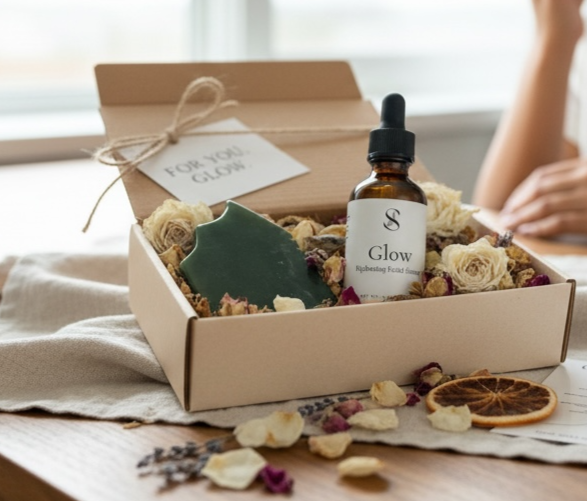
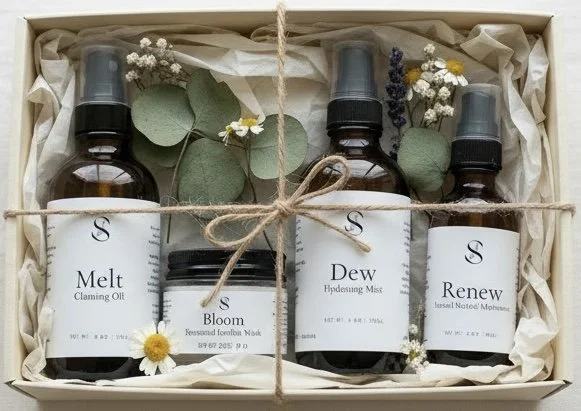
Spring Skin Reset: Detox Your Routine with Botanical Skincare
Spring isn't just about cleaning out your closet—it's the perfect time to reset your skincare routine too. After months of heavy winter products, indoor heating, and stale air, your skin is craving something fresh, clean, and alive. As a holistic aesthetician with 13 years of experience, I believe the best spring reset isn't about adding more products—it's about simplifying, swapping synthetic for botanical, and giving your skin exactly what it needs to renew itself. Here's how to detox your routine and embrace spring with glowing, healthy skin.
By Amber Boone, Holistic Aesthetician & Founder of Skin Soul Rituals
There's something about spring that makes you want to open all the windows, clear out the clutter, and start fresh.
The air smells different. Light lasts longer. Everything feels like it's waking up after a long winter sleep, including your skin.
As a licensed holistic aesthetician with over 13 years of experience, I've learned that the best spring reset is about simplifying. It's about stripping away the products that aren't serving you, detoxing your routine from harsh synthetics, and rebuilding with clean, botanical ingredients that work with your skin, not against it.
Spring is nature's renewal season. Your skincare should reflect that, simple, intentional, alive.
Let me show you how to reset your routine the right way.
Important Disclaimer: I'm a licensed aesthetician, not a medical doctor or dermatologist. This information is educational and based on my professional experience. If you have specific skin concerns or conditions, please consult with your healthcare provider or dermatologist.
Why Your Skin Needs a Spring Reset
Let's talk about what winter did to your skin because understanding the problem helps you solve it correctly.
What happens to skin during winter:
Harsh indoor heating: Strips moisture from the air and your skin, leaving it dehydrated and tight.
Heavy products: You likely switched to richer creams and oils to combat dryness. These products served their purpose in winter but can feel too heavy as weather warms.
Less circulation: Cold weather constricts blood vessels, reducing circulation to your skin. Less blood flow = less oxygen and nutrients = dull, lifeless complexion.
Dead skin buildup: Your skin's natural exfoliation process slows in winter. Combine that with heavy products sitting on top, and you have layers of dead cells making your skin look gray and textured.
Indoor air and lack of fresh oxygen: You've been breathing recycled, stale air for months. Your skin cells need fresh oxygen to function optimally.
Weakened skin barrier: The combination of harsh weather, indoor heating, and potentially irritating products has likely compromised your skin's protective barrier.
The result? Even if you don't have obvious problems, your skin probably feels:
Dull and lackluster
Congested or sluggish
Dry but also somehow oily (confused barrier)
Textured, rough, uneven
Tired and aged
Spring is the perfect reset opportunity because:
Weather is gentler (not too hot, not too cold)
Your skin is naturally more receptive to change
You can transition to lighter, fresher products without shock
It's psychologically motivating (fresh start energy)
But the reset has to be done right—intentionally, gently, with purpose.
What "Detox Your Routine" Actually Means
Let's be clear: your skin doesn't "detox" in the way juice cleanses claim to detox your body. Your liver and kidneys handle detoxification. Your skin's job is protection and regulation.
When I say "detox your routine," I mean:
Remove products with synthetic ingredients that stress your skin:
Sulfates (harsh cleansing agents)
Synthetic fragrances (major irritants)
Silicones (can trap congestion)
Parabens and phthalates (endocrine disruptors)
Alcohol denat (extremely drying)
Artificial dyes and unnecessary fillers
Simplify to what your skin actually needs: Most people use too many products. Your skin doesn't need 12 steps. It needs cleansing, hydration, nourishment, and protection. That's it.
Swap synthetic for botanical: Plant-based ingredients work synergistically with your skin's natural processes. They nourish, support, and enhance, rather than force or override.
Support your skin's natural functions: Instead of products that do the work FOR your skin (making it lazy), use ingredients that support what your skin already knows how to do, renew, repair, protect, glow.
Think of it like this: you're not detoxing your skin, you're detoxing your routine to give your skin space to do what it does best naturally.
The Core Principles of a Spring Skin Reset
Before I give you the specific routine, understand these principles. They're more important than any product.
1. Less Is More
Your skin doesn't need layering upon layering of products. In fact, over-layering can:
Clog pores and cause congestion
Confuse your skin's natural oil production
Prevent products from actually absorbing
Waste money on products that aren't even reaching your skin
Spring reset principle: Strip down to essentials. If a product isn't actively serving a purpose, remove it.
2. Botanical Over Synthetic
Synthetic ingredients are created in labs to be stable, consistent, and shelf-stable. That's great for manufacturers, not always great for skin.
Botanical ingredients are alive. They contain hundreds of compounds that work together synergistically, antioxidants, vitamins, minerals, fatty acids, and phytonutrients that your skin recognizes and knows how to use.
Spring reset principle: Choose products with ingredient lists you can actually read and understand. If it sounds like a chemistry experiment, it probably is.
3. Support the Skin Barrier
Almost every skin issue, dryness, oiliness, sensitivity, acne, aging is made worse by a compromised skin barrier.
Your barrier is your skin's protective layer. When it's healthy, your skin can regulate moisture, defend against irritants, and function optimally. When it's damaged, everything goes wrong.
Spring reset principle: Every product you use should either support or at minimum not harm your barrier. Harsh cleansers, astringent toners, alcohol-based products, these damage your barrier. Gentle oils, hydrating mists, nourishing botanical ingredients, these support it.
4. Quality Over Quantity
One high-quality botanical serum will outperform five mediocre synthetic products.
Spring reset principle: Invest in fewer, better products. You'll save money in the long run and get better results.
5. Consistency Over Perfection
A simple routine you do every day beats an elaborate routine you do sporadically.
Spring reset principle: Choose a routine you'll actually stick with. Simple, effective, sustainable.
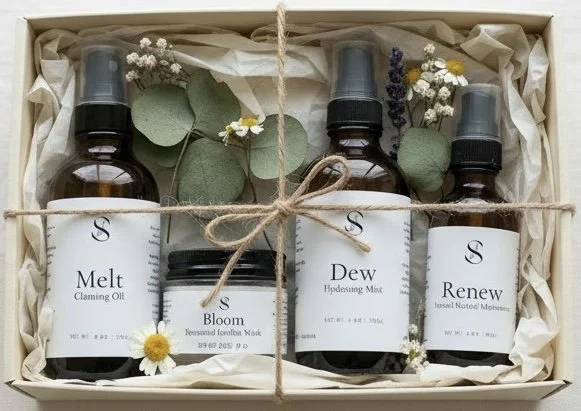
Skin Reset Collection | Skin Soul Rituals
The Spring Skin Reset Routine: A Botanical System
Here's the routine I recommend for spring renewal. It's simple, botanical, and designed to work as a complete system where each product enhances the next.
This is the exact approach I use in my own routine and recommend to clients transitioning into spring.
Step 1: Cleanse Away Winter with Oil (Melt)
Why oil cleansing for spring:
After months of heavy makeup, SPF, environmental pollutants, and dead skin buildup, your skin needs a deep but gentle reset. Oil cleansing is the most effective way to truly clean your skin without stripping it.
How it works: Oil dissolves oil. The oil cleanser binds to sebum, makeup, SPF, and impurities on your skin, then emulsifies with water and rinses away completely, taking all the buildup with it.
Unlike foaming cleansers that use harsh sulfates to strip everything (including your skin's natural protective oils), oil cleansing respects your skin barrier while still giving you a truly clean canvas.
The botanical difference:
Melt is formulated with nourishing plant oils, jojoba, meadowfoam, sunflower that cleanse deeply while simultaneously feeding your skin vitamins, antioxidants, and essential fatty acids. It's not just removing; it's replenishing.
How to use it:
Apply to dry skin with dry hands (yes, dry, this is key)
Massage gently for 1-2 minutes, focusing on congested areas
Add warm water to emulsify (it'll turn milky)
Rinse thoroughly
Use morning and/or evening
What you'll notice:
Skin feels clean but not tight or stripped
Makeup and SPF dissolve effortlessly
Blackheads and congestion gradually clear
Skin looks brighter almost immediately
This is your foundation, the reset starts here.
Step 2: Hydrate and Prep with Botanical Mist (Dew)
Why misting for spring:
Your skin lost a lot of moisture over winter. Before you can nourish it with oils or serums, you need to hydrate the deeper layers. That's where a botanical mist comes in.
How it works: Misting delivers water-based hydration directly into your skin. It plumps cells, preps your skin to absorb the next products more effectively, and creates a dewy, fresh base.
Most toners are alcohol-based and astringent (drying, pore-tightening). Dew is the opposite, it's pure hydration and botanical nourishment with zero harsh ingredients.
The botanical difference:
Dew contains rose hydrosol, aloe vera, and glycerin, all deeply hydrating and soothing. Rose is also gently toning (refines without stripping), aloe calms any irritation from winter damage, and glycerin is deeply hydrating.
How to use it:
After cleansing, mist generously over your face and neck
Let it sit for 30 seconds to absorb
While skin is still damp, apply your serum or oil (this locks in the hydration)
You can also mist throughout the day for a refresh
What you'll notice:
Instant plumpness and dewiness
Skin drinks it in (you'll see it absorb)
Makeup applies more smoothly
Fine lines from dehydration soften immediately
Think of Dew as giving your skin a drink of fresh water after months of drought.
Step 3: Renew with Gentle Retinol Alternative (Renew)
Why bakuchiol for spring:
Spring is renewal season and your skin is ready to renew too. You want to stimulate collagen, fade winter dullness and any hyperpigmentation from lack of sun, smooth texture, and support cell turnover.
Retinol does all of this but it's harsh, causes peeling and sensitivity, and makes you sun-sensitive (not ideal heading into brighter months). Bakuchiol delivers the same benefits without any of the harshness.
How it works: Bakuchiol is a plant-derived compound that stimulates collagen production, increases cell turnover, and improves skin texture and tone—just like retinol—but through gentler pathways. No irritation, no sun sensitivity, safe for sensitive skin.
The botanical difference:
Renew combines bakuchiol with nourishing botanical oils (rosehip for vitamin C and cell regeneration, jojoba for barrier support, sea buckthorn for antioxidants). It's anti-aging and nourishing in one step.
How to use it:
After misting with Dew (on damp skin for better absorption)
Apply 2-4 drops to face and neck
Gently press and massage in
Use morning and/or evening (unlike retinol, you can use it any time)
What you'll notice:
Smoother, more refined texture within 2-4 weeks
Brighter, more even tone
Softened fine lines
Firmer, more lifted skin over time
No peeling, no irritation
This is your active renewal step, the product doing the most transformation work.
Step 4: Reveal Fresh Skin with Gentle Exfoliation (Bloom)
Why a powder mask for spring:
You have months of dead skin buildup. Your skin's natural exfoliation slowed over winter, and heavy products have been sitting on top creating a barrier. You need to gently remove this layer to reveal the fresh, glowing skin underneath.
But harsh scrubs and chemical peels damage your barrier, exactly what you're trying to repair. Bloom offers gentle physical exfoliation that refines without destroying.
How it works: The powder mask contains:
French Pink Clay - draws impurities, gently exfoliates, refines pores
White Kaolin Clay - absorbs excess oil without stripping
Hibiscus Powder - natural fruit acids (AHAs) for gentle chemical exfoliation and brightening
Rose Petal Powder - toning, astringent, refines texture
Calendula Powder - calms inflammation, soothes sensitivity
Marshmallow Root Powder - creates slip, locks in moisture
Tremella Mushroom - holds moisture like hyaluronic acid, plumps skin
When you mix the powder with water (or Dew for extra hydration, or Melt for a cleansing treatment), it activates into a creamy paste. As it dries, it gently lifts dead skin. When you massage and rinse, you're physically buffing away dullness.
The botanical difference:
Every ingredient is plant-derived and serves multiple purposes; exfoliating, hydrating, soothing, brightening. No microbeads, no harsh acids, no synthetic fragrances. Just pure, effective botanicals.
How to use it:
Mix 1 tsp powder with water, Dew, or Melt to form a paste
Apply to clean, damp skin
Leave for 5-10 minutes
Gently massage in circular motions, adding water as needed
Rinse thoroughly
Use 1-2x weekly (more in early spring as you're resetting, then reduce to weekly maintenance)
What you'll notice:
Immediately softer, smoother skin
Visible glow and brightness
Refined pores and texture
Makeup applies like silk
Your other products absorb better
This is your deep reset step; the one that physically removes winter and reveals spring.
How the System Works Together
These four products aren't random. They're designed to work as a complete system where each step enhances the next:
Melt cleanses without stripping → creates a clean, receptive canvas
Dew hydrates and preps → allows Renew to penetrate deeply
Renew stimulates renewal from within → transforms skin over time
Bloom reveals fresh skin → removes the old to make room for the new
The synergy: Clean skin absorbs better. Hydrated skin responds better to actives. Renewed skin glows brighter when dead layers are removed. Everything works together.
This is what I mean by a system; not just products you use separately, but a ritual where each step builds on the last.
Beyond Products: Lifestyle Elements of a Spring Reset
Skincare products are important, but they're only part of the equation. True skin health is holistic. Here are the lifestyle shifts that support your spring reset:
1. Hydrate from within Drink more water. Your skin is an organ, and like all organs, it needs hydration to function. Aim for half your body weight in ounces daily.
2. Open the windows Fresh air and natural light do wonders for your skin and your circulating system. Let your home breathe.
3. Eat spring foods Fresh greens, berries, light proteins. Your skin reflects what you eat. Heavy winter foods served their purpose—now lighten up.
4. Move your body Exercise increases circulation, which brings oxygen and nutrients to your skin while flushing toxins through lymphatic drainage. Even a daily walk makes a difference.
5. Manage stress Stress destroys your skin. It triggers inflammation, breakouts, premature aging, and barrier damage. Spring is a good time to reassess your stress management practices, meditation, breathwork, time in nature, whatever works for you.
6. Sleep well Your skin repairs itself overnight. Poor sleep = poor skin recovery = dull, aged skin. Prioritize 7-9 hours.
7. Simplify your life, not just your skincare The philosophy of "less is more" applies beyond your bathroom shelf. What else in your life needs a spring cleaning? Clutter, toxic relationships, overcommitment? Simplify holistically.
Taking care of your skin is part of taking care of you, your whole self, not just your face.
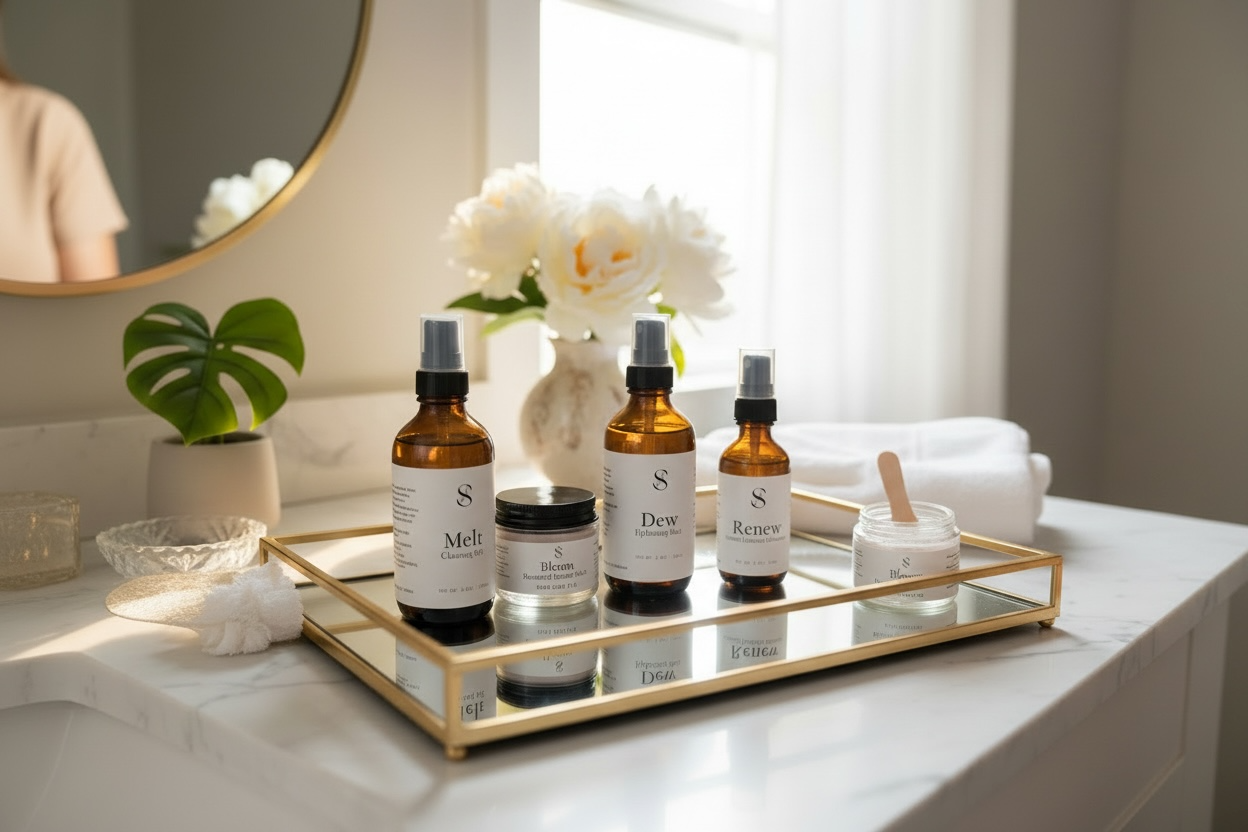
Skin Reset Collection | Skin Soul Rituals
What to Expect: Your Spring Reset Timeline
Week 1:
Skin feels cleaner, fresher
Immediate hydration and dewiness
Slight adjustment period (your skin is getting used to new products)
You might purge a bit as congestion clears, this is normal
Weeks 2-3:
Texture starts smoothing
Dullness fades noticeably
Skin barrier feels stronger
Products absorb better
Morning puffiness reduces
Week 4-6:
Visible transformation, brighter, more even tone
Refined pores and texture
Fine lines soften
Skin looks healthier, more alive
People comment that you look well-rested
Long-term (2-3 months):
Sustained glow and clarity
Stronger, more resilient skin
Less reactivity to stressors
Your skin functions optimally on its own
You've built a sustainable routine you actually enjoy
The key is consistency. Commit to the reset for at least 6 weeks before deciding if it's working.
Common Mistakes to Avoid During Your Reset
1. Changing everything at once too fast Introduce new products one at a time over 1-2 weeks so you can identify any reactions.
2. Expecting overnight miracles Botanical skincare works with your skin's natural rhythms. It's effective but gradual. Give it time.
3. Adding "just one more" product The whole point is simplification. Don't sabotage yourself by sneaking in extra serums and treatments.
4. Not patch-testing Even natural ingredients can cause reactions. Patch test new products on your inner arm for 24 hours first.
5. Forgetting SPF Spring sun is deceptively strong. Protect your skin daily, especially if you're using any exfoliating products.
6. Going back to old habits Once you reset, maintain it. Don't go back to harsh cleansers and synthetic products just because they're familiar.
Final Thoughts: Spring as a Fresh Start
Spring reminds us that renewal is possible. That we're not stuck. That we can shed what's no longer serving us and start fresh.
Your skin is no different. It's been through a long winter, harsh weather, heavy products, stale air, stress. It's ready for something lighter, cleaner, more alive.
A spring reset isn't about buying everything new or following the latest trends. It's about simplifying, returning to what's real and botanical, and giving your skin exactly what it needs to do what it already knows how to do: renew itself.
You don't need 12 steps. You don't need synthetic miracles in a bottle. You need clean, gentle, effective botanical ingredients working together as a system.
Cleanse. Hydrate. Repair. Transform.
That's the reset.
Welcome spring with skin that glows from the inside out because you gave it the space, the nourishment, and the respect it deserves.
Ready for Your Spring Reset?
The Skin Reset Collection includes everything you need for a complete botanical spring renewal:
Melt - Gentle oil cleanser
Dew - Hydrating botanical mist
Renew - Bakuchiol renewal serum
Bloom - Gentle exfoliating powder mask
Complete system: $175 (save $17 vs. buying individually)
Each product is formulated with pure botanical ingredients, free from synthetic fragrances, sulfates, parabens, and unnecessary fillers. Just clean, effective skincare that works with your skin, not against it.
Shop the Skin Reset Collection
If your looking for more botanical skincare advice and tips. Checkout our Skin + Soul Education Hub

Does Your Gua Sha Stone Actually Matter: An Aestheticians Honest Guide
Does your gua sha stone actually matter? Yes, more than you think. From material and weight to shape and craftsmanship, the right tool can improve results, protect your skin, and elevate your facial sculpting ritual.
by Amber Boone, Holistic Aesthetician & Founder of Skin Soul Rituals
You've probably noticed that gua sha stones come in every color, material, and price point imaginable. And if you've ever wondered whether the material actually matters, it does. More than most people realize.
I've been a licensed aesthetician for over a decade, and gua sha has been part of my practice from the beginning. I fell in love with it early, for the results, yes, but also for the way it feels. Rooted in touch, rhythm, and intention, it's a practice that has stood the test of time for a reason.
But here's what doesn't get talked about enough: your stone comes into direct contact with your skin, your fascia, your lymphatic system, and even your nervous system. It becomes part of the experience. Which means the material it's made from and the integrity behind it, deserves real consideration.
So today I'm breaking it all down for you.
What Makes One Stone Different From Another
Many gua sha tools on the market are mass-produced from dyed glass or synthetic materials. They may look beautiful, but not all tools offer the same experience or results.
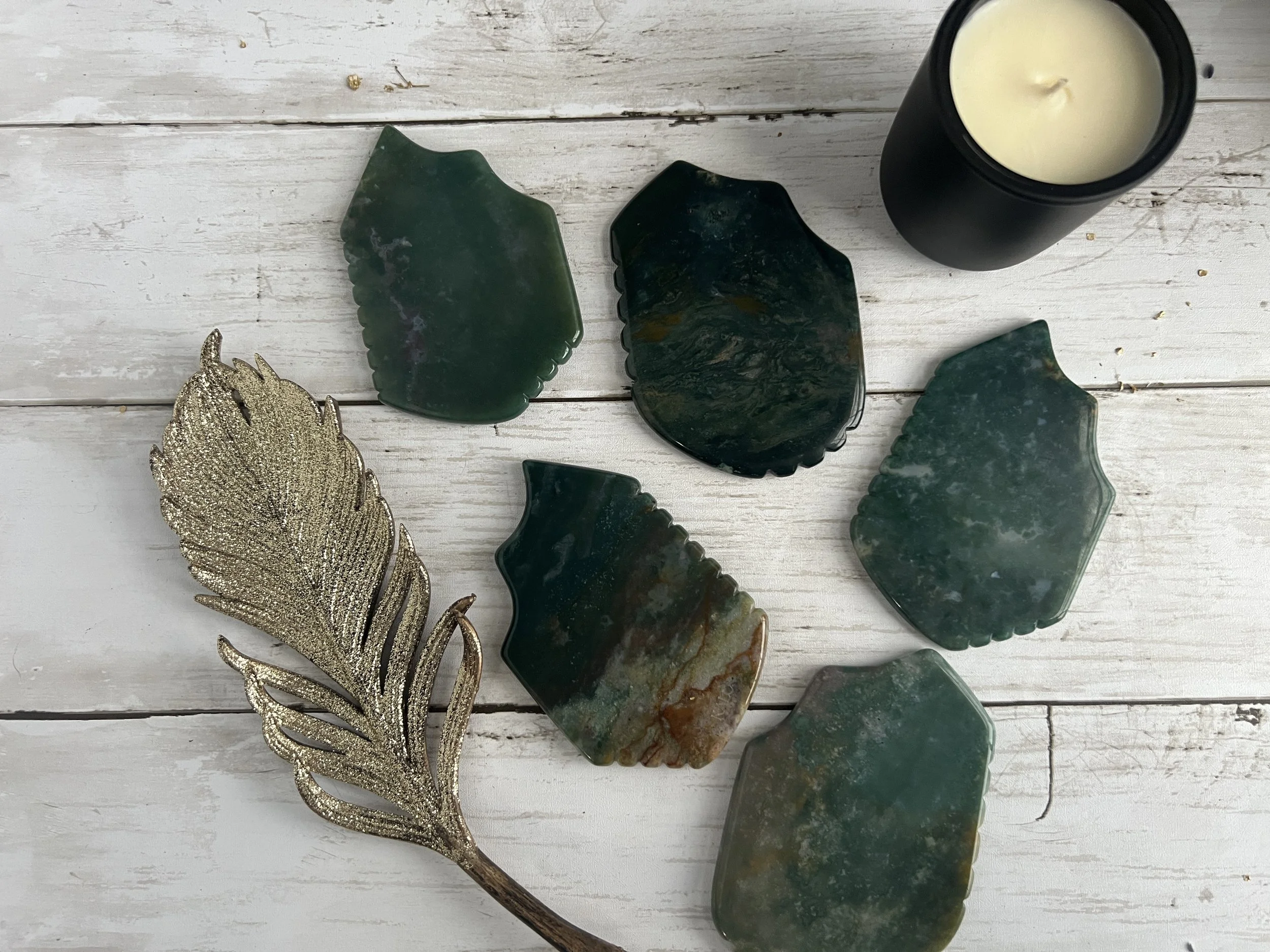
Some of our favorite Gua Sha Stones
Weight & Feel
Natural stone carries a different weight and presence than lightweight imitations. That subtle weight helps create steady, controlled movements rather than rushed or uneven pressure.
Temperature
Natural stone holds coolness longer, which can feel calming and soothing on the skin especially during a slow, mindful ritual. This cooling effect also makes it supportive for de-puffing and encouraging circulation for a healthy glow.
Shape & Function
A well-designed stone supports the natural curvatures of the face and neck. It should glide along contours without tugging and allow for sculpting, lifting, and lymphatic movements with ease.
We’ll talk more about shape below, because this is where results truly change.
Authenticity
We prioritize natural stone because we believe materials carry integrity. Authentic sourcing takes more time and care, but it aligns with how we approach everything we create from our formulations to tools.
The Energetic Side of Ritual
For centuries, stones have been used in practices connected to grounding and balance. Whether you see this through an energetic lens, emotional awareness, or simply the psychology of intention, the materials we use affect how we feel.
When something feels meaningful, we return to it.
And consistency is where the real results happen.
Why Gua Sha Stone Shape Matters More Than You Think
Facial gua sha works by:
• Encouraging stuck lymphatic drainage
• Releasing facial tightness and tension
• Supporting circulation and contour
Your face isn’t flat and a poorly designed stone can’t properly follow facial anatomy.
When the shape is wrong:
Pressure is uneven
Movements feel clunky
Certain areas get skipped
Results are inconsistent
A well-designed stone should fit your face, not force your face to adapt to it.
Best Gua Sha Stone Shapes (What To Look For)
1. Curved Edge (Jawline + Cheekbones)
A long, smooth curve is essential for sculpting the jawline, lifting the cheeks, and releasing masseter tension.
Why it matters: Flat or overly sharp edges can irritate skin and limit lift.
2. Notched or U-Shape (Jaw + Chin Area)
A gentle notch allows you to sculpt both sides of the jaw evenly and create definition without excessive pressure.
Especially helpful for beginners learning placement.
3. Small Tip/ Or Edged Corner (Under-Eyes + Delicate Areas)
A small tip or edged tip supports under-eye lymphatic drainage and temple work without irritation.
The best tips increase the risk of broken capillaries and sensitivity.
4. Broad Flat Side (Neck + Lymphatic Prep)
The neck is where gua sha should begin but many stones ignore this.
A flat surface allows for gentle lymphatic opening and smooth neck work. One of my favorites.
Materials: What to Know
Natural stone supports durability and glide, but results come from technique and shape.
High-quality stones:
• Feel smooth against the skin
• Have consistent weight
• Don’t drag or snag
• May vary slightly in color or translucency (this is normal)
What to Look for in a Beginner-Friendly Stone
If you’re new to gua sha, choose a stone with:
Multiple usable edges
Rounded, smooth contours
A shape that works for jaw, cheeks, eyes and neck
A comfortable grip
The goal is for it to be easy to use and choosing these qualities in a stone will help you get off to a good start. Some of my favorites I’m currently working with are white jade, moss agate and green aventurine.
Natural Variation Is Part of the Beauty
It’s also important to note that natural stones are not always perfectly uniform. Variations in color, veining, and translucency are signs of authenticity.
Your tool is uniquely yours.
How to Clean & Care for Your Gua Sha Stone
Your gua sha tool touches your skin, oil, lymphatic fluid, and hands, so keeping it clean isn’t optional. A well-cared-for stone not only lasts longer, it protects your skin and keeps your ritual feeling fresh and hygienic.
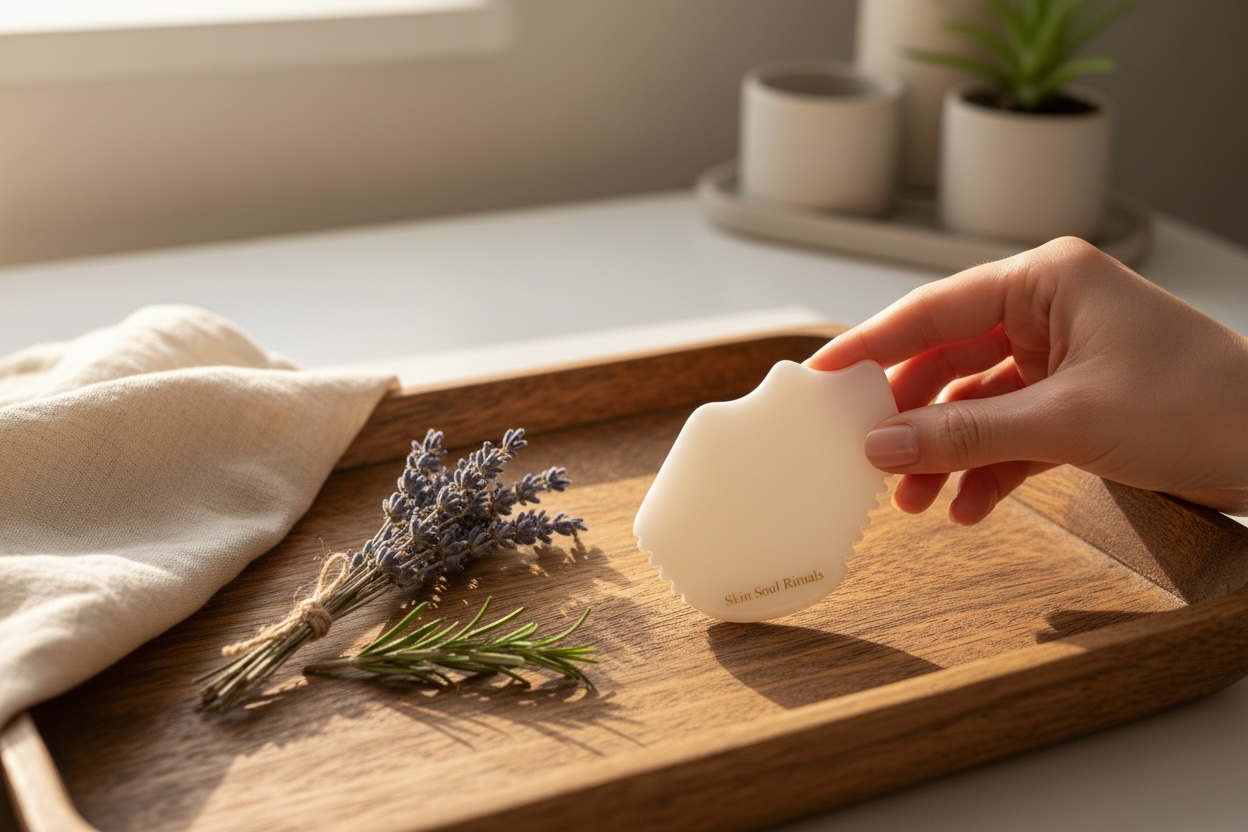
Remember to Clean Your Stones After Every Use with a Gentle Cleanser
After Every Use (Quick Clean)
Rinse with lukewarm water
Avoid hot water, extreme temperature changes can stress natural stone.Use a gentle cleanser
A mild soap, facial cleanser, or natural dish soap works well. Rub with your fingers, not a rough cloth.Rinse thoroughly
Make sure no residue from oils or cleanser remains.Dry completely
Pat dry with a clean towel and allow it to air dry before storing.
Weekly Deep Clean
If you use facial oils regularly (especially thicker oils), give your stone a deeper clean once a week.
Wash with gentle soap and warm (not hot) water
Use a soft toothbrush to clean edges and grooves
Rinse well and dry fully
This prevents oil buildup that can make the tool slippery or dull.
What Not to Do
Natural stone is strong, but it isn’t indestructible.
Avoid:
Boiling water
Soaking for long periods
Harsh chemicals or alcohol
Dropping it on hard surfaces
These can weaken the stone, fade its finish, or cause cracks.
Storage Matters Too
Store your gua sha tool:
In a dry place
In a soft pouch or box
Away from moisture or steam (like the shower)
Keeping it protected prevents chips and keeps your ritual feeling intentional rather than tossed in a drawer.
The Right Stone Makes All the Difference.
Gua sha isn't about collecting tools, it's about choosing one that actually works with your face, your hands, and your life.
When the shape fits your anatomy, something shifts. Results come faster. The ritual feels intuitive. And you actually want to come back to it tomorrow. That's where the real transformation lives not in one session, but in the consistency that a good tool makes possible.
If you're ready to stop guessing and start seeing results, we made it simple.
Our Glow & Lift Kit includes everything you need to begin, the right stone, the right botanical oil, and access to my 5-Day Gua Sha Foundations video series so you can pick it up with total confidence from day one.
Already have a stone? Grab the free 5-Day Gua Sha Challenge and learn the exact techniques that make the real difference.
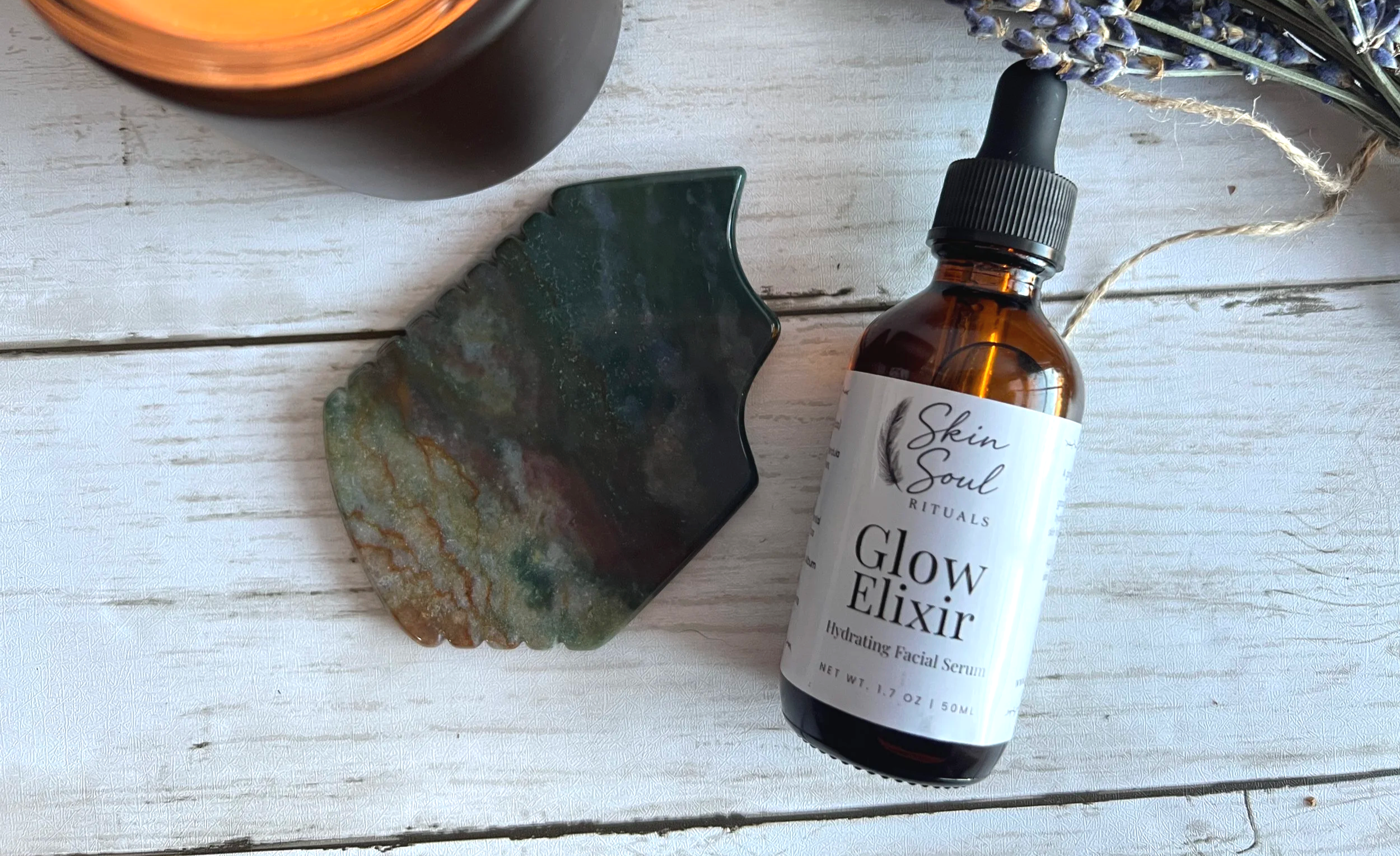
Start Your Transformation
Gua Sha for Beginners: How to Start & See Results
New to gua sha? This beginner-friendly guide breaks down how to start, what tools matter, and how to see real lifting and sculpting results.
by Amber Boone, Holistic Aesthetician & Founder of Skin Soul Rituals
If you’re new to gua sha and wondering whether it actually works or maybe how to do it to see results, you’re not alone.
Gua sha has exploded in popularity over the last few years and some may believe it’s just a trend but as a licensed aesthetician with over a decade of experience I can confidently say, it works!
When done correctly, gua sha can lift, sculpt, de-puff, and support healthy skin aging, it requires a few things to get started, the right tools, technique and consistency are key to getting results. But don’t worry we’ll go over everything you need and if you would like further guidance, sign up for my Gua Sha Foundations video series. It will teach you a step-by-step guided gua sha routine.
In this beginner’s guide, you’ll learn:
What gua sha actually does
How to start safely and effectively
Common mistakes beginners make
How to see visible results faster
What Is Gua Sha?
Gua sha is a traditional East Asian healing technique that involves gently gliding a smooth stone across the skin to stimulate circulation, support lymphatic drainage, and release facial tension.
Originally used on the body, facial gua sha is a refined, gentle version designed to:
Reduce puffiness
Improve circulation
Support collagen production
Sculpt facial contours
Relax tight facial muscles
Unlike quick fixes, gua sha works with your skin, not against it.
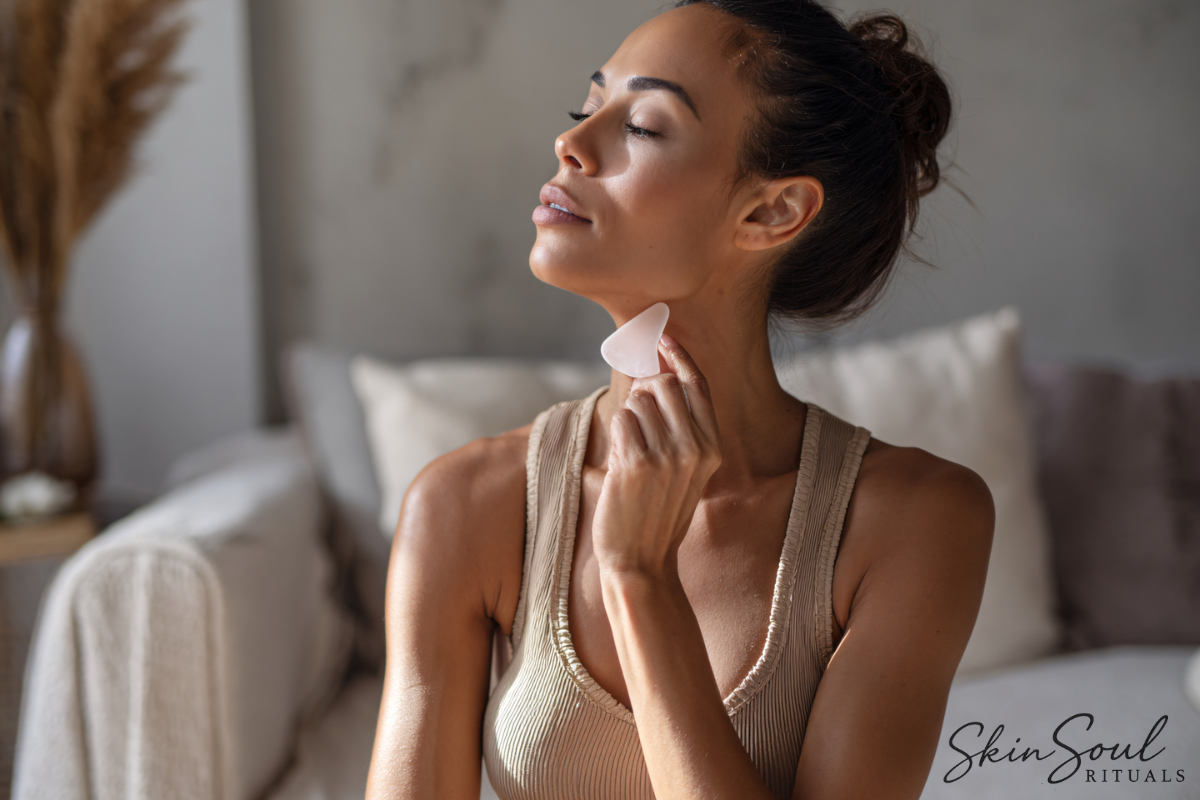
Does Gua Sha Really Work?
Yes, when done correctly and consistently you can see and feel great results.
Gua sha works by:
Encouraging lymphatic drainage (which reduces puffiness)
Increasing blood flow (which supports glow and vitality)
Releasing muscle tension (which softens lines caused by facial holding patterns)
Many people don’t see results because they:
Use too much pressure
Skip lymphatic preparation
Use poor-quality tools
Don’t follow a consistent routine
When gua sha is approached as a ritual, not a trend, results will follow.
What You Need to Start Gua Sha (Beginner Essentials)
Before you begin, gather these essentials:
1. A High-Quality Gua Sha Stone
Not all stones are created equal. A well-shaped, smooth stone makes a huge difference in results and comfort.
Look for:
Smooth edges (no sharp corners)
Natural stone (each piece will vary slightly)
Shapes that fit the jawline, cheekbones, and neck (bonus if it has a perforated edge side)
2. A Facial Oil or Serum
Never perform gua sha on dry skin. This can cause irritation and tugging neither feel good or are good for the skin.
A nourishing oil helps:
Protect your skin barrier
Improves gua sha glide
Enhance overall results
3. Clean Skin
Always start with freshly cleansed face and neck to avoid pushing impurities deeper into the pores.
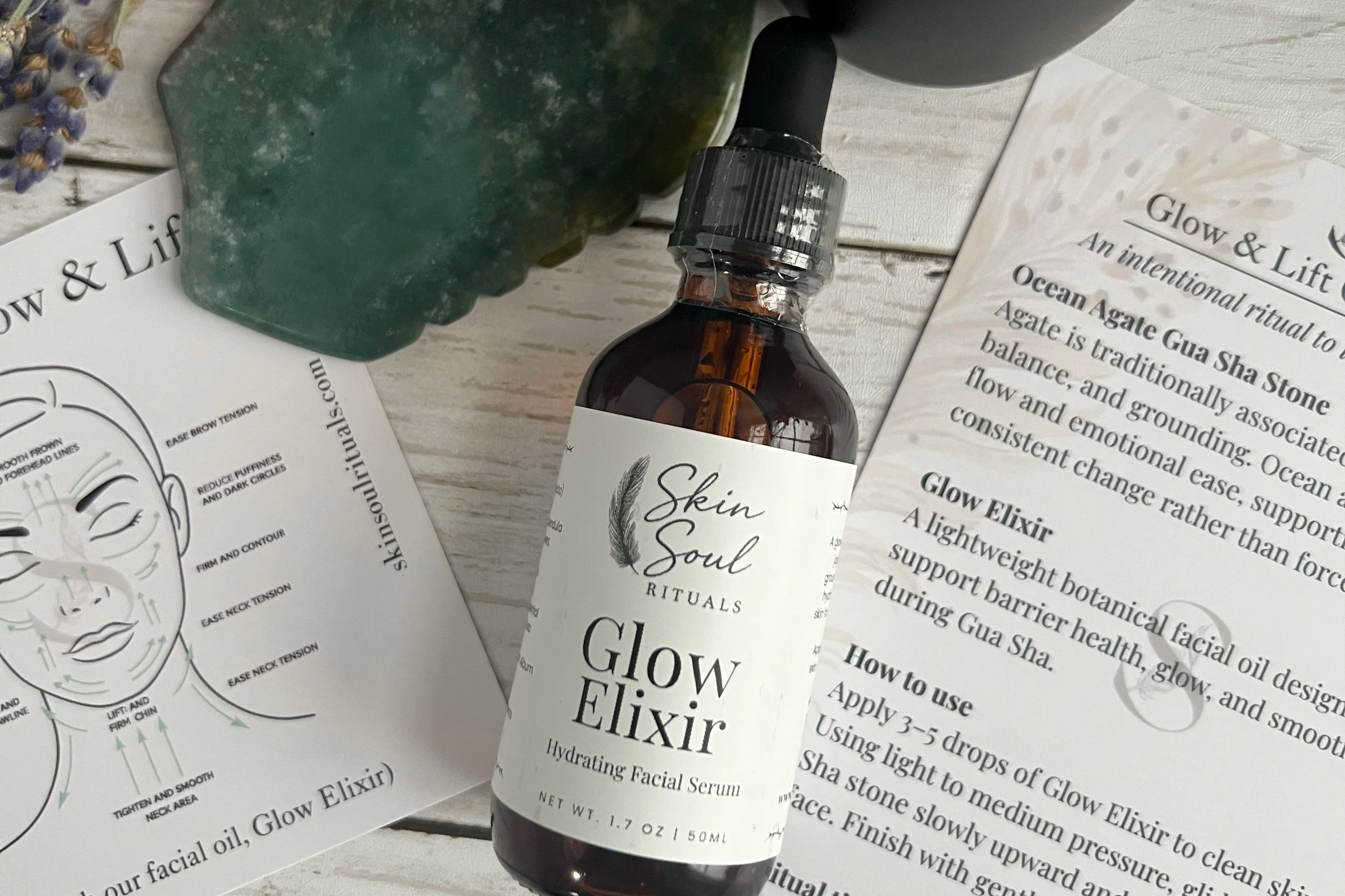
Curated Gua Sha Kit
How to Do Gua Sha for Beginners (Step-by-Step)
Step 1: Prep the Lymphatic System
This step is often skipped, but it’s essential. Start by opening up the lymphatic drainage points, righat above your collar bone. Use the pads of your fingertips and lightly tap for 10-15 seconds. You lightly tap all across the face to increase circulation and prep for gua sha.
Start with light strokes at the neck and collarbone to encourage lymphatic flow. This creates a pathway for fluid to drain properly. Be gentle when working with the neck and face, with light strokes down the neck. Lymphatic drainage does not need heavy pressure, the pressure is light to move lymph.
Step 2: Apply Facial Oil
Use enough oil so the stone glides effortlessly across the skin. Depending on your oil, 2-3 drops is typically enough. You don’t want your stone to drag or tug at the skin.
Step 3: Hold the Stone at a Low Angle
Keep the gua sha tool nearly flat against the skin (about 15 degrees). More pressure does not mean better results. Light pressure is key to lymphatic flow.
Step 4: Work in Upward and Outward Motions
Move slowly and intentionally:
Neck → Jawline → Cheeks → Under-eyes → Forehead
Always work outward toward the ears or downward toward lymphatic drainage points
Step 5: Keep It Short and Consistent
5-10 minutes a day is plenty of time when done correctly. 3-5 passes per section is ideal as well as making sure your getting in 3-5x per week for results.
Common Gua Sha Mistakes Beginners Make
If you’re not seeing results, check for these common issues:
Using too much pressure
Skipping the neck and lymphatic prep
Using a low-quality or poorly shaped stone
Practicing inconsistently
Expecting instant results
Gua sha is cumulative and your results will improve with time. You’ll notice de-puffing immediately but sculpting and lifting take some consistency and time.
How Long Does It Take to See Results?
Most beginners notice:
Reduced puffiness immediately after use
Improved glow within 1–2 weeks
More sculpted contours after 3–4 weeks of consistent practice
Like any holistic ritual, gua sha works best when practiced regularly.
How to Get Better Results Faster
To maximize your results:
Pair gua sha with a nourishing facial oil
Follow a structured routine (Gua Sha Foundations here)
Use a stone designed specifically for gua sha
Stay consistent, even 3–5 minutes matters
This is why curated kits often outperform random tools.
A Simple Way to Get Started
If you’re new to gua sha and want a guided, beginner-friendly setup, a ritual kit that includes:
A properly shaped gua sha stone
A barrier-supporting facial oil
Step-by-step guidance
The Glow & Sculpt Ritual Kit can remove the guesswork and help you see results faster.
Final Thoughts: Gua Sha Is a Practice, Not a Trend
Gua sha isn’t about perfection, it’s about connection.
When practiced intentionally, it becomes more than skincare.
It’s a ritual that supports your skin, nervous system, and confidence.
Start slow. Stay consistent. Trust the process.
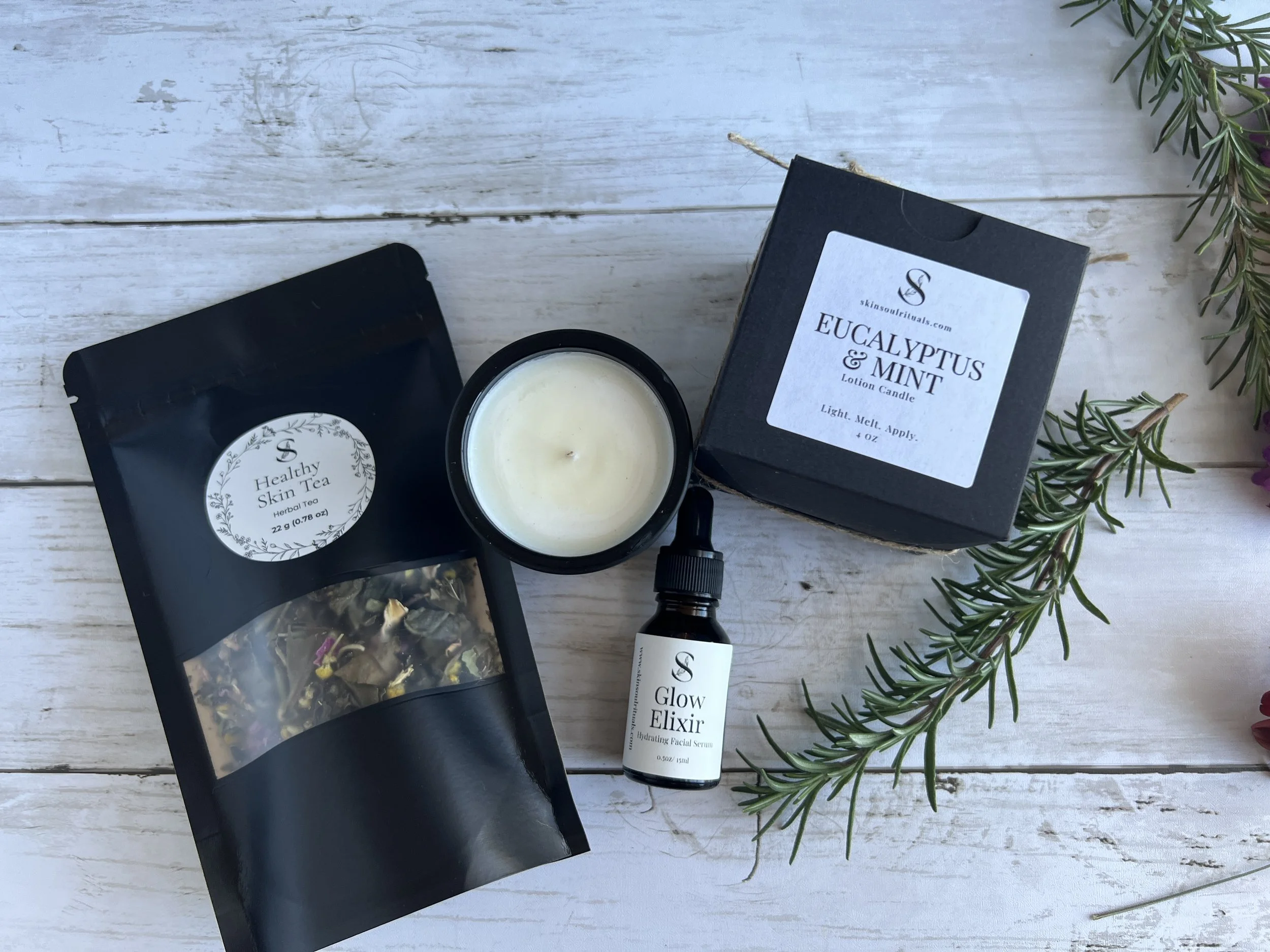
The Daily Glow Ritual: How to Support Healthy Skin From the Inside and Out
A simple daily ritual using herbal tea, a lotion candle and Glow Elixir to support healthy, glowing skin from the inside out.
by Amber Boone, Holistic Aesthetician & Founder of Skin Soul Rituals
Glowing skin isn’t only about what you apply topically. It’s about what you drink, what you breathe in, how you slow down, and the rituals you return to day after day. When the body is supported internally and the nervous system is calm, the skin reflects it. Our skin is our biggest protector from outside pollutants which is one of the reasons is so important we support it in multiple ways consistently.
That’s the philosophy behind the Daily Glow Kit. I wanted to create a discovery kit of some of the very first products I created for Skin Soul Rituals. A chance to get to know my brand in a simple, sensory ritual designed to support and nourish our skin and nervous system from the inside out. 10-step routines are so 5 years ago. Now is the time for simplifying, nourishing rituals that support our every day. That we actually enjoy and look forward too.
Why glow is more than skincare
Dullness, dryness, and tired-looking skin are often signs of:
stress and nervous system overload
dehydration and sluggish circulation
lack of consistency, not lack of products
Skin responds best when our body feels supported. That’s why internal rituals and external care work best together.
The Daily Glow Kit was created to gently anchor all three.
What’s inside the Daily Glow Kit
Healthy Skin Tea
Herbal tea supports glow by:
hydrating the body
supporting digestion and circulation
calming the nervous system
When the body is nourished internally, the skin can do what it’s meant to do, repair, renew, and glow naturally.
Drinking tea daily creates a pause. A moment of warmth. A ritual the body recognizes.
Eucalyptus + Mint Lotion Candle
This isn’t your traditional candle.
Made with:
coconut wax, mango butter, shea butter, beeswax and jojoba
rosehip oil and vitamin E
grounding essential oils infused with eucalyptus & mint
As it melts, the lotion candle transforms into a warm, nourishing body balm that:
softens dry or stressed skin
delivers calming aromatherapy
grounds the body through touch
Eucalyptus and mint help clear mental fog and tension, making this especially supportive during evening wind-down or post-shower rituals.
It turns scent into skincare and relaxation into something tangible.
*Never used a lotion candle before, no worries it comes with its own lotion candle ritual card.
Glow Elixir (.5 oz)
Glow Elixir is a hydrating facial oil designed to restore the skin barrier and enhance your natural glow.
Made with:
jojoba oil slow-infused with rose petals and calendula
rosehip oil and vitamin E
grounding essential oils including hinoki, bergamot, and sandalwood
Used daily, Glow Elixir helps:
seal in moisture
support skin resilience
bring softness and luminosity back to the face
This is the perfect hydrating serum that supports your skin barrier. It also makes a great Gua Sha glide. Even a few drops is enough, this is about nourishment, not excess. It provides just the right amount of hydration without feeling greasy.
Ritual Card
The ritual card ties everything together, offering guidance on how to use each element intentionally.
Because results don’t come from owning beautiful things, they come from using them consistently.
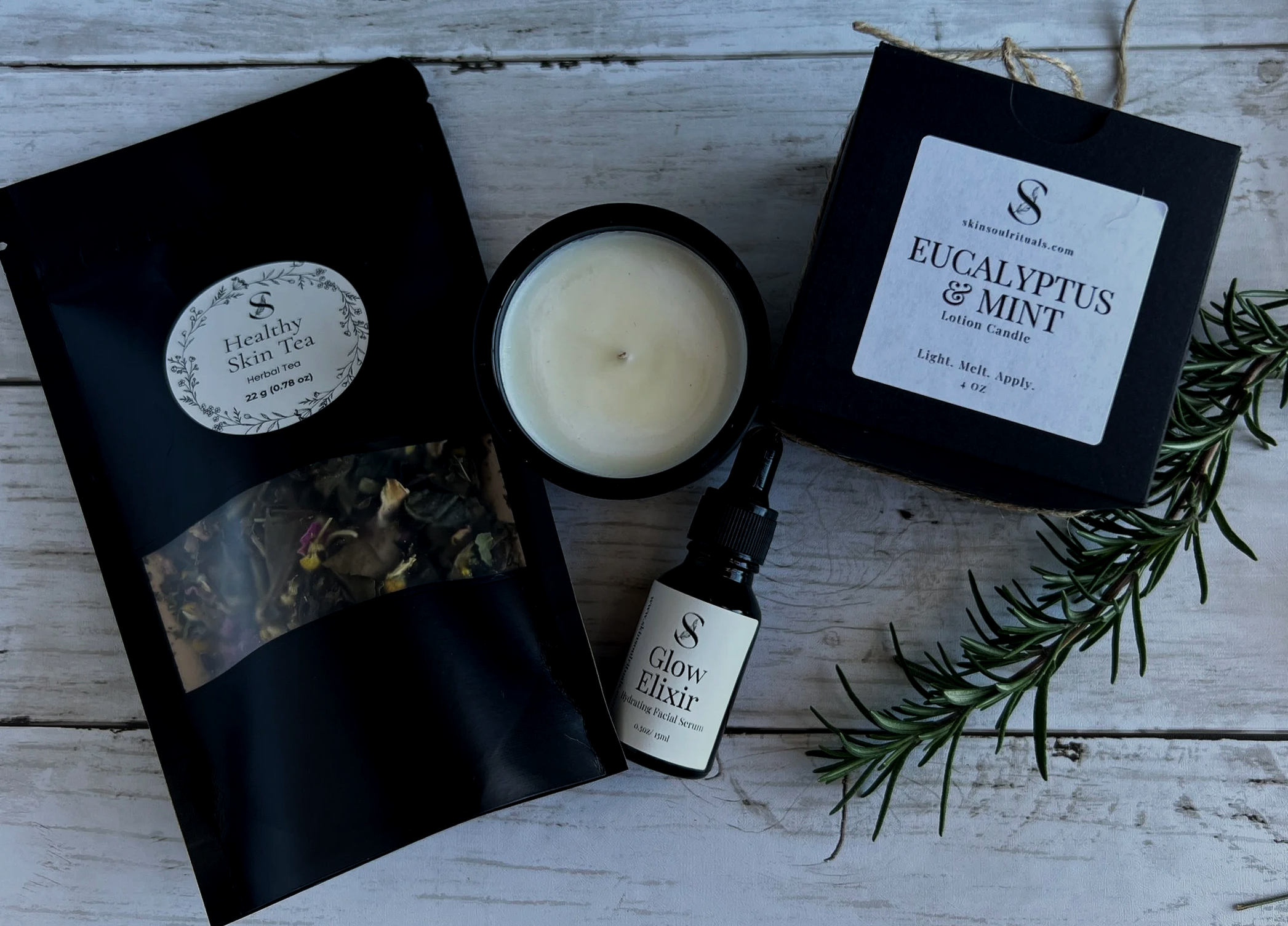
How to use the Daily Glow Kit
This ritual can take 5–10 minutes, once or twice a day.
Morning or Evening Ritual:
Brew a cup of Healthy Skin Tea and sip slowly
Light the lotion candle and allow it to melt
Apply Glow Elixir to clean skin
Massage warm lotion into hands, arms, or body
Take a few intentional, mindful breaths
That’s it. Simple. Repeatable. Sustainable. Your Daily Glow Ritual.
Who the Daily Glow Kit is for
This kit is for you if:
your skin looks dull or tired despite “doing all the right things”
you crave simple rituals that actually feel good
you believe glow starts internally
you want consistency without feeling overwhelmed
you’re drawn to holistic, clean, self-care
It’s especially supportive during seasons of stress, transition, or when your skin feels out of sync. It’s also makes the perfect gift.
What to expect with consistency
With daily or near-daily use, many of my customers notice:
improved skin softness and hydration
a brighter, more even-looking complexion
reduced dryness and tightness
a calmer, more grounded feeling overall
Glow builds over time. Through repetition, not intensity. This is your moment to relax and support you.
A ritual you’ll actually return to
The Daily Glow Kit isn’t about chasing perfection.
It’s about creating a small, nourishing rhythm that the body and skin come to trust.
Because when care becomes ritual, glow happens naturally.
Ready to begin the Daily Glow Ritual?
The Daily Glow Kit brings together tea, touch, scent, and skin nourishment. This discovery kit will support healthy skin from the inside and out.
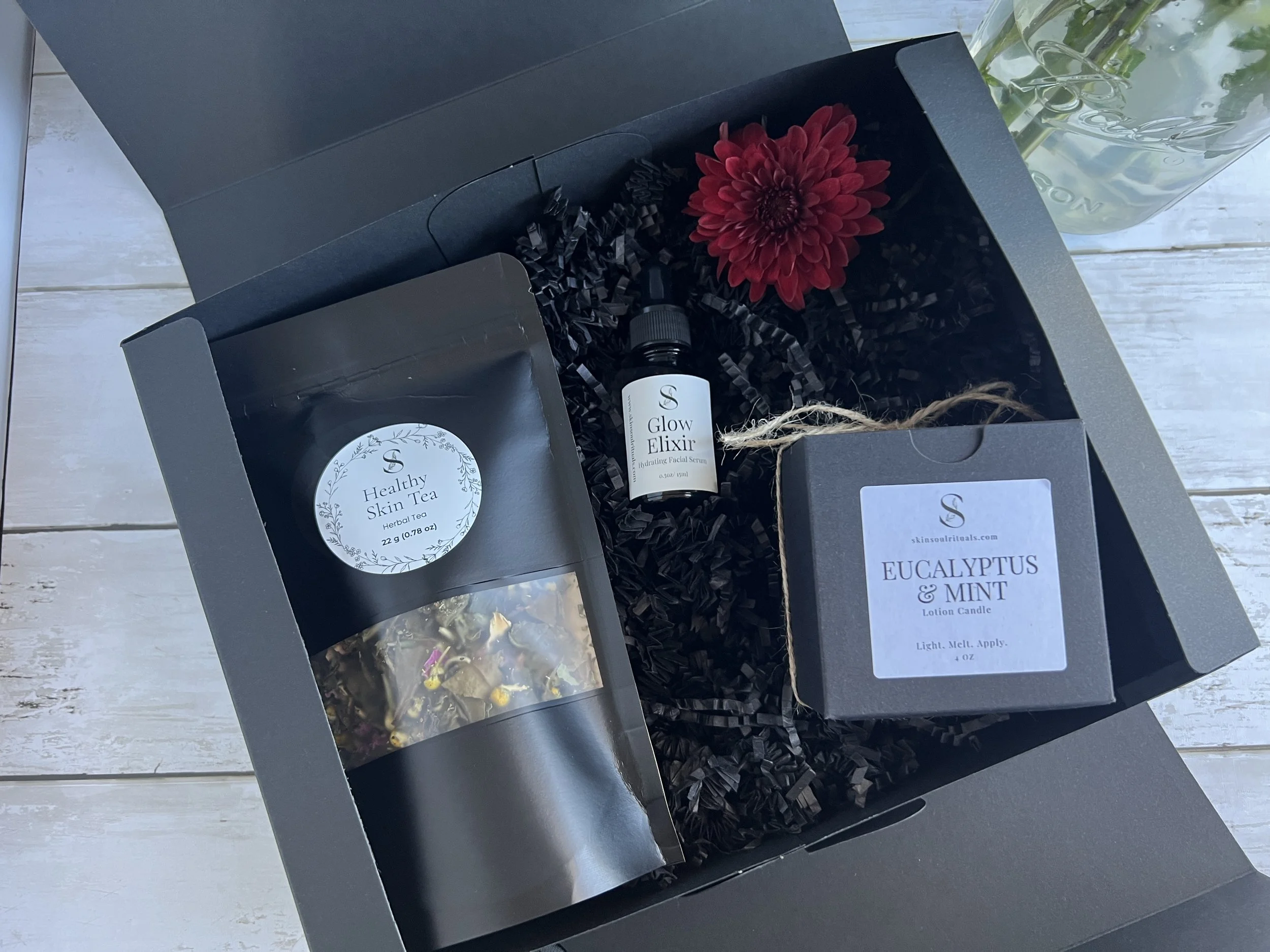
Your 5-minute morning ritual for lifted skin, calm energy, and an effortless glow.
When your mornings feel rushed, this ritual practice brings you back to center, a skincare + candle + tea trio designed to nourish your skin and your nervous system at the same time.
Why You’ll Love It
Most people wake up and rush straight into stress mode. This bundle allows you to take a deep breath and a few minutes of calm, all before you check your phone.
What It Helps With:
A glowing, hydrated complexion
Starting your day grounded instead of frazzled
Melts jaw/neck tension first thing
Feeling more centered and intentional
Supporting healthy skin from the inside out
What’s Inside
1. Glow Elixir (.5 oz)
Your lightweight, glow-boosting facial oil infused with calendula, chamomile, and rose petals. Creates a silky, nourished finish that looks lit-from-within.
Ingredients:
Jojoba oil (infused with calendula, chamomile, rose petals), rosehip oil, vitamin E, hinoki, bergamot (skin-safe), sandalwood.
2. Eucalyptus + Peppermint Lotion Candle (4 oz)
A clean-burning, skin-safe lotion candle that melts into a warm, aromatic body butter. Opens your breath, boosts clarity, and instantly melts tension.
Ingredients:
Coconut wax blend, mango butter, jojoba oil, rosehip oil, vitamin E, eucalyptus, peppermint essential oil infused fragrance oil.
3. Healthy Skin Tea (22g)
Your daily glow-from-within tea blend supporting clear skin, digestion, lymph flow, and overall vitality.
Ingredients:
White peony, rose petals, lemon balm, chamomile, spearmint.
How to Use Your Daily Glow Ritual
1. Light your eucalyptus + peppermint lotion candle as you begin your morning. Breathe in the clarity. Take 5 minutes for a morning meditation.
2. Sip your Healthy Skin Tea while your candle melts and sets your intention for the day.
3. Glow: Use Glow Elixir on clean skin for a radiant, nourished finish.
4. Begin your day with intention.
“The daily glow kit is my new morning obsession.” – SSR Customer