

The Science Behind Gua Sha: Circulation, Fascia & Lymphatic Flow
Gua sha isn’t just a beauty trend. It works by improving circulation, releasing tight fascia, and supporting lymphatic drainage. Learn how these systems affect facial aging and why gua sha helps the face look more lifted and sculpted.
by Amber Boone, Holistic Aesthetician & Founder of Skin Soul Rituals
Gua sha might look like a trendy skincare tool… but the reason it works has everything to do with how your body already functions.
Your face isn’t just skin. Underneath the surface, you have:
• Blood flow
• Lymph fluid
• Muscles
• Fascia (connective tissue)
When these systems move well → your face looks lifted, sculpted, and radiant.
When they get sluggish → puffiness, sagging, and dullness show up.
Gua sha helps get things moving again.
Let’s break this down.
First: Why Movement Matters in the Face
Your face is not meant to be stagnant.
Every day your tissues deal with:
Gravity
Stress tension
Poor sleep
Hormonal changes
Screen time posture
Over time, this can slow down circulation and fluid flow, and tighten the connective tissue that holds everything in place.
That’s when you start noticing:
• Puffiness
• Heaviness in the jawline
• Lines that look deeper
• Skin that looks tired
Gua sha works by gently guiding movement back into these systems.
1. Circulation: Bringing Fresh Blood to the Skin
Circulation is simply blood flow.
Blood carries:
✔ Oxygen
✔ Nutrients
✔ Repair support
When circulation slows, skin can look:
Dull
Uneven
Less firm
When you glide a gua sha tool across the skin, you create gentle stimulation that encourages blood to move to the area.
Think of it like this:
Your skin cells are like tiny workers.
Blood flow delivers their supplies.
More flow = better working conditions.
That’s why after gua sha you often see:
A healthy glow
Slight warmth
Brighter-looking skin
It’s not magic, it’s biology.
2. Fascia: The Hidden Structure of Your Face
Fascia is one of the most important (and least talked about) parts of facial aging.
Fascia is a thin layer of connective tissue that:
• Wraps around muscles
• Connects everything together
• Helps give your face shape
When fascia is healthy, it’s flexible and mobile.
But stress, tension, and repetitive facial expressions can cause it to get:
Tight
Stuck
Pulled downward
When fascia tightens, it can contribute to:
• Sagging
• Heaviness
• Loss of contour
Gua sha helps gently glide and release tension in this tissue.
Imagine wearing a tight sweater all day.
When you finally stretch and loosen it, things feel lighter.
That’s similar to what happens when fascia can move more freely.
3. Lymphatic Flow: Reducing Puffiness
Your lymphatic system is your body’s drainage system.
It helps move away:
Waste
Excess fluid
Inflammation
Unlike blood, lymph does not have a pump like the heart.
It relies on movement.
If lymph gets sluggish, you may see:
• Puffy cheeks
• Under-eye swelling
• A less defined jawline
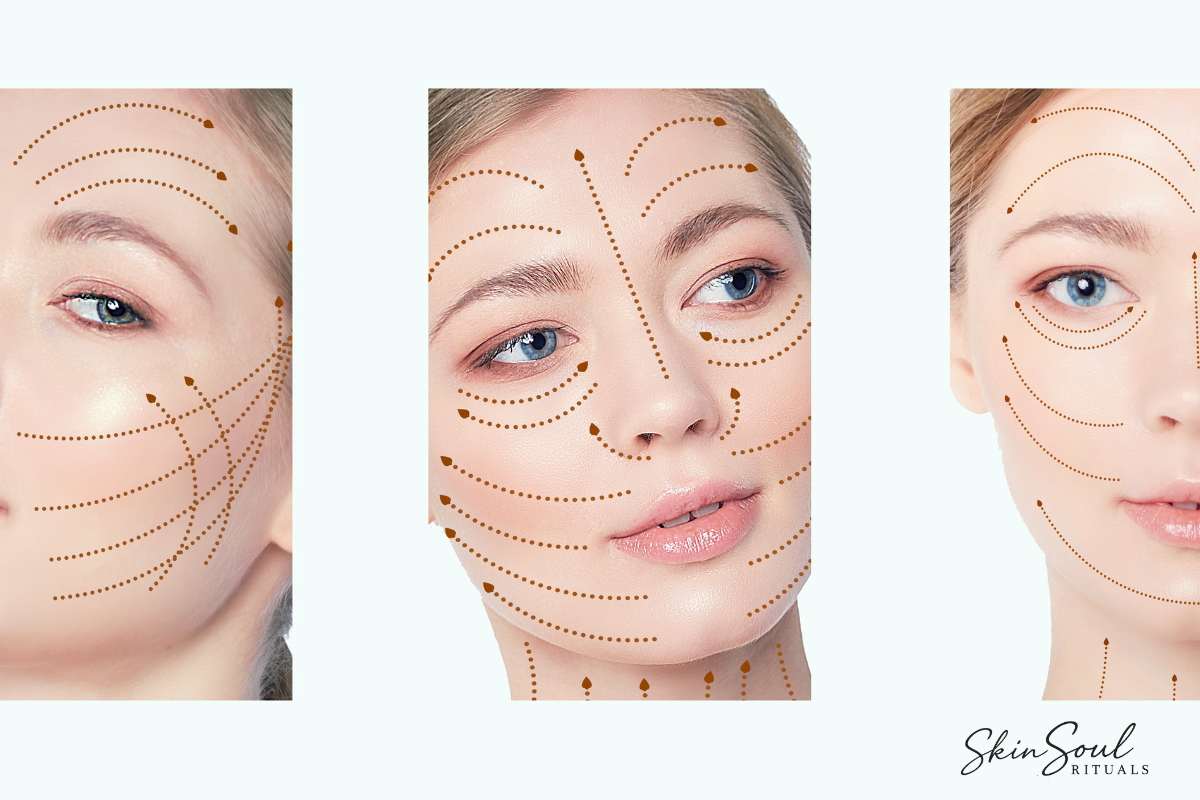
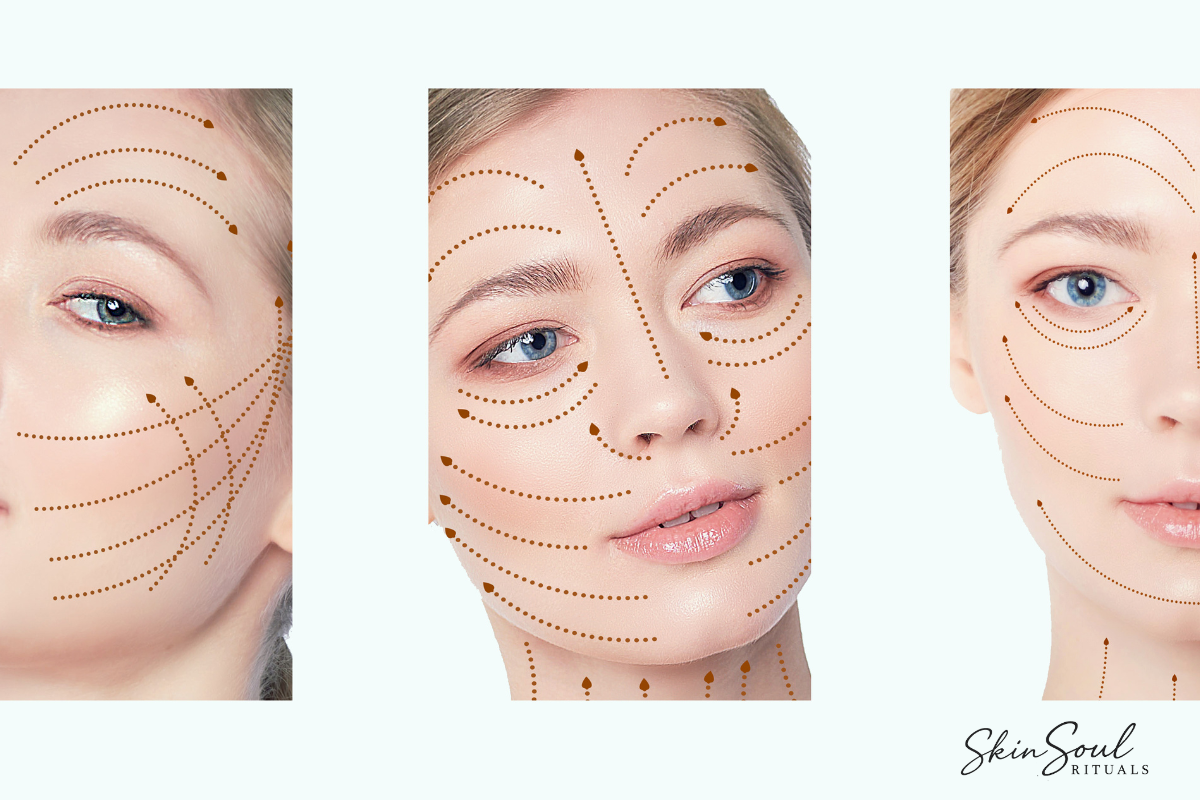
Gua sha uses light, directional strokes that follow lymph pathways to help fluid move toward drainage areas (like the sides of the neck).
This is one of the reasons gua sha can make your face look:
Less swollen
More defined
Slimmer and sculpted
Often after just one session.
Why This Creates a “Lifted” Look
Gua sha doesn’t lift your face like a surgical procedure.
Instead, it improves the conditions of the tissues.
When you have:
✔ Less fluid retention
✔ Better circulation
✔ Freer fascia movement
Your face can look:
• More contoured
• Less heavy
• More awake
• Naturally lifted
It’s like decluttering, nourishing, and loosening the face all at once.
Why Consistency Matters
One gua sha session can give temporary results.
But consistent practice supports:
• Long-term tissue health
• Muscle balance
• Better fluid movement
Think of it like brushing your teeth.
You don’t do it once and expect lifetime results.
Small daily rituals make the biggest difference.
Final Takeaway
Gua sha works because it supports systems your body already uses:
Circulation → nourishes
Fascia → shapes
Lymph → drains
You’re not forcing the face into a result.
You’re helping the body do its job better.
That’s why gua sha feels both relaxing and effective, it’s working with your biology, not against it.
Ready to try Gua Sha for yourself? Sign up for my free 5 days of Gua Sha Challenge.
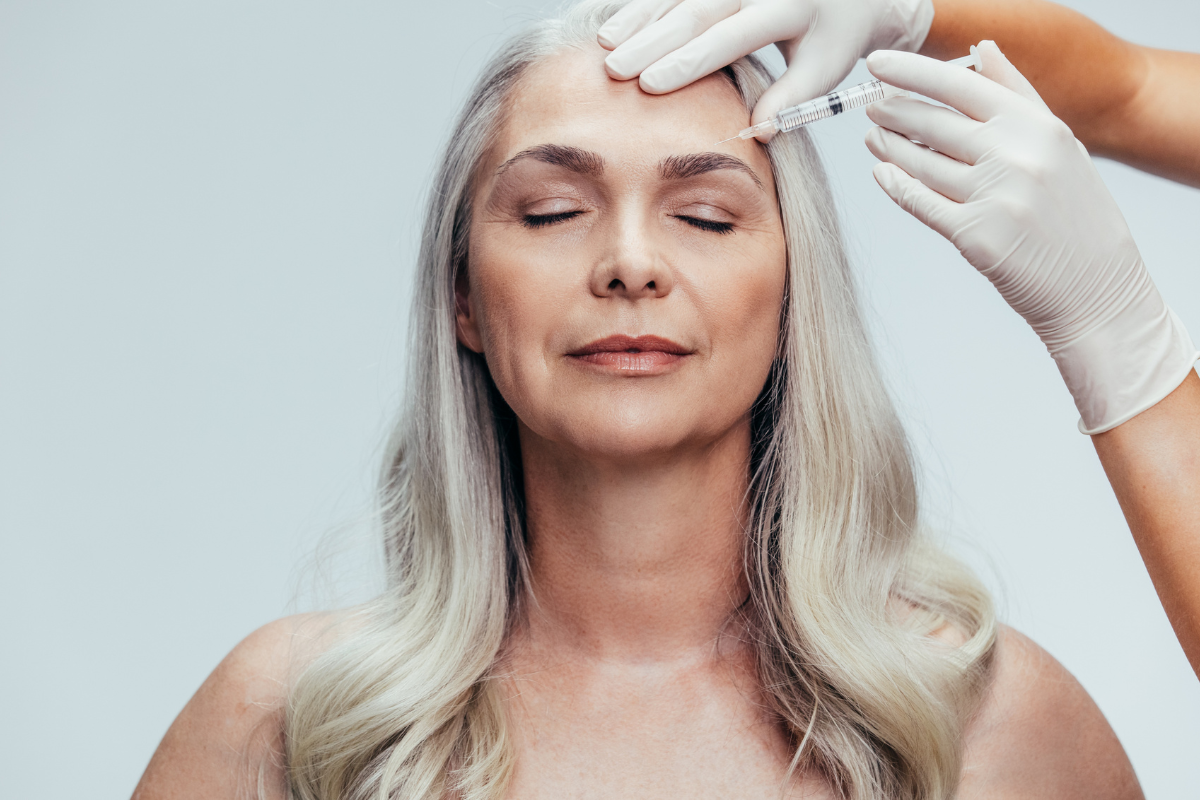
Can Gua Sha Replace Botox? A Realistic Look at Natural Face Lifting
Is Botox the only way to lift and smooth the face? Not necessarily. This guide explains how Botox works, what causes facial aging beyond wrinkles, and how gua sha supports natural lifting by improving circulation, fascia mobility, and lymphatic flow.
by Amber Boone, Holistic Aesthetician & Founder of Skin Soul Rituals
If you’ve ever looked in the mirror and thought,
“Is it time for Botox?”
You are not alone.
Fine lines, forehead creases, and loss of facial firmness are a normal part of aging but in a world where injectables are everywhere, it can feel like Botox is the only option.
Here’s the truth: Botox is one option.
But it is not the only path to a lifted, sculpted, confident-looking face.
Gua sha and other holistic facial practices offer a completely different approach to facial aging, one that works with your tissues instead of temporarily freezing them.
This article isn’t about Botox-bashing. I used to get it myself. Nothing wrong with it. However, I didn’t realize there were other options at the time. That’s what this article is about, understanding there are other options that can work for you.
Let’s break it down.
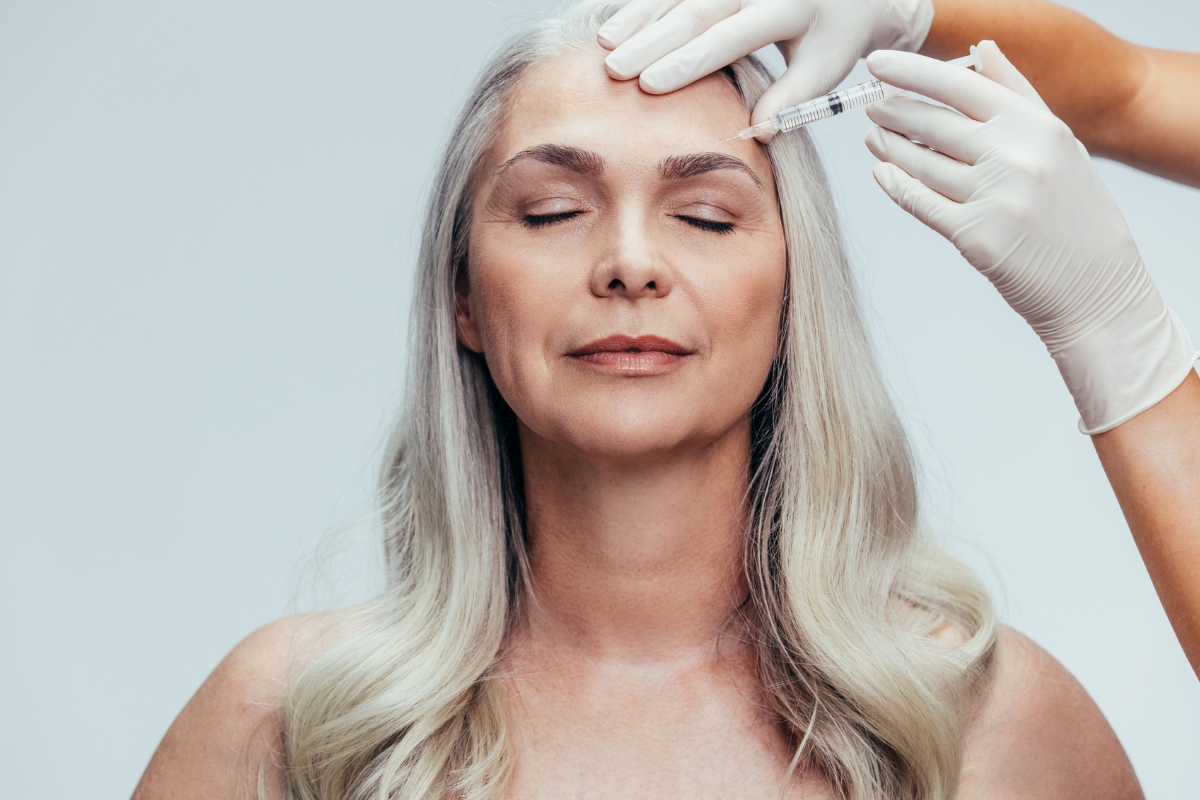
First: What Is Botox and How Does It Work?
Botox is a brand name for botulinum toxin, a purified neurotoxin used in small, controlled doses.
When injected into a muscle, Botox:
• Blocks nerve signals to that muscle
• Reduces muscle movement
• Softens expression lines caused by repetitive facial motion
That’s why it’s commonly used for:
Forehead lines
Frown lines (11s)
Crow’s feet
What Botox does well:
✔ Quickly smooths dynamic wrinkles
✔ Results appear within 3–10 days
✔ Effects last about 3–4 months
But here’s the key point:
Botox does not improve:
Circulation
Lymphatic drainage
Tissue health
Skin quality
Fascia mobility
It reduces muscle activity and it doesn’t address the underlying tissue systems that influence facial aging.
Why Faces Age in the First Place (It’s Not Just Wrinkles)
Facial aging is not only about lines.
It involves:
• Sluggish lymphatic flow → puffiness & heaviness
• Reduced circulation → dull, tired-looking skin
• Tight, stuck fascia → sagging & loss of contour
• Muscle imbalances → some areas overactive, others weak
• Fluid retention → loss of definition in jawline & cheeks
This is where natural facial practices come in.
What Is Gua Sha for the Face?
Facial gua sha is a traditional East Asian technique that uses a smooth stone tool to gently glide along the face and neck.
It is not about scraping hard.
It is about rhythm, direction, and intention.
Modern facial gua sha is used to:
✔ Support lymphatic drainage
✔ Increase circulation
✔ Release fascial tension
✔ Reduce fluid retention
✔ Improve muscle tone and relaxation balance
✔ Encourage natural lift and contour
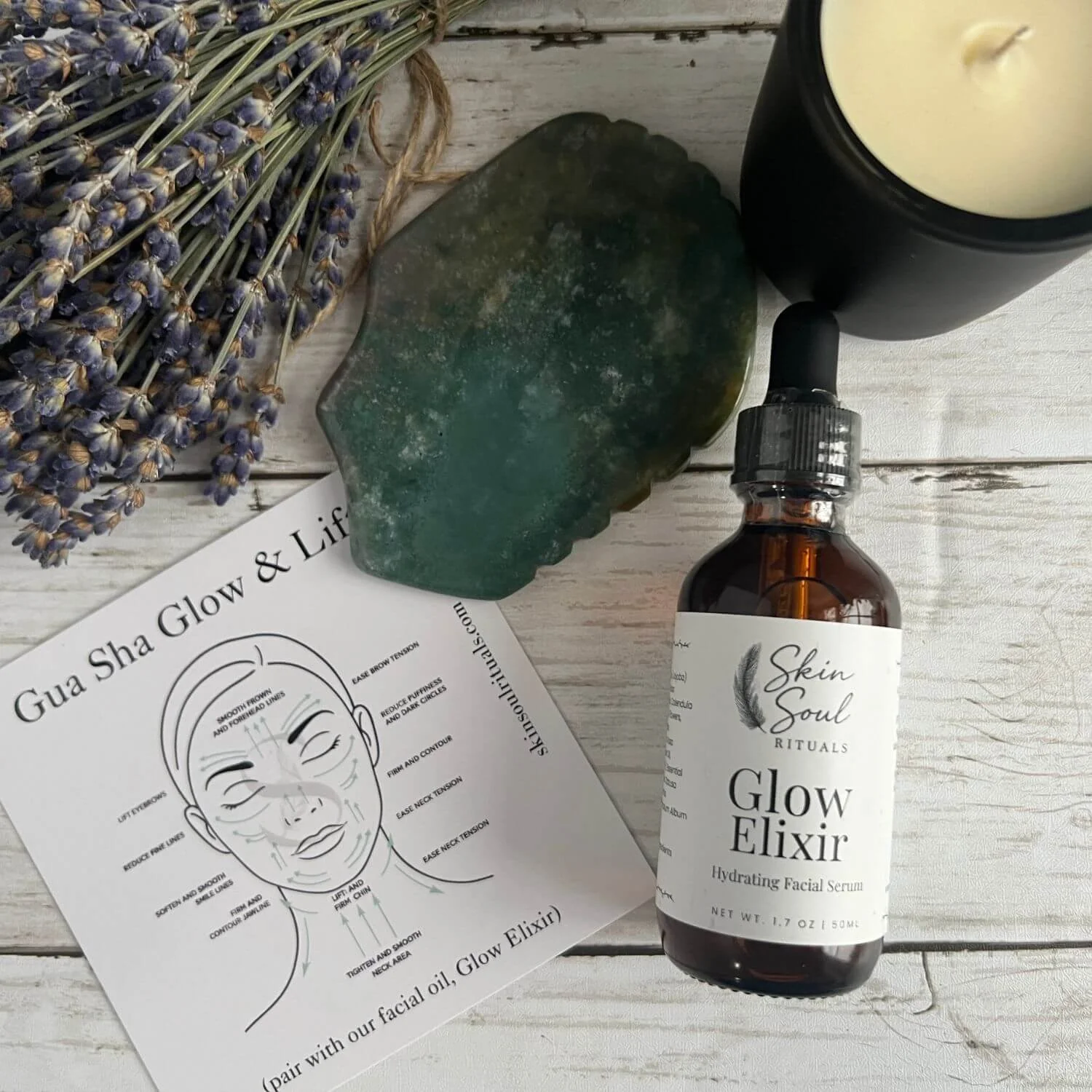
Can Gua Sha Replace Botox?
Here’s the honest answer:
Gua sha does not freeze muscles like Botox.
But it works on systems Botox does not touch.
Instead of paralyzing movement, gua sha helps restore:
• Fluid flow
• Tissue mobility
• Muscle balance
• Natural definition
So the question becomes less “Does it replace Botox?”
And more…
“Do you want to freeze movement, or improve tissue function?”
They are two completely different strategies.
What Gua Sha Can Do for the Face
With consistent practice, gua sha can help:
Reduce Puffiness
By moving stagnant lymphatic fluid, especially in:
Under eyes
Cheeks
Jawline
Improve Facial Contour
Releasing tight fascia allows tissues to sit more naturally, helping:
Jawline look more defined
Cheekbones appear lifted
Face look less heavy
Support Smoother Expression Lines
When overactive muscles (like between the brows) are gently relaxed and circulation improves, lines can appear softer over time.
Give a “Rested” Look
Better circulation = more oxygen & nutrients to skin
This often translates to a healthy glow Botox alone does not provide.
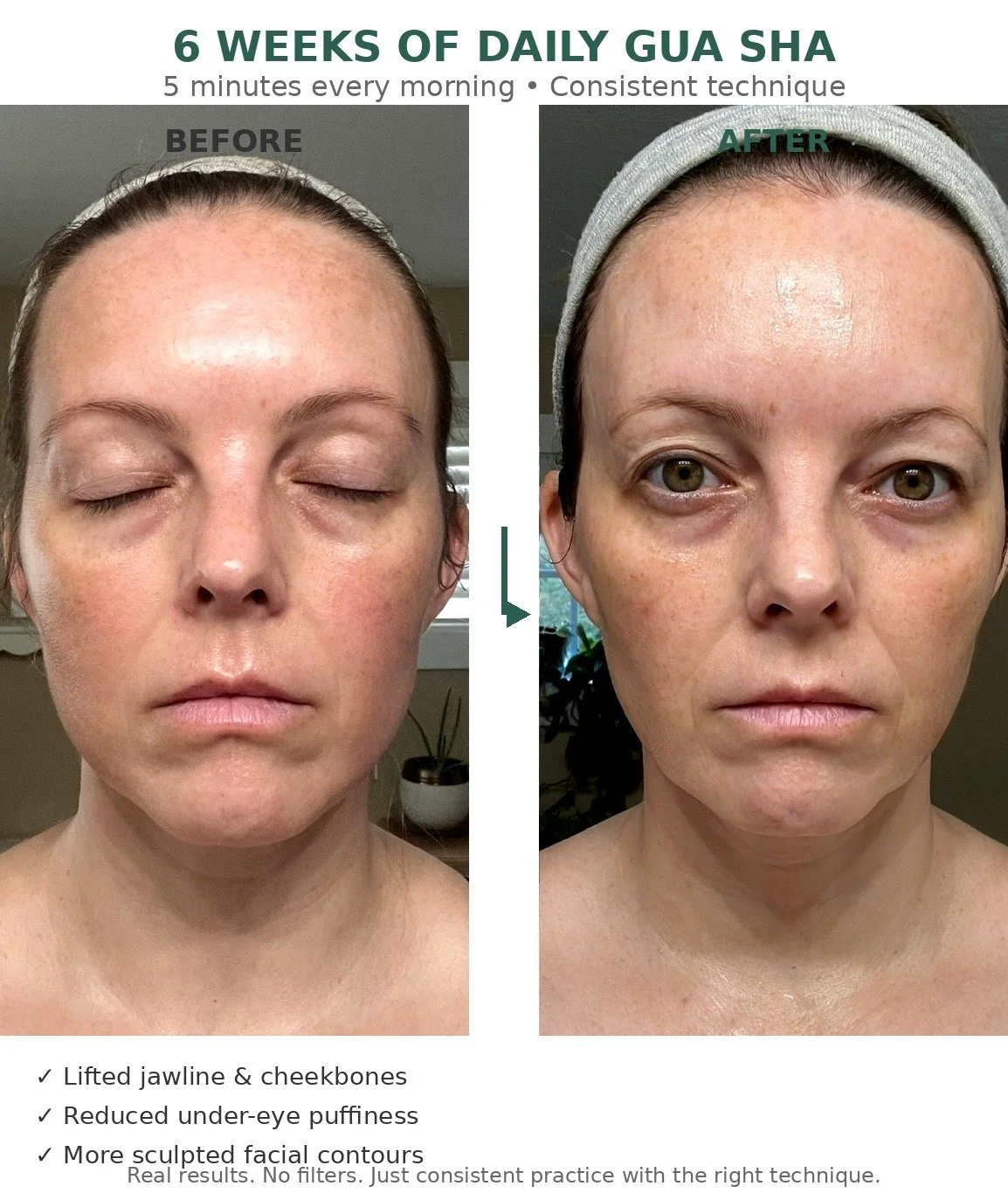
6 weeks of consistent Gua Sha. This is my before and after using my Glow & Lift Kit.
Why Gua Sha Results Look Different Than Botox
Botox = quick, muscle-freezing effect
Gua sha = gradual, tissue-supporting effect
Botox results can look smooth but sometimes flat.
Gua sha results look alive, sculpted, and naturally expressive.
It’s less “frozen forehead”
More “lifted, healthy face.”
What Makes Gua Sha So Effective?
It works on three major systems Botox does not:
1. Lymphatic System
Reduces fluid retention that causes heaviness and sagging.
2. Fascia
The connective tissue that holds the face together. When tight or stuck, it pulls downward.
3. Circulation
Brings nutrients and oxygen to the skin, supporting tone and glow.
You are improving the environment of the face, not just muting one muscle.
Who Might Prefer Gua Sha Over Botox?
Gua sha may appeal to you if you:
• Want a natural, non-invasive approach
• Prefer improving tissue health over freezing muscles
• Enjoy self-care rituals
• Want long-term maintenance vs repeated injections
• Are sensitive to the cost or commitment of Botox
A Personal Note
Many people explore both options at different stages of life. Some choose injectables. Others shift toward holistic methods.
For some, gua sha becomes more than skincare.
It becomes a ritual, a moment to slow down, connect, and support your body naturally.
And that in itself is powerful.
The Bottom Line
Botox and gua sha are not enemies.
They are different tools with different mechanisms.
Botox works at the neuromuscular level.
Gua sha works at the circulatory, lymphatic, and fascial level.
One is not automatically “better.”
But if you’re looking for a natural, at-home approach that supports your tissues and helps you feel connected to your beauty routine, gua sha is absolutely worth exploring.
You have options.
And understanding how each one works helps you choose what feels right for you.
Looking to try Gua Sha? I have a free 5-day challenge for you to learn the technique and process. Sign Up Below.