

Gua Sha for Jaw Tension and TMJ: A Holistic Aesthetician's Guide to Relief
by Amber Boone, Holistic Aesthetician & Founder of Skin Soul Rituals
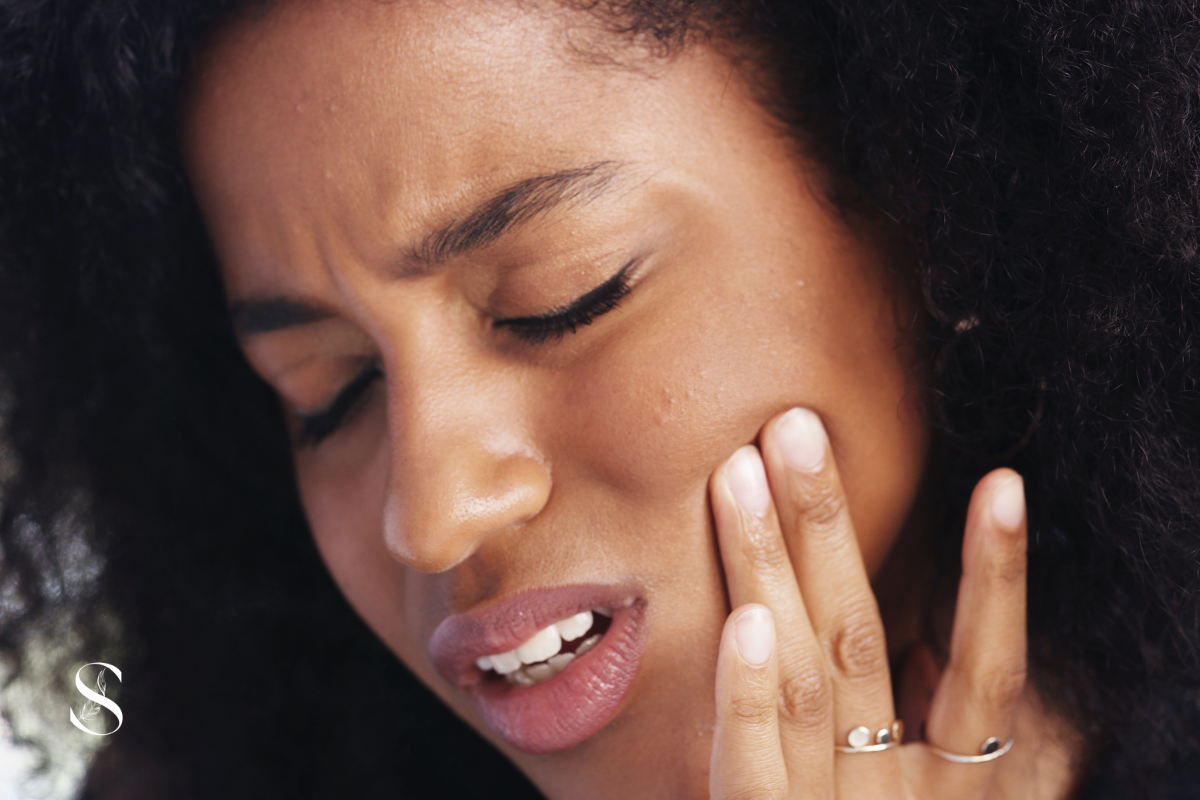
If you've ever woken up with a sore, tight jaw or felt that familiar ache radiating up toward your temples, you're not alone. Jaw tension and TMJ (temporomandibular joint) discomfort affect millions of people, especially women in their 40s and 50s who juggle stress, hormonal changes, and the unconscious habit of clenching their teeth throughout the day or even all night long.
As a licensed holistic aesthetician with over 13 years of hands-on experience, I've worked with countless clients who carry chronic tension in their faces. And while I'm not a medical professional and can't diagnose or treat TMJ disorders (that's your dentist or doctor's job), I can share what I've learned about using gua sha as a supportive tool for facial muscle tension and lymphatic drainage.
Important Disclaimer: I'm a licensed aesthetician, not a medical doctor or TMJ specialist. If you're experiencing severe jaw pain, locking, chronic clicking, or symptoms that interfere with eating or daily life, please consult with your dentist, doctor, or a TMJ specialist for proper diagnosis and treatment. Gua sha is a complementary wellness practice for muscle tension, not a medical treatment for TMJ disorders.
Why Does Jaw Tension Happen?
Your jaw is surrounded by some of the strongest muscles in your body, the masseter muscles that help you chew can exert incredible force. When you're stressed, anxious, or concentrating deeply (hello, hours at the computer), these muscles often stay contracted without you even realizing it.
Common causes of jaw tension include:
Stress and anxiety leading to unconscious clenching
Teeth grinding, especially during sleep
Poor posture, particularly forward head position from screen time
Hormonal fluctuations that affect muscle tension and inflammation
Repetitive chewing on one side or chewing gum habitually
Over time, this chronic tension doesn't just stay in your jaw. It can travel up into your temples, down your neck, and even contribute to headaches, facial puffiness, and that overall feeling of tightness in your face.
How Gua Sha Helps with Facial Tension
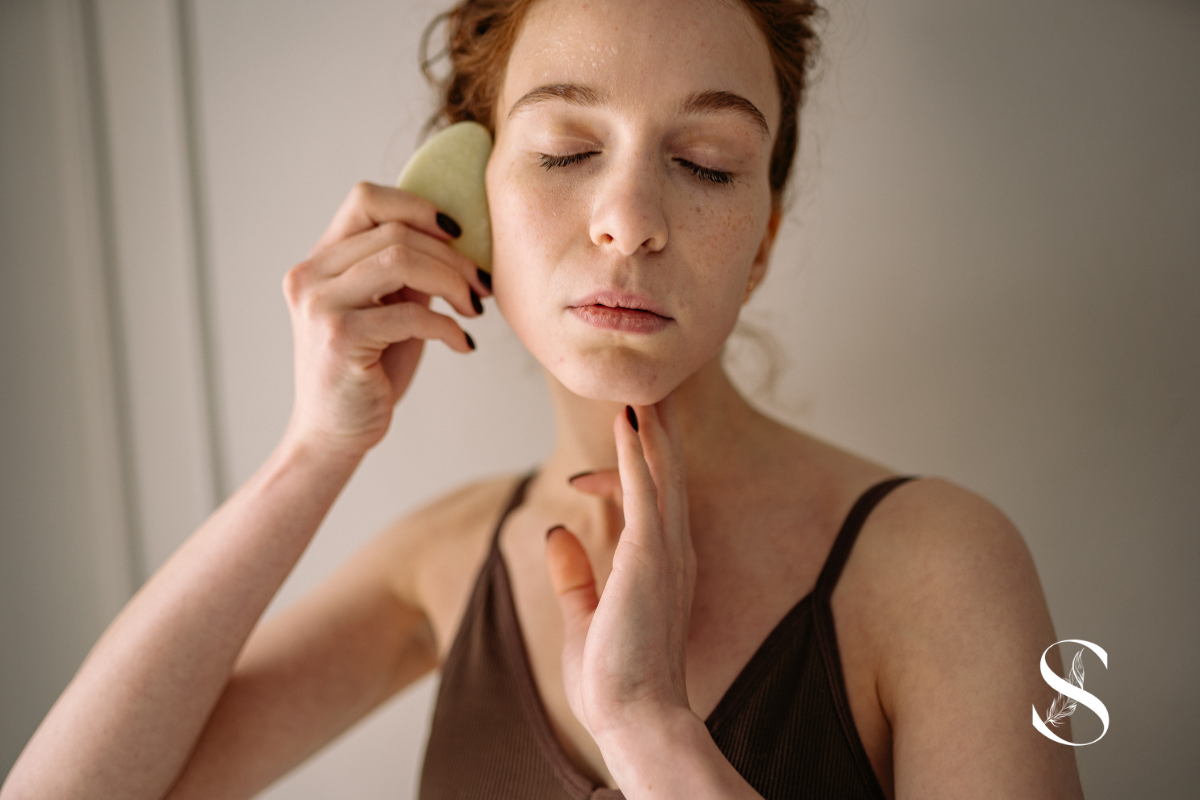
Gua sha is an ancient Chinese healing technique that uses a smooth-edged tool to apply pressure and massage along the skin. When used on the face, it works on multiple levels:
Releases muscle tension: The gentle pressure and gliding strokes help tight muscles relax and lengthen, similar to how a massage therapist would work on a knotted shoulder.
Supports lymphatic drainage: Your face has a complex network of lymph vessels that can become sluggish, especially when muscles are chronically tight. Gua sha encourages lymph flow, which can reduce puffiness and that "heavy" feeling in your face.
Increases circulation: The massage brings fresh blood flow to the area, delivering oxygen and nutrients while carrying away metabolic waste that builds up in tense tissue.
Provides nervous system regulation: The slow, intentional strokes activate your parasympathetic nervous system known as your body's "rest and digest" mode, which is the opposite of the stress response that causes clenching in the first place.
In my treatment room, I've watched clients visibly relax as we work through jaw tension with gua sha. They often report feeling like their face "opened up" or that they could finally unclench for the first time in days.
The Right Gua Sha Technique for Jaw Tension
Here's the approach I teach my clients for working with jaw tension at home. The key is to be gentle, intentional, and consistent.
What you'll need:
A smooth gua sha stone with curved edges that fit the contours of your jaw
A nourishing facial oil for slip—never drag on dry skin
If you're just getting started, our Glow & Lift Kit includes a professional-grade gua sha stone and our signature Glow Elixir facial oil, the same tools I use. The kit is designed specifically for facial work, with the right shape and weight for jaw release techniques.
The technique:
Start by taking three deep breaths. Place your hands on your jaw and just feel where you're holding tension. This awareness is half the work.
Step 1: Warm up with the neck Begin at your collarbone, using light pressure to sweep the gua sha tool up along the sides of your neck toward your jawline. This "opens the drain" for lymphatic fluid and helps your nervous system shift into relaxation mode. Repeat 5-7 times on each side.
Step 2: Release the jaw muscles Place the curved edge of your gua sha tool at the corner of your jawbone (right where your jaw hinges). Using light to medium pressure, glide the tool along your jawbone toward your chin. The movement should be slow and intentional—take about 3-5 seconds per stroke. Repeat 5-10 times on each side.
Step 3: Address the masseter muscle This is the major jaw muscle that does most of the clenching. Place your tool on your lower cheek, just above your jawbone, and glide upward toward your cheekbone. You're essentially "lifting" the masseter muscle. This might feel tender if you hold a lot of tension here—that's normal. Start with lighter pressure and work up as the muscle releases. Repeat 5-10 times on each side.
Step 4: Release temple tension Jaw tension often travels up into the temples. Using the flat edge of your tool, make small circular motions at your temples, then sweep outward toward your hairline. Repeat 5-7 times on each side.
Step 5: Finish at the lymph nodes End by sweeping down the neck again, encouraging all that released fluid and tension to drain toward your lymph nodes. This completes the circuit.
When to Do Gua Sha for Jaw Tension
Consistency matters more than duration. Even 3-5 minutes of focused jaw work can make a difference.
Best times to practice:
First thing in the morning if you grind your teeth at night and wake up sore
Mid-afternoon when work stress has you clenching without realizing it
Before bed as part of a wind-down ritual to prevent nighttime grinding
Any time you feel that "tight jaw" sensation coming on
I recommend starting with once daily, then adjusting based on how your body responds. Some clients with significant tension do a quick jaw release twice a day.
What Results to Expect
Gua sha isn't a quick fix, but it is effective when practiced consistently. Here's what you might notice:
Immediate: Many people feel looser and more relaxed right after a session. Your jaw might feel like it can open wider or move more freely.
Within a few days: You may notice less morning soreness if you've been grinding your teeth, or fewer tension headaches.
After 2-4 weeks: Chronic tension patterns start to shift. Your jaw might not default to clenching as quickly when stress hits. Facial puffiness often improves as lymphatic drainage becomes more efficient.
Long-term: Combined with stress management and possibly other interventions (like a night guard from your dentist), many people find their baseline tension decreases significantly.
Important Things to Remember
Pressure matters: You're working with facial muscles, not trying to break up deep tissue. Think "firm but comfortable" and never painful. If you see significant redness or bruising on your face, you're pressing too hard.
Oil is essential: Never drag your gua sha tool on dry skin. Always use a facial oil or serum for smooth gliding. This prevents irritation and makes the massage more effective.
Listen to your body: If something hurts beyond a normal "tender muscle" feeling, ease up or skip that area. Pain is not the goal.
This supports, not replaces, medical care: If you have diagnosed TMJ disorder, severe pain, jaw locking, or other medical concerns, work with your healthcare provider. Gua sha can complement treatment but isn't a substitute for it.
Teeth grinding might need more: If you grind your teeth significantly at night, you likely need a custom night guard from your dentist. Gua sha can help with the muscle tension, but it won't prevent the grinding itself.
Beyond the Physical: The Mind-Body Connection
Here's something I've learned after years of working with faces: jaw tension is rarely just about your jaw. It's often where your body stores stress, anxiety, worry, and all the things you're mentally "chewing on."
The ritual of gua sha, the intentional touch, the slow pace, the focused attention is what gives your nervous system permission to let go. It's a few minutes where you're not multitasking, not pushing through, not proving anything. You're just caring for yourself.
Many of my clients tell me that the gua sha practice becomes less about the physical technique and more about creating a moment of peace in their day. And interestingly, when they stick with it, they often notice they're clenching less overall, not just because the muscles are less tight, but because they're carrying less stress in their bodies.
Final Thoughts
If you're dealing with jaw tension, TMJ discomfort, or just that feeling of carrying tightness in your face, gua sha offers a gentle, accessible way to support your body's natural ability to release and restore. It's not magic, and it's not a replacement for medical treatment when needed, but it is a powerful tool for self-care that you can practice at home, on your own schedule.
Your jaw has been working hard for you, day in and day out. Gua sha is one way to say thank you and give those overworked muscles a chance to finally relax.
Ready to Get Started?
New to gua sha? Join our free 5-Day Gua Sha Challenge where I'll walk you through the fundamentals step-by-step, including specific techniques for jaw tension relief. You'll get daily video tutorials, practice routines, and personalized guidance delivered straight to your inbox. Sign up here.
Ready to dive in now? Our Glow & Lift Kit includes everything you need: a professional-grade gua sha stone and our nourishing Glow Elixir facial oil, the same tools I use.