

Calendula for Eczema: What It Is, Why It Works, and How to Use It Safely
by Amber Boone, Holistic Aesthetician & Founder of Skin Soul Rituals
You've tried the creams. You've read the labels. You've watched your child scratch at skin that just won't calm down and you're tired of reaching for the hydrocortisone knowing it's only a temporary fix.
There's a botanical that's been quietly working for centuries. And the research on it is really solid.
Important Disclaimer: I'm a licensed aesthetician, not a medical doctor or dermatologist. I cannot diagnose or treat medical conditions. Eczema (atopic dermatitis) is a medical condition that should be managed with guidance from your healthcare provider. This information is educational and based on my professional experience and current research. Always consult with your doctor before trying new treatments, especially for children.
What Is Calendula?
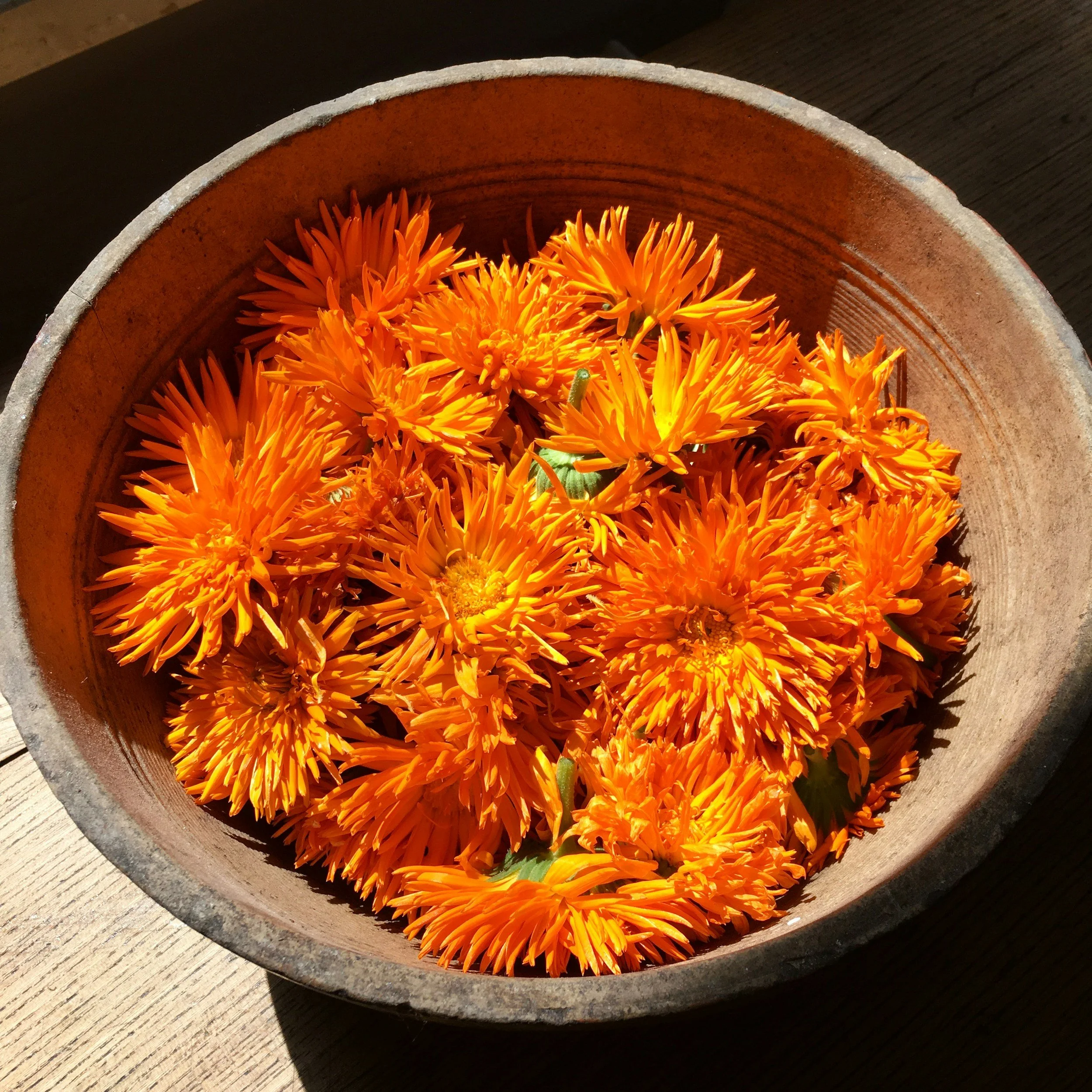
Calendula officinalis, commonly called pot marigold is a bright orange-yellow flower that's been used medicinally for centuries. It's not the same as the marigolds you see in garden centers (those are Tagetes); calendula is its own distinct plant with a long history in herbal medicine.
Traditional uses of calendula: Throughout history, calendula has been used topically for wounds, burns, skin inflammation, rashes, and infections. Herbalists called it "wound herb" because of its ability to support healing and reduce inflammation.
What makes calendula special for skin: The flowers contain powerful anti-inflammatory, antimicrobial, and skin-soothing compounds including:
Flavonoids (anti-inflammatory and antioxidant)
Triterpenoids (promote wound healing and tissue repair)
Carotenoids (antioxidant protection)
Essential oils (antimicrobial properties)
When these compounds are extracted from the flowers, typically through oil infusion they create a gentle but effective topical treatment that's safe enough for the most delicate skin, including babies and children.
Understanding Eczema (So You Know Why Calendula Helps)
Before we talk about how calendula works, you need to understand what's actually happening with eczema so the mechanism makes sense.
What eczema is: Atopic dermatitis (the medical term for eczema) is a chronic inflammatory skin condition characterized by a compromised skin barrier, immune system overreaction, and extreme sensitivity to triggers.
What's happening in eczema-prone skin:
Damaged skin barrier: Your skin's outermost layer normally acts like a brick wall, skin cells are the bricks, lipids (fats) are the mortar. In eczema, this wall is faulty. The "mortar" is deficient, creating gaps that allow:
Moisture to escape (causing dryness)
Irritants, allergens, and bacteria to penetrate (causing inflammation)
Overactive immune response: When irritants get through the damaged barrier, the immune system overreacts, releasing inflammatory chemicals that cause redness, swelling, itching, and pain.
The itch-scratch cycle: Itching triggers scratching, which further damages the barrier, which allows more irritants in, which causes more inflammation and itching. It's a vicious cycle.
Microbial imbalance: Eczema-prone skin often has an overgrowth of Staphylococcus aureus bacteria, which produces toxins that worsen inflammation.
Common eczema triggers:
Harsh soaps and detergents
Fragrances and synthetic chemicals
Wool and rough fabrics
Temperature extremes and sweating
Stress
Allergens (food, environmental)
Dry air
Why most products make it worse: Many conventional skincare products contain ingredients that further damage the barrier, sulfates, alcohol, synthetic fragrances, preservatives that irritate. Even products marketed for "sensitive skin" can contain hidden irritants.
This is where calendula comes in. It addresses multiple aspects of the eczema problem at once.
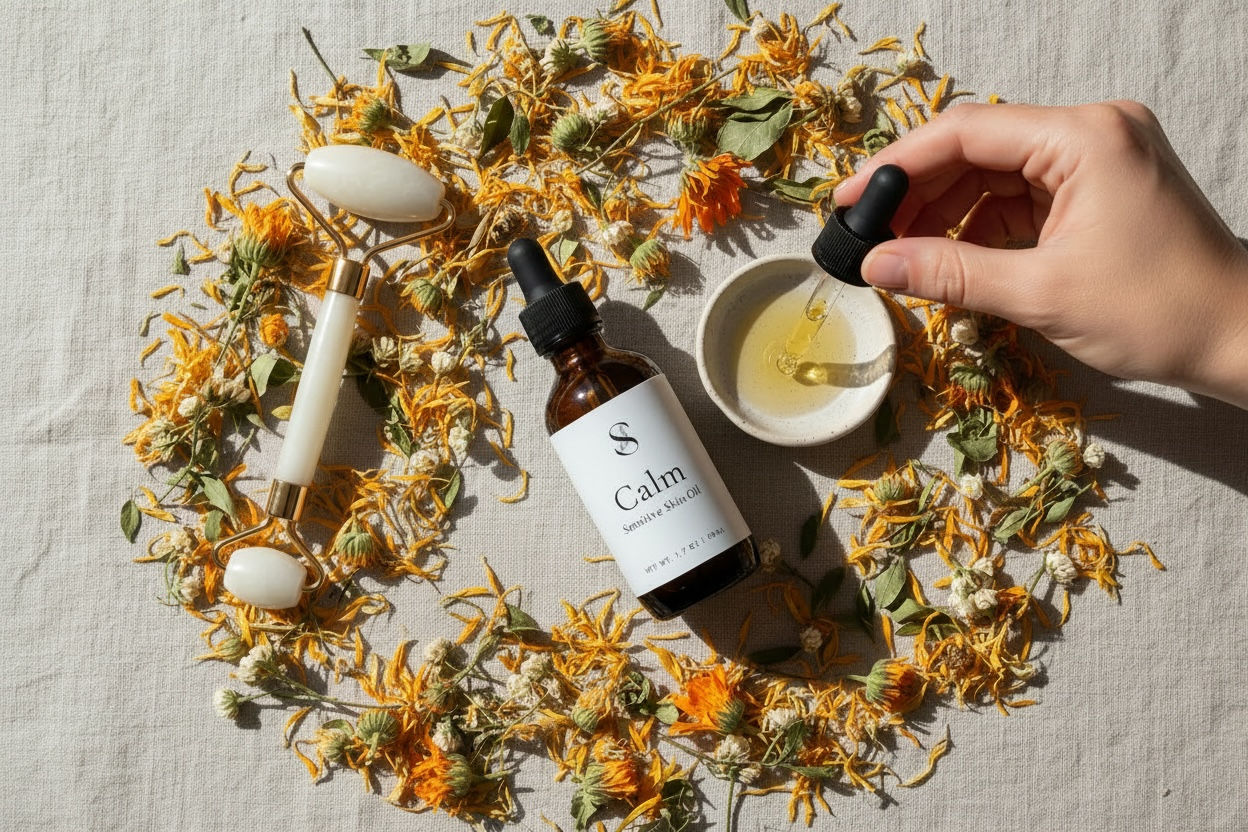
Skin Soul Rituals | Jojoba & Calendula Oil
How Calendula Helps Eczema: The Science
Calendula isn't a cure for eczema, there is no cure. But research shows it can significantly reduce symptoms, support the skin barrier, and calm the inflammatory response that drives flare-ups.
Here's what calendula does for eczema-prone skin:
1. Powerful Anti-Inflammatory Action
The primary benefit of calendula for eczema is its anti-inflammatory effect. Studies show that calendula extracts significantly reduce inflammation markers in the skin.
How it works: The flavonoids and triterpenoids in calendula inhibit the inflammatory pathways that cause redness, swelling, and pain. It's gentler than hydrocortisone but works through a similar anti-inflammatory mechanism.
What this means for eczema: Less inflammation = less redness, less swelling, less discomfort. The angry, hot feeling that comes with flare-ups calms down.
2. Supports Wound Healing and Skin Repair
Calendula has been extensively studied for wound healing. It promotes the formation of new tissue, increases collagen production, and speeds up epithelialization (the process of skin growing back over wounds).
How it works: The triterpenoids stimulate fibroblast activity (the cells that produce collagen and repair tissue). Calendula also increases blood flow to the area, bringing nutrients and oxygen needed for healing.
What this means for eczema: The cracked, broken skin that comes with severe eczema heals faster. The skin barrier repairs more efficiently, reducing vulnerability to irritants.
3. Antimicrobial Properties
Calendula has natural antimicrobial activity against bacteria, fungi, and some viruses, including Staphylococcus aureus, the bacteria that commonly overgrows in eczema.
How it works: The essential oils and other compounds in calendula disrupt bacterial cell membranes and inhibit their growth.
What this means for eczema: Reduces the risk of infected eczema (a common and painful complication). Helps rebalance the skin's microbiome.
4. Soothes Itching and Discomfort
While the mechanism isn't fully understood, calendula has a documented soothing effect on itchy, irritated skin.
What this means for eczema: Breaking the itch-scratch cycle is crucial. If you can reduce the urge to scratch, you prevent further damage to the barrier.
5. Hydrates Without Irritation
When calendula is infused into a carrier oil (like jojoba), it delivers moisture and nourishment to dry, damaged skin without any of the irritating ingredients found in conventional creams.
What this means for eczema: Hydration supports barrier function. Eczema skin is chronically dehydrated, and calendula-infused oil provides essential fatty acids and moisture that compromised skin desperately needs.
The Research: What Studies Show
I'm not just recommending calendula based on tradition or anecdote, there's actual research backing its use for inflammatory skin conditions.
Key studies:
A 2009 study published in the Journal of Clinical Oncology compared calendula cream to trolamine (a common anti-inflammatory) for radiation-induced dermatitis (which shares characteristics with eczema). Calendula was significantly more effective at preventing and reducing skin inflammation.
A 2012 study in Advances in Therapy found that calendula extract reduced inflammation and promoted wound healing in skin injuries.
Multiple studies have confirmed calendula's antimicrobial activity against S. aureus, the bacteria implicated in eczema flare-ups.
While there aren't large-scale clinical trials specifically on calendula for atopic dermatitis, the anti-inflammatory, wound-healing, and antimicrobial properties documented in research directly address the mechanisms of eczema.
Calendula Oil vs. Calendula Cream: What's the Difference?
You'll find calendula in different forms, creams, ointments, salves, and oils. Here's what you need to know:
Calendula-infused oil:
Dried calendula flowers steeped in a carrier oil (jojoba, olive, sunflower, etc.) to extract the beneficial compounds
Pure, simple, minimal ingredients
Excellent for very sensitive skin because there are no emulsifiers, preservatives, or additives
Absorbs well, nourishes deeply
Best for: Daily moisture, barrier support, gentle treatment
Calendula cream/ointment:
Calendula extract or infused oil mixed with water, emulsifiers, and often preservatives to create a spreadable cream
May contain additional beneficial ingredients (colloidal oatmeal, shea butter, etc.)
Can be more convenient for some people
Risk: Additional ingredients may irritate sensitive skin
Best for: People who prefer cream texture over oil
My professional recommendation for eczema: Pure calendula-infused oil in a gentle carrier oil is the safest, most effective option, especially for children and severely compromised skin. The fewer ingredients, the lower the risk of irritation.

How to Use Calendula Oil for Eczema
Using calendula correctly matters. Here's my protocol based on years of working with eczema-prone clients:
Step 1: Choose the Right Calendula Oil
Not all calendula oils are created equal. Look for:
High-quality carrier oil: Jojoba is ideal because it's non-comedogenic, shelf-stable, and mimics skin's natural sebum. Olive, sunflower, and sweet almond oil are also good choices.
Organic calendula flowers: Pesticides and chemicals defeat the purpose of using a gentle botanical.
Proper extraction method: Heat or cold infusion extracts the beneficial compounds. Avoid products that just add calendula fragrance or have "calendula" far down the ingredient list.
Minimal ingredients: The best calendula oil for eczema is just two ingredients.
Step 2: Patch Test First
Even gentle ingredients can cause reactions in highly sensitive skin. Before using calendula oil all over:
Apply a small amount to the inside of the forearm
Wait 24-48 hours
Check for any redness, itching, or irritation
If clear, proceed to use on affected areas
Step 3: Apply to Damp Skin
Oil works best when applied to slightly damp skin, it seals in moisture rather than sitting on top of dry skin.
The routine:
Bathe or wash the affected area with lukewarm (not hot) water and a gentle, fragrance-free cleanser (or just water for babies)
Pat skin mostly dry but leave it slightly damp
Apply a few drops of calendula oil to your palm
Warm it between your hands
Gently press and massage into the affected areas, don't rub vigorously, use gentle patting and pressing motions
Allow it to absorb for a few minutes
Step 4: Use Consistently
For active flare-ups: Apply 2-3 times daily (morning, midday if needed, and before bed)
For maintenance: Apply once or twice daily to prevent flare-ups
For children: Apply after bath time and in the morning, more frequently during cold, dry weather
Step 5: Combine with Other Eczema Management Strategies
Calendula works best as part of a comprehensive approach:
Avoid known triggers
Use gentle, fragrance-free cleansers
Keep nails short to minimize damage from scratching
Dress in soft, breathable fabrics
Use a humidifier in dry climates
Manage stress (stress worsens eczema significantly)
Work with your doctor on any underlying allergies or immune issues
Is Calendula Safe for Babies and Children?
This is one of the most common questions I get, and it's the right question to ask.
Yes, calendula is generally considered safe for babies and children when used topically.
Here's what you need to know:
Safety profile: Calendula has been used for centuries on infants and young children. It's one of the gentlest botanicals available and has a very low risk of allergic reaction.
Precautions for babies:
Always dilute: Use calendula-infused oil, not pure essential oil or alcohol-based extracts
Patch test first, even on babies
Avoid eyes, mouth, and any open, weeping wounds (wait until the acute phase calms)
Use organic, pure formulations with minimal ingredients
Consult your pediatrician before starting any new treatment, especially for infants under 6 months
Why parents choose calendula for children's eczema: Parents are rightfully cautious about using steroids on young children. While topical steroids prescribed by a doctor are sometimes necessary, many parents want gentler options for daily maintenance and mild flare-ups. Calendula offers that.
What Results to Expect (And When)
Let me set realistic expectations so you're not disappointed or give up too soon.
Within 24-48 hours:
Reduced redness and inflammation
Less intense itching
Skin feels more comfortable and soothed
The "angry" feeling of a flare-up starts to calm
Within 1 week:
Visible reduction in redness and swelling
Cracked skin begins to heal
Less frequent scratching
Improved sleep (if itching was disrupting sleep)
Within 2-4 weeks:
Skin barrier function improves
Flare-ups become less frequent
Affected areas start to look and feel more like normal skin
Overall skin texture smoother and healthier
Long-term (2-3 months of consistent use):
Significantly fewer flare-ups
Baseline skin health much improved
Less dependency on rescue treatments like steroids
Better tolerance of previously triggering situations (weather changes, stress, etc.)
Important: Calendula is not a cure. Eczema is chronic and will require ongoing management. But calendula can dramatically reduce symptom severity and frequency when used consistently.
When Calendula Alone Isn't Enough
Calendula is incredibly effective for mild to moderate eczema and as a maintenance treatment. But there are situations where you need more intervention:
See a doctor if:
Eczema is severe, widespread, or getting worse despite treatment
Skin shows signs of infection (yellow crusting, oozing, increased pain, fever)
Eczema is significantly impacting quality of life or sleep
You suspect an underlying allergy or trigger that needs identification
Home treatments aren't providing adequate relief
Calendula works well alongside medical treatment: Many dermatologists actually support using gentle botanicals like calendula for maintenance between steroid treatments. It's not an either/or as it can be both.
Choosing a Quality Calendula Product
If you're buying rather than making your own calendula oil, here's what to look for:
Ingredient list should be short: Ideally just: [Carrier oil] infused with Calendula Officinalis Flower, Tocopherol (Vitamin E)
Avoid:
Long ingredient lists with chemicals you can't pronounce
Synthetic fragrances (even "unscented" products can have masking fragrances)
Alcohol, parabens, sulfates
Calendula listed far down the ingredient list (means there's very little actual calendula)
Look for:
Organic or wildcrafted calendula
Cold-pressed or properly infused oils
Dark glass bottles (protect from light degradation)
Clear information about sourcing and extraction method
Where to buy:
Reputable natural skincare brands
Herbalists and botanical product makers
Aesthetician-formulated products (like Skin Soul Rituals)
Avoid: Random Amazon listings, suspiciously cheap products
My Personal Experience with Calendula for Eczema
I want to share why I'm so passionate about calendula for eczema beyond just the research.
Over my 13 years as a holistic aesthetician, I've worked with dozens of clients, adults and children, struggling with eczema. I've seen the physical discomfort, the emotional toll, the frustration with products that promise relief but deliver irritation.
Calendula has been one of my most consistently effective recommendations. Not because it's trendy or profitable, but because it genuinely works and it's safe.
I grow calendula in my own garden specifically because I want complete control over the quality of what goes into the products I create. I harvest the flowers at peak bloom, dry them carefully, and infuse them slowly into organic jojoba oil. The resulting oil is simple, pure, and effective.
That's the power of simple, quality botanical skincare, it doesn't need a marketing team or celebrity endorsement. It just needs to work.
Final Thoughts: Gentle, Effective, and Safe
If you or your child struggles with eczema, you don't have to choose between effective and gentle. Calendula offers both.
It won't cure eczema, nothing will. But it can significantly reduce inflammation, support your skin's natural barrier, calm itching, and help you manage flare-ups without harsh chemicals or constant steroid use.
The key is consistency, quality, and patience. Give calendula at least 2-4 weeks of daily use before deciding if it's working. Support it with gentle skincare practices, trigger avoidance, and medical guidance when needed.
Your skin (or your child's skin) deserves care that doesn't cause more harm in the process of trying to heal. Calendula is that kind of care, ancient wisdom backed by modern research, gentle enough for the most delicate skin, and effective enough to make a real difference.

Calm Sensitive Skin Oil | Skin Soul Rituals
Ready to try Calm for yourself?
I formulated Calm specifically for eczema-prone, reactive, and sensitive skin, including children's. Two ingredients. Calendula flowers, infused into organic jojoba oil. Nothing else.